Tucker Carlson, who opposes Trump's stance on the Middle East, interviewed Iran's president
As confirmed by the Fox News anchor on social media, the full interview will be posted in the coming days with the intention of contributing to the American public discourse.
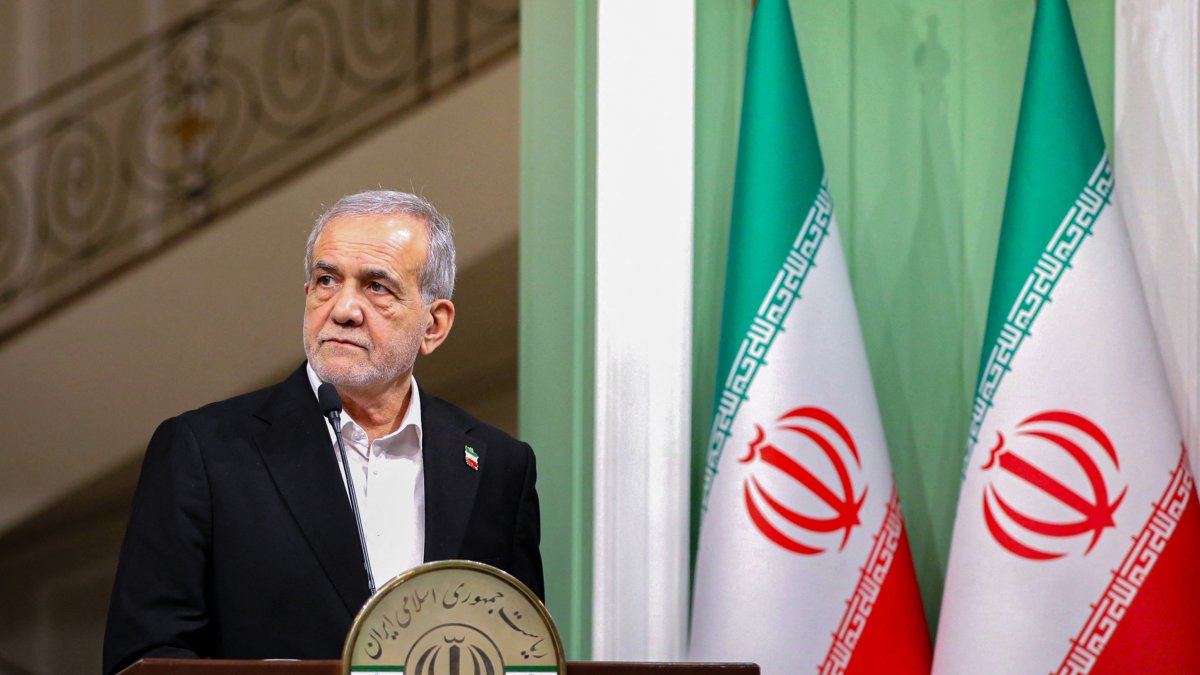
Pezeshkian at a press conference/ HO / IRANIAN PRESIDENCY

Tucker Carlson interviewed Iranian President Masoud Pezeshkian. As confirmed by the former Fox News host on social media, the full interview will be published in the coming days with the intention of contributing to American public discourse. He also specified that he hopes to be able to talk with the Israeli Prime Minister Benjamin Netanyahu.
Since his departure from Fox in 2023, Carlson has raised his profile with his interviews with local figures and international leaders. The latter group includes Vladimir Putin of Russia, Javier Milei of Argentina and Nayib Bukele of El Salvador, among others.
In this case, a few days after the beginning of the ceasefire between Israel and Iran, the interviewee was Pezeshkian. A surgeon by profession, he has been serving as president since July 2024, under the leadership of Ayatollah Ali Khamenei.
"We know we’ll be criticized for doing this interview. Why did we do it anyway? Well, we did it because we were just at war with Iran 10 days ago, and maybe again. ... Now, can you believe everything you hear from the president of Iran? Probably not. But that's not the point. The point is, you should be able to decide for yourself whether you believe it or not. And keep in mind that anyone who seeks to deny you that right is not your ally, but your enemy," Carlson said in a video released to explain the reasons and goals of the interview.
"And so, our view, which has remained consistent over time, is that American citizens have the constitutional right and the God-given right to all the information they can gather about matters that affect them," he added.
About the interview, Carlson acknowledged that he avoided certain questions that would not get "honest" answers, such as the extent of the impact of U.S. attacks on nuclear facilities in Fordow, Natanz and Isfahan.
Instead, he delved into questions such as Iran's goals with Israel and whether the regime would be willing to escalate the conflict to eventual open war with the United States.
LATEST