US diplomatic chief in Venezuela meets with Delcy Rodriguez and sets the course for the transition
The meeting took place just days after the United States and Venezuela resumed diplomatic relations, almost a month after the capture of dictator Nicolás Maduro in Caracas.

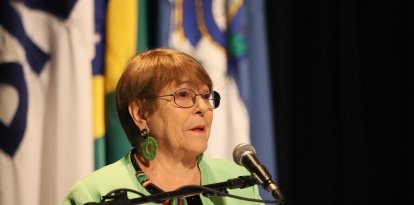
Delcy Rodríguez talks with Ambassador Laura Dogu

Ambassador Laura Dogu, head of the U.S. diplomatic mission in Caracas, met this Monday with Delcy Rodriguez at the Miraflores Palace and left a clear message to the Chavista regime of how the transition should be in Venezuela.
"Today I met with Delcy Rodriguez and Jorge Rodriguez to reiterate the three phases that Secretary Marco Rubio has laid out on Venezuela: stabilization, economic recovery and reconciliation, and transition," the U.S. Embassy in Venezuela communicated.
Hoy me reuní con Delcy Rodríguez y Jorge Rodríguez para reiterar las tres fases que el @SecRubio ha planteado sobre Venezuela: estabilización, recuperación económica y reconciliación, y transición - LFD pic.twitter.com/QoMbqgOf8S
— Embajada de los EE.UU., Venezuela (@usembassyve) February 2, 2026
The meeting took place just days after the United States and Venezuela resumed diplomatic relations, almost a month after the capture of dictator Nicolás Maduro in Caracas by direct order of President Donald Trump.

Politics
Rubio warns that the US could use force if Delcy Rodríguez does not cooperate
Virginia Martínez
In recent weeks, the Chavista interim regime, led by Delcy Rodriguez under the approval of Washington, has begun to take several steps towards a transition that, according to the Trump Administration, has as its ultimate goal to return Venezuela to being a functional state, with separation of powers and real democracy.
According to the organization Foro Penal, a recognized voice on human rights in Venezuela, 344 political prisoners have been released since January 8. However, there are still more than 500 political prisoners in the South American country.
Also, in a surprise move, Delcy Rodriguez announced on Friday a general amnesty law for political prisoners in Venezuela and the official closing of El Helicoide, the largest torture center in Latin America and one of the main prisons used by the Chavista regime to attack dissidents.
During a ceremony at the Supreme Court of Justice, which is sympathetic to the Chavista regime, Rodriguez indicated that the proposal will cover "the entire period of political violence from 1999 to the present", and that the law will be formally sent to the National Assembly, also controlled by the dictatorship and whose president is his brother, Jorge Rodriguez.
With this, the messages of the last few days from the United States directly addressed to the Chavista regime seem to put on track, step by step, a transition that promises to be laborious, complex and that could last several months.
LATEST