Vozinha and Cape Verde Make History and Face Argentina; Paraguay Faces Germany
The Blue Sharks drew 0-0 with Saudi Arabia and finished second in Group H behind — which defeated Uruguay 1-0; Uruguay finished third and was eliminated — and will face Lionel Messi’s team next Friday in Miami.
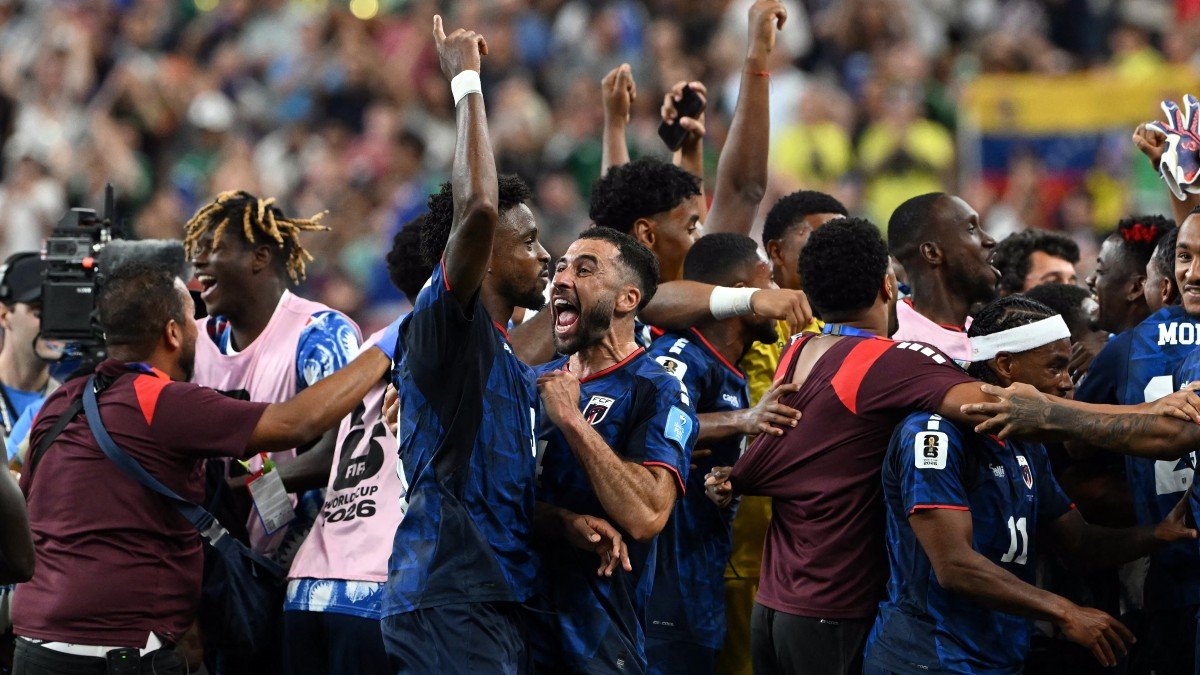
Cape Verde players celebrate their qualification

"Hope is as vast as the sea," goes the Cape Verdean national anthem, which made history this Friday by advancing to the Round of 16 in its first-ever World Cup, with three draws, and will face defending champion Argentina.
The Blue Sharks tied 0-0 with Saudi Arabia and finished second in Group H behind —which defeated Uruguay 1-0; Uruguay finished third and was eliminated— and will face the team led by Lionel Messi next Friday in Miami.
The game was bogged down in midfield for much of the match. The Africans were the more attacking side, though they struggled to penetrate Saudi Arabia’s penalty area, as the Saudis quickly dropped back and closed down spaces.
The Arabs seemed to be aiming for a long, drawn-out match, trying to capitalize on at least one lapse in concentration to score, and then holding firm and tightening their defensive structure again.
The match intensified in the final minutes, with attacks from both sides that tested the goalkeepers Vozinha, going viral on social media, and the Arab Mohamed Al-Owais, who denied the Africans a clear goal.

Without getting hurt
Vozinha, who rose to fame for saving everything in his debut against Spain (1-1) and prevent a loss to Uruguay (2-2), was praised by spectators as he took the field at Houston Stadium.
His nickname means “grandma” in Spanish, and he earned it because he was raised by his grandmother as a child.
Saudi Arabia started cautiously, while the Blue Sharks struggled to organize themselves and mount an attack, with flashes of brilliance from their captain, Ryan Mendes, as he tried to break through down the left flank.
The first shot on goal, however, came from Saudi captain Salem Aldawsari, who controlled the ball with his chest and took a shot, though it was blocked by the defense.
Next, Cape Verdean forward Willy Semedo tried his luck on his own.
In the 28th minute, a low cross from the right by Dailon Livramento went to waste. During the play, center back Hassam Altambakti, who was already injured, went down and was replaced by Ali Lajami.

The game became tense and defensive, with both teams mirroring each other’s tactics. The Sharks kept pressing down the left flank with Semedo, who was difficult to contain but lacked accuracy.
Meanwhile, the screens at Houston Stadium showed that their group rivals, Spain , were leading Uruguay 1-0 in Guadalajara.
The Cape Verdeans in the stands were celebrating because a draw in Texas would already qualify them.
Near the end of the first half (45+2), The Green Falcons managed to send a cross into the opponent’s box.
Mohamed Kanno’s header was saved by Vozinha. His mother, whom the goalkeeper had fought to bring to the Cup, celebrated the feat from the stands.
Sharks on the Attack
The Tiburones came out more aggressively in the second half. Jamiro Monteiro, who had been quiet in the first half, managed a shot that forced the Arab goalkeeper into action.
Shortly after, Kevin Pina—the player who had scored against Uruguay—tried a left-footed shot from outside the box.
Clearly, the team from the archipelago was superior. The Arabs, however, seemed to be banking on a long game. If they scored, given the current Spain-Uruguay score, they would advance to the Round of 16.
The newly substituted Mohammed Alshamat found space on the right and forced Vozinha to control the ball in two touches.
In the 73rd minute, Cape Verde had another clear chance. Bruno Da Costa received the ball in the opponent’s half, got behind his defenders, and delivered a pinpoint pass to Joao Paulo (77). Goalkeeper Al Ansari threw himself in front of the shot to make the save.
Near the end of the match, the Arabs managed to string together a play, culminating in a shot by Abdullah Alhamddan. But today, it was the Africans who made history. “Sing, my brother!” says their national anthem. And today, they have every reason to do so.
Paraguay Qualifies and Faces a Tough Opponent
Following Spain’s victory over Uruguay and the draw between Cape Verde and Saudi Arabia, the Albirroja team, led by Gustavo Alfaro, secured its spot in the Round of 16, one day after scoreless draw against Australia, in a match that left fans and the press in the South American country deeply dissatisfied.
The main reason for the criticism directed at the Guaraní national team—in addition to their lackluster offensive performance against the Australians—is that their status as the best third-place team left them in the difficult position of having to rely on other results and, if they advanced, facing a group winner. En this case, Paraguay already has an opponent: four-time world champion Germany.
Although the German team is the heavy favorite in this round, it is coming off a loss to another South American team, Ecuador, which secured its spot by deservedly defeating the team led by young head coach Julian Nagelsmann. Paraguay, known for its intensity off the ball and strong aerial play, will try to replicate Ecuador’s epic performance in a match that could be historic for the Guaraní team, which has never managed to beat a World Cup champion in the tournament itself.
However, in 2010, Paraguay came very close to defeating Italy, also a four-time champion; and, furthermore, pushed two teams—Spain and France—to the limit in 2010 and 1998, respectively, both of which went on to win the World Cup. So the Paraguayan national team has a reputation for being a tough nut to crack—and also for bringing “bad luck” to the European teams that have eliminated them in the past. It remains to be seen whether that will be the case for Germany or if the Paraguayans will make history.
LATEST