ANALYSIS
Mamdani presses full speed ahead with his socialist agenda, stirring up growing discontent across New York
In less than a month, the Democratic mayor has pushed through three controversial policies that are causing him conflict, legal problems, and a great deal of criticism: the tax on luxury second homes, the subsidized municipal supermarket, and the law to boycott Amazon and large shipping and delivery companies.
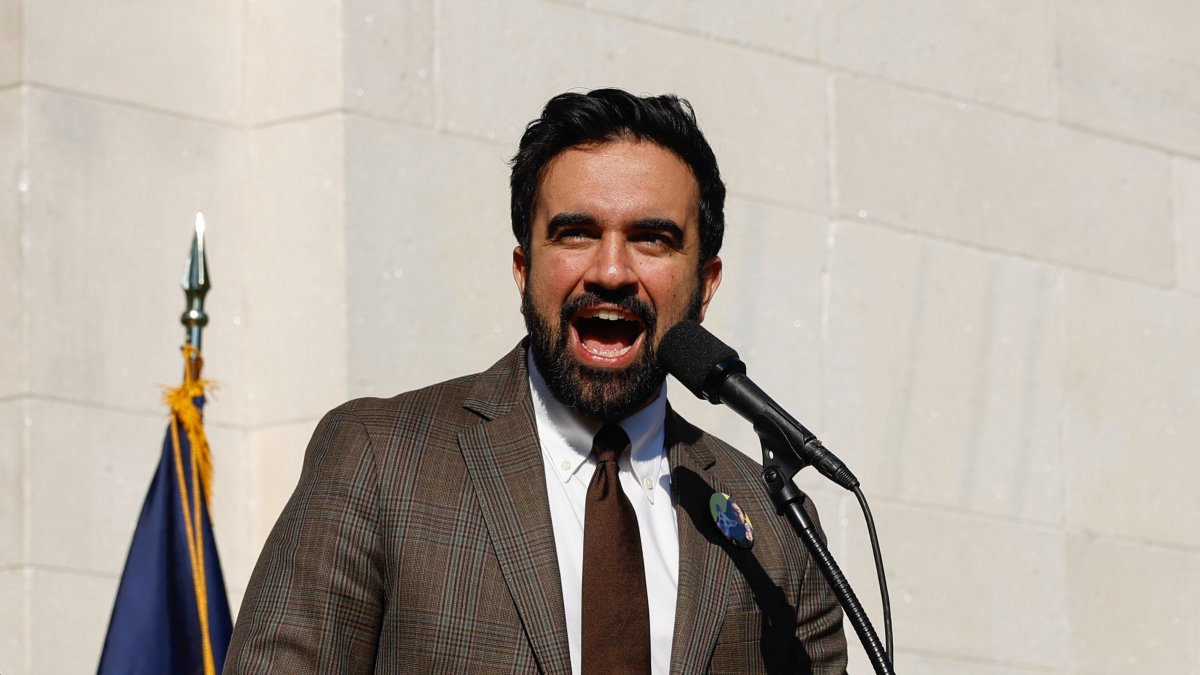
Mayor Zohran Mamdani in a file photo

On July 23, New York's socialist mayor, Zohran Mamdani, announced that the city had already begun sending letters to owners of luxury second homes in New York to collect the new "pied-à-terre" tax from them. A few days later, on July 27, the Democratic leader announced the creation—funded by $70 million in taxpayer money—of municipal supermarkets offering discounts of up to 30%, ostensibly to combat inflation. Now, on August 10, Mamdani announced that he will support a controversial plan that would require Amazon and other large package delivery companies to directly hire thousands of drivers or outsourced delivery workers, most of whom come from small businesses allied with these shipping giants.
All of these policies, which appeal to the emotions of New York voters, are not necessarily having the desired impact for the socialist mayor, whose plans for housing, affordability, and "fight" against big corporations are already causing friction among political rivals, city officials, large corporations, and, especially, small business owners and ordinary New Yorkers who are concerned that their businesses or livelihoods could vanish in the blink of an eye thanks to an administration that is stepping on the gas from the left.
In fact, according to Wall Street Journal reporter James Fanelli, Mamdani's "honeymoon" with New York is, more or less, over. This comes after the socialist leader had amassed significant popularity through clever communications and several months of trying to build bridges between concerned business owners and critics. But that image of Mamdani has faded, and he is now facing harsh criticism for his policies, some of which have already been blocked by legal action.
The first point of contention is the tax on luxury second homes itself. According to the WSJ, weeks after collection began, a judge suspended the measure after a group of residents—including a supporter of Mamdani himself—sued the city over errors in its implementation. The mayor's office had published an online list of more than 900,000 properties that might be subject to the tax—though many of them likely are not—and sent notices to 17,000 property owners warning them of the potential charge, some of whom claimed to have been city residents for decades.
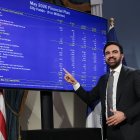
At the hearing, Judge Wayne Ozzi questioned the decision to make such a broad list public: "I'm sure it caused concern amongst people." The judge also noted that the Mamdani administration made errors that could have been avoided with a more rigorous review before sending out the notices. The city immediately filed an appeal, which put the court order on hold, but the episode has already left a mark on the implementation of Mamdani's flagship project. The White House, for its part, continues to evaluate federal legal actions to block the tax, which it described as a dangerous political experiment.
The second front opened by Mamdani is the plan itself for municipal supermarkets initially subsidized by the state—that is, New York taxpayers' taxes. The 44-page request for proposals published by the city's Economic Development Corporation revealed that only two of the five promised locations—one in Manhattan and another in the Bronx—actually exist so far; the remaining bidders must propose stores in neighborhoods that have not yet been identified. Chicago restaurateur Nick Kokonas, whose analysis of the document went viral, questioned the fact that the plan will not require identification or proof of income to make purchases: "No means test. Anyone can shop there." In other words, the taxpayer-funded subsidy will benefit high-income buyers living near a store just as much as low-income families in other parts of the city. However, Mamdani has said they could implement a requirement to present identification to make a purchase—a move that Democrats have harshly criticized in the run-up to the election. Other merchants, such as Andy Arons, former head of the Gourmet Garage chain, and Fernando Matteo of the United Bodegas of America group, agreed that the plan does not address the underlying problem of affordability and that it would be more efficient to expand existing food assistance benefits.
However, one of the harshest criticisms comes precisely from small grocery stores, which complain that the city, through the subsidy, is creating competitors with much lower prices that will affect the sales of unsubsidized private stores. Representative Mike Rulli, who ran a family-owned grocery business before entering politics, snapped, "You will put hundreds of these small businesses out of business. And a lot of these businesses are owned by immigrants."

Politics
Mamdani's first major fiscal setback: Judge blocks his tax on luxury homes in New York
Luis Francisco Orozco
From the federal government, criticism was also clearly heard: "So not only will New York taxpayers pay $70 million to build government-run grocery stores, they will also pay subsidies in perpetuity to keep them afloat while funding unfair competition against legitimate small businesses. One more problem with socialism: you eventually run out of other people's money," said Kelly Loeffler, administrator of the Small Business Administration.
Mamdani's scheme, in fact, is not unprecedented. Venezuela tried something similar starting in 1999, when the Chavista regime launched the state-run Mercal network to exempt the government from retail chain costs and offer subsidized products. That model, later expanded with the nationalization of private supermarket chains, collapsed due to the inability to sustain the subsidies and unfair competition against independent retailers. By 2015, the shortage rate for price-controlled products exceeded 80%, according to independent measurements. Analysts at the Citizens Budget Commission warned that New York could face precisely this dilemma: maintaining price freezes that will inevitably require constant subsidies, while at the same time, traditional retailers—which operate on margins of just 1% to 3%—are rapidly losing competitiveness to stores with unlimited government backing.
Economist Anne Rathbone Bradley of the Fund for American Studies even cited the case of Kansas City, where a municipally-run supermarket closed after months of empty shelves and theft. The expert attributed the failure to the fact that such schemes replace market logic—prices, ownership, incentives—with bureaucratic decisions driven by political sentiment rather than economic facts.
Politics
The illusion of the 'public supermarket': A lesson New York refuses to learn from Venezuela
Andrés Ignacio Henríquez
The third initiative promoted in Mamdani's bill—and the one that could draw in the most companies—is the so-called Delivery Protection Act, which the socialist mayor himself endorsed on Monday with the support of the Teamsters union.
The bill would require Amazon, FedEx and other delivery companies to directly hire the drivers who currently work for small subcontracting firms, rather than outsourcing that work. The mayor defended the measure by citing a 2025 Comptroller's Office report, according to which accidents resulting in injuries increased by 78% in neighborhoods where last-mile delivery centers were established. "Corporations like Amazon build billion-dollar business models by insulating themselves from accountability," he said in a statement.
The backlash was immediate. Amazon warned that, if the regulation were approved, it could move its delivery operations outside the five boroughs, which would put more than 5,000 jobs of drivers hired by its partners at risk. A study by the consulting firm AKRF estimated that the measure would increase the cost of receiving packages for each New York household by $664 per year. The opposition coalition New York Delivers, made up of delivery workers and small business owners, argues that up to 10,000 delivery jobs in the city could be lost, including some 3,500 in Harlem and neighboring City Council districts alone; according to the group, 82% of those workers do not have a college degree and 84% are not white, so Mamdani's anti-Amazon crusade would affect minorities in New York.
Among those with the most to lose are the subcontractors themselves, generally small business owners who currently employ drivers directly. Rudy Cazares, who operates an Amazon Delivery Service Partner and also works as a FedEx contractor in the city, said the law would leave him without a job: "I would be shutting my business down. I have no business." Cazares currently employs about 130 people, with wages ranging from $23.75 to $27 an hour, and told the New York Post that no city official has consulted with business owners like him before moving forward with the bill.
Given this situation, it is practically a foregone conclusion that the truce in New York is over. Now that Mamdani's socialist proposal is moving forward unabashedly, the Democratic mayor has seen his immense popularity—built up over the past summer—eroded, ushering in a phase of political conflict, criticism from voters, and legal battles.
LATEST