Deserted streets, hundreds of detentions, makeshift centers: ICE raids terrorize Doral, its Hispanic community
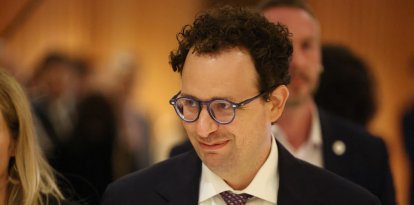
"As a lawyer, I don't want a disaster like the one we had before, but what's happening today makes no sense at all. It's an issue that needs to be addressed, but they're handling it in a terribly inhumane way," immigration attorney Andrés Rojas, a Doral resident, told VOZ.
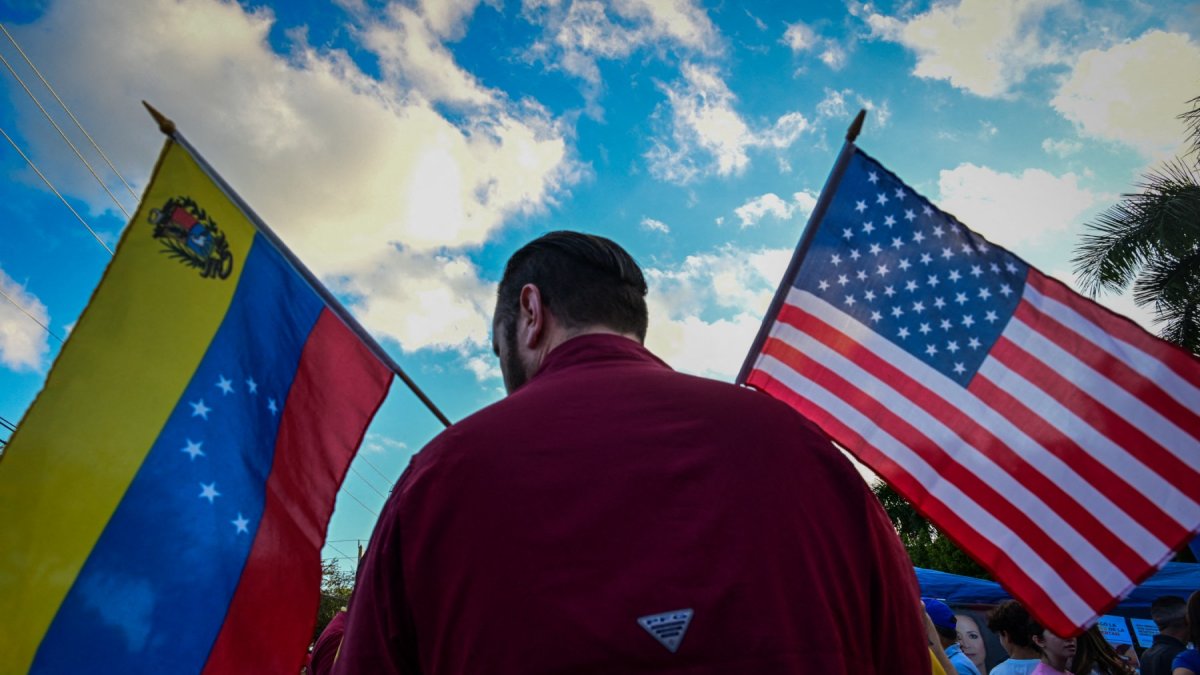
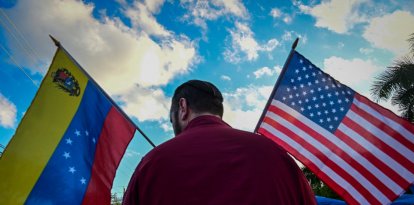
Venezuelans protest in Doral, Florida, on Jan. 4, 2026

For over a month now, the streets of Doral, a town in Miami-Dade , known for its large Hispanic population, looks like a scene many compare to the worst moments of the pandemic in 2020. Almost desolate, like a dystopian future, with businesses closed and few people out and about, many immigrants — most without clear immigration status but with pending cases that, in principle, allow them to remain in the U.S. — have decided to take refuge in their homes, keeping a low profile, putting their jobs and studies on hold due to the intense raids by ICE throughout South Florida.
In just the last few days, VOZ has learned of several cases in which U.S. Immigration and Customs Enforcement (ICE) acted swiftly to detain Hispanic immigrants who were driving, filling up their cars with gas, going to work or taking their children to school. This pattern is repeating itself throughout virtually all of South Florida and several states across the country. The Venezuelan community, which makes up a significant portion of Doral's total population — a city now famously known as "Doralzuela" — has been the hardest hit in this area. And dozens of Venezuelans have gone to the media to speak out about what they consider unfair and cruel treatment.
"What hurts me the most is the uncertainty, the fear, not knowing when I'll be able to get him out of there," said Karla Rincón, whose father was detained on his way to work. "Knowing that he's going through very difficult times there and yet we here still have to keep going out and fighting to be able to be with him… but even so, with the fear that the same thing could happen to us." This isn't the only case, and in fact, out of fear, many migrants choose not to drive at all.
"They want me to take their children to school, to take their mother to work, to take them to work because they don't want to drive," said Lisbeth Lovo, a Venezuelan ride-share driver and South Florida resident.
Although there is no accurate or official figure on the arrests in Doral, Florida is the state with the second-highest cumulative number of arrests from January to date, with 29,624, surpassed only by Texas, with 63,404. According to the Department of Homeland Security, Miami is the Florida city with the highest number of ICE arrests, with 4,862 during those months, followed by Orlando with 3,680 and Tampa with 3,271. In Doral, although it is a much smaller city and has not reached those figures, the number of detentions is in the dozens, with multiple cases of immigrants being detained who have pending asylum cases and no criminal records, as stated to VOZ by immigration attorney Andrés Rojas, who lives in the city, and Doral City Councilman Rafael Pyneiro, who has been denouncing what he considers "inhumane" abuses against immigrants and "honest families" who have not broken the law.
"Many of these people have cases that have been pending for seven, 10 or 15 years, waiting to be heard in immigration court. They're still waiting, and it's not their fault," Pyneiro said in a conversation with VOZ. "You're telling people who have been doing the right thing all these years — who have been paying taxes and contributing to our economy — 'I'm treating you like a criminal.'"
The councilman emphasized that this is an unprecedented phenomenon in the country: "That had never happened under a previous administration. It's the first time they're taking action or detaining people in connection with this type of immigration proceeding. It's something that hasn't been seen before."
The cases documented by Pyneiro and Rojas highlight the difficult situation faced by a detained immigrant, who endures the uncertainty of a process that is not standardized and that depends, to a large extent, on an immigration judge hired by the Trump administration, whose political goal is to carry out a campaign of mass deportations. In addition, it also takes a heavy financial toll — hiring a lawyer can easily cost between $80 and $200 an hour, and bail can range from $6,000 to $12,000.
All of this is happening amid a legal loophole, which attorney Rojas also explained in a conversation with VOZ: "That pending asylum application, while it's in process, does not grant migrants a defined status. However, in theory, it does not make them undocumented either. So, there's a sort of legal loophole in the law, and that further complicates the situation."
Rojas also explained a key distinction: "This needs to be clarified because there are criminal detentions, and immigration detention is a civil detention." In other words, for a detained migrant, there is a distinction that should, in theory, entail different conditions than those of someone detained for a crime. However, the attorney himself noted that many migrants are deprived of their liberty for an indefinite period while their case proceeds, even if they have never committed a crime.
That is why the raids are terrorizing Doral, and many still prefer to stay home rather than expose themselves to a tortuous, exasperating process that can lead to financial ruin or back to Venezuela, a country where repression continues — with more than 300 political prisoners behind bars — and where the economic and energy crisis is flaring up again, especially following the twin earthquakes that left more than 6,000 victims according to official figures.

Political conflict between the federal government and local allies
The situation in Doral and throughout Florida has sparked a direct confrontation between the Trump administration and some Republican members of Congress from the Sunshine State who view the ICE raids with great concern.
The strongest voice came from María Elvira Salazar, representative for Florida's 27th district, who challenged President Trump on his immigration policy, warning him that in many cases immigration authorities had overstepped their bounds and that Hispanic families should not be confused with illegal immigrants with criminal recordss. Salazar was one of the congresswomen who championed the Dignity Act, a bipartisan immigration reform proposal that was criticized in MAGA circles and that provided a path to legalization for millions of immigrants without clear status.
"Mr. President, some of your immigration enforcement efforts have gone too far," Salazar said in an ad, arguing that in July, 50% of those detained by ICE had no criminal convictions or pending charges. "Be careful what your advisers are telling you about immigration policy."

The Department of Homeland Security responded harshly to the congresswoman in a statement sent to Fox News: "Under the leadership of President Trump and Secretary Mullin, there will be NO amnesty for illegal aliens. Not now, not ever. DHS is focused on delivering the most HISTORIC mass deportation campaign in American history — exactly as President Trump promised." However, 24 hours later, Trump clarified his administration's response to Salazar's criticism, hinting that he has no problem with the congresswoman even though they disagree on immigration.
"She's a good person. I got her elected. Without me, she wouldn't have been elected," he said. "When I endorsed Maria, she ended up winning. It was the biggest surprise in Congress during that period. She's become a little softer on the border. I get it, I get it. But I'm simply not there."
Despite the federal government's continued push for deportations, Salazar's announcement comes at a politically sensitive time. Her district, where Trump swept the vote in 2024 and she won comfortably, has become highly competitive according to recent polls, which spells bad news for Republicans, who aim to maintain control of both chambers and now see their dominance in Florida or Texas may be eroding due to Hispanic discontent. Pyneiro agrees with this assessment: "We have an election coming up in November, and if the Republican Party continues on this path, it will undoubtedly face serious problems."
Amid the intensification of raids, Pyneiro met with a group of immigration lawyers in the city to document the cases they were handling, and with that information, he compiled a report that he sent to the Congress of the United States in September 2026, containing concrete data — not just a generic letter of complaint — about immigrants in Doral with pending asylum cases who were detained despite having no criminal record. The city councilman told VOZ that the federal government is aware of the matter and that Florida representatives and senators, including Senator Rick Scott's office, are helping to address the situation so that things can begin to calm down and return to normal.
Doral is a community that Trump, in fact, visited in March 2026, just two months after Maduro's capture in Caracas, where he was welcomed with open arms. Historically, Venezuelan and Cuban communities have strongly supported the president and the Republicans because of their opposition to communist regimes in the region. However, due to his closeness to the Chavista official Delcy Rodríguez, Venezuela's interim leader, and his heavy-handed immigration policy, the Venezuelan electorate in the U.S. has suffered two consecutive setbacks at the hands of the president they supported by a wide margin in recent election cycles.

A tortuous process
The legal loophole described by Rojas — which the Trump administration exploits to justify its detentions — translates, in practice, into a confusing process even for those who have never committed a crime. Most detainees from Doral first pass through the Miramar center, a makeshift facility intended for stays of just 12 hours within the ICE system, but where many end up crammed together for three, four, five days, and even weeks for the least fortunate. From there, some are transferred to Krome in Miami, a center that Rojas describes almost as an exception within the system: "You could say it's like the resort of detention centers," with beds, television, and tablets for video calls. The contrast is even greater with the centers in Texas, Louisiana, Oklahoma and Arizona, where former prisons have been converted into facilities with actual cells, and conditions for detainees are harsher.
Added to this is a structural problem that concerns Rojas and other immigration attorneys. As the attorney told VOZ, immigration judges are not part of the independent judiciary but are administratively subordinate to the executive branch. "These judges are 100% dependent on the executive branch. They report to the attorney general, and the attorney general reports to Donald Trump," he said, adding that he is aware of cases where judges were removed from office "simply because they did not overturn a decision they did not agree with."
This subordination, combined with the massive hiring of new judges, has accelerated the processing time to a month and a half for those who remain in detention. Some interpret this as almost an "express trial" and a game in which the Trump administration has to show monthly numbers regarding detentions and deportations, with the Border Czar, Tom Homan, at the helm.
For families with joint asylum cases, this speed creates an additional problem: When a father is detained, his case goes to immigration court, but the rest of the family remains in a separate legal limbo. And for those who end up being deported to Venezuela, the risk doesn't end there. According to Rojas, some judges are already citing the capture of former dictator Nicolás Maduro as proof that "conditions have changed" in the country, a claim that the lawyer and other activists and experts flatly reject given that repression and political prisoners continue.
Those who prefer to avoid that process have a different, shorter option: the voluntary self-deportation program. It is carried out through the CBP Home app, offering a free plane ticket and a cash incentive that started at smaller amounts and today, according to Rojas, hovers around $3,000.
Fear of being captured and a strained economy
Fear has already transformed daily life in Doral. Pyneiro said that many parents have stopped driving their own children to school, opting instead for Uber or taking turns with neighbors, and Rojas described Doral as a community that now closely follows websites like Iceout.org, where volunteers report real-time sightings of ICE across the country, in an effort to anticipate where to avoid running into a raid.
The economy has also suffered due to the raids, with sales falling by up to 40% because customers are simply not leaving their homes and are spending much less.
As a direct response to the situation, Pyneiro is organizing an educational event this Monday, Sept. 21, at Albizu University, from 4:00 to 7:00 p.m., designed to provide legal guidance to affected families and offer assistance — including pro bono services — to those who cannot afford a private attorney. Those unable to attend in person may register and participate virtually, the councilman noted.
The goal is also to help the community overcome its fear as the arrests subside and the economy recovers. To that end, Pyneiro said that he and local politicians are working to help make the Federal government understand that is not taking the right approach: "They're going about it the wrong way. They're making mistakes with the people they're detaining."
Both Pyneiro and Rojas also agree that the immigration problem did not begin with this administration. Rojas traces the origin of the bottleneck to around 2014, noting that no government, regardless of party, has resolved it since then. "It has never been a priority for any administration," he said. "They are victims of that system." Despite his criticism, the lawyer made it clear that he doesn't long for the previous situation either, when, during the Biden administration, the border faced its worst crisis in several decades: "As a lawyer, I don't want a disaster like the one we had before, but what's happening today doesn't make any sense either. It's an issue that needs to be addressed, but they're handling it in a terribly inhumane way."
LATEST