Economist issues warning on Voz News about Fed's decision to raise rates: 'It makes no sense. The US economy can't afford this'
According to the institution's own indicators, the U.S. economy continues to perform well.
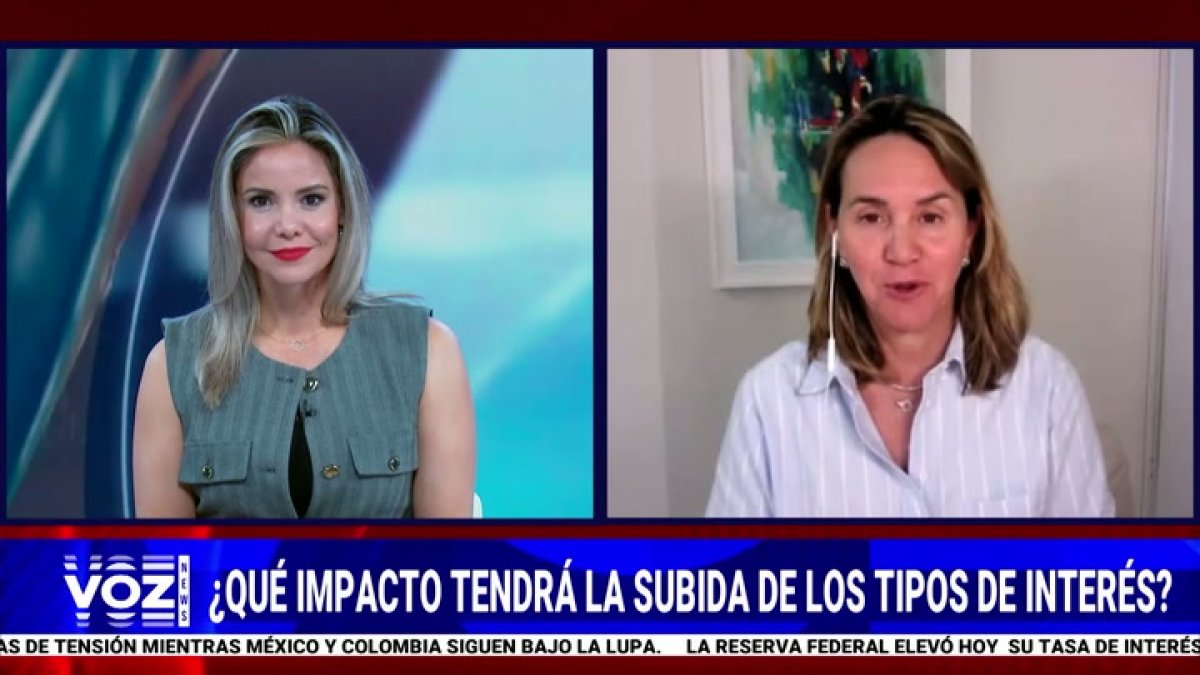
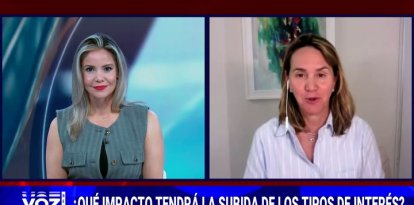
María Lorca-Susino on Voz News.
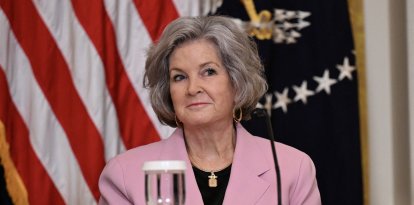
University of Miami economics professor María Lorca-Susino questioned the Federal Reserve's decision to raise interest rates during an interview on the Voz News newscast on Wednesday, and even warned that the measure could end up slowing down an economy that, according to the institution's own indicators, continues to perform well. During her interview with anchor and executive director Karina Yapor, the economist pointed out that there is a contradiction between the Fed's assessment and the decision it made.
"So, it's a contradictory message, because the country's economy is actually doing well, but I don't think this rate hike is what the economy needs right now," Lorca-Susino stated. The professor argued that the decision is "slowing economic growth" and "slowing job creation." "This is putting the brakes on the economy, which is exactly what we don't need right now," she added, noting that the country "is supposedly creating jobs, is growing and we're seeing industrial development." In her view, "it's like trying to slow down growth, which makes no sense at all" — a decision she described as "very harmful" with consequences that remain to be seen.
During the interview, Lorca-Susino explained that the Federal Reserve justified the interest rate hike primarily based on the strength of the labor market and economic growth. "What they've explained is that they've raised interest rates, first because they say the labor market is very strong," she explained.
The economist also referred to inflation and noted that, when gasoline and energy prices are excluded, the indicator remains close to 2%. "When you look at core inflation — that is, inflation that excludes gas prices — inflation remains very stable, close to 2%," she said.
Lorca-Susino noted that rising energy costs are having a significant impact on inflation and recalled that the Fed had previously considered some price increases to be temporary. "The problem with gasoline, fuel prices and energy is what is, so to speak, driving inflation up significantly," she explained.
When discussing the consequences for Americans, the professor warned that rising interest rates will particularly affect those with debt. "Everyone who has debt is going to lose out," she stated. As she explained, costs could rise for credit cards, personal loans, loans to small and medium-sized businesses and 30-year mortgages.
"Because what this does is raise the cost of money," Lorca-Susino explained. The Fed's strategy, she added, aims to make borrowing more expensive "so that we borrow less, so that, let's say, we invest less, so that we spend less." However, she described this mechanism as "a punishment for economic growth."
The economist also analyzed the yield on 10-year Treasury bonds, which reached 5.04%. She explained that this level represents the return investors expect to earn for lending money to the U.S. government over a decade. "You're going to ask the United States to give you a 5% return because you're lending it the money," she noted.
Finally, Lorca-Susino questioned the Federal Reserve's leadership and raised the need for institutional renewal. "I believe there are institutions that need a complete overhaul from top to bottom," she stated. "So, I think this is going to be more of the same," she concluded.
You can watch the full interview by clicking on the video below.
LATEST