Washington accuses network linked to Russian intelligence of planning assassinations and financing terrorism
The Department of Justice has charged five people, including two Cubans and one Venezuelan, with allegedly being part of a network working for Russian intelligence.
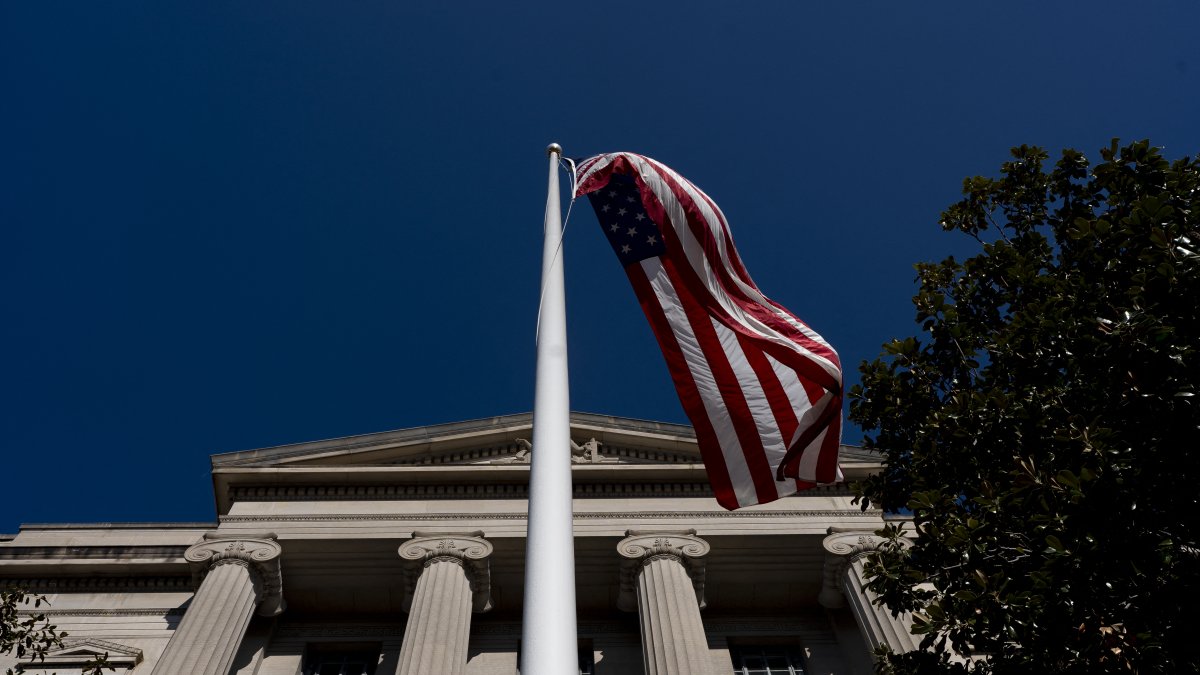
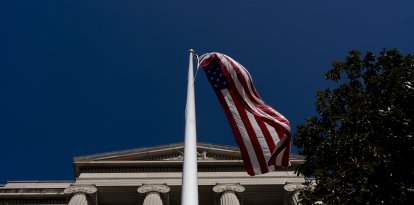
The Department of Justice (DOJ) in Washington (File photo)

The Department of Justice announced charges against five individuals allegedly linked to the intelligence services of Russia, accusing them of participating in an international network dedicated to financing acts of terrorism and organizing contract killings, including plans to kill people on U.S. soil.
The indictment, declassified by the U.S. Attorney's Office for the Southern District of New York, alleges that the so-called 'RIS Network' has been operating since at least 2024 and was allegedly used to target Russian dissidents and defectors, as well as targets in countries considered allies of Ukraine. The five defendants remain at large.
Among the defendants are Yuri Khrameev, 63, identified by authorities as a former colonel in the Russian intelligence services; his son, Kirill Khrameev, 27, identified as an officer with the Russian Federal Security Service (FSB); and Cuban citizen Oemis Romagoza Durruthy, 35, whom the DOJ credits with playing a significant role in coordinating the network's operations.
Also charged were the 35-year-old Cuban Yaidel Delgado Suarez, alias "Viking," whom prosecutors describe as a recruiter for the organization, and the 22-year-old Venezuelan Angel Eduardo Castro. According to the indictment, both participated in attempts to recruit individuals in the United States to surveil and allegedly assassinate a prominent Russian dissident residing in the country.

Up to $40,000 to "eliminate" a dissident
One of the central episodes in the case occurred this summer.
According to the DOJ, the network recruited a person residing in the United States to carry out surveillance on a Russian dissident. Delgado Suarez allegedly sent two locations related to the victim and offered between $1,000 and $1,500 to obtain photographs and videos of those locations.
Subsequently, Delgado Suarez and Castro allegedly offered $40,000 to "eliminate" or make the target "disappear."
When the person contacted refused to directly carry out the murder, the defendants allegedly asked if he knew anyone capable of doing so. Delgado Suarez also stated, according to the case file, that he had "people in Mexico" who could carry out the murder.
The director of the FBI, Kash Patel, argued that the case reveals an alleged attempt by Russian intelligence services to assassinate a dissident within the United States and presented it as an example of what U.S. authorities consider "transnational repression."
Another alleged plot in Europe
According to prosecutors, Kirill Khrameev allegedly recruited a U.S. citizen to photograph the target's residence in exchange for $200. Subsequently, Yuri Khrameev allegedly offered him approximately $25,000 to kill the target, claiming that the victim was spreading information hostile to Russia.
After the recruit refused, Khrameev allegedly proposed other jobs, such as setting warehouses on fire or attacking an electrical substation, and explained that he intended to act against countries supporting Ukraine, according to the indictment.
The role attributed to Cuban Oemis Romagoza
The DOJ also identifies the Cuban national Oemis Romagoza Durruthy as responsible for coordinating travel and logistics for the network's operations in Europe.
Prosecutors allege that in June 2024, he participated in the planning of an attack in Prague, Czech Republic by identifying potential targets and arranging transportation for one of the participants.
Months later, in September 2024, he allegedly coordinated the logistics of another operation in Lithuania, including travel reservations and communications with individuals involved in the attack.
The prosecution also alleges that Romagoza communicated with Yuri Khrameev and obtained images of one of the residences linked to the Russian dissident, which was subsequently placed under surveillance in the United States.

Charges of terrorism and contract killing
The five defendants face a charge of conspiracy to finance terrorism, a crime that carries a maximum sentence of 20 years in prison.
Yuri Khrameev, Yaidel Delgado Suarez, and Angel Eduardo Castro were also charged with conspiracy to commit murder-for-hire, a charge carrying a maximum sentence of 10 years in prison.
The investigation was led by the FBI's Counterintelligence Division in New York, with support from the Washington field office and the Department of Homeland Security.
Attorney General Todd Blanche stated that authorities will take action against any attempt by foreign adversaries to promote violence within the country.
LATEST