Supreme Court rules against Rastafarian whose dreadlocks were cut off in prison
The highest court ruled 6-3 that Damon Landor cannot claim damages under the Religious Land Use and Institutionalized Persons Act (RLUIPA).

File photo of the Supreme Court in Washington, D.C.

The Supreme Court ruled Tuesday against Damon Landor, a Rastafarian who was seeking financial compensation after officials at a Louisiana prison cut off his dreadlocks even though he argued that the action violated his religious beliefs.
According to a report by NBC News, the Supreme Court ruled 6-3 that Landor cannot claim damages under the Religious Land Use and Institutionalized Persons Act (RLUIPA). The decision divided the justices along ideological lines, with conservative justices in the majority and liberal justices dissenting.
The case dates back to 2020, when Landor was transferred to the Raymond Laborde Correctional Center while serving a five-month sentence for a drug-related offense. According to the case record, officials handcuffed him to a chair and shaved his head despite his protests.
Prior to the incident, Landor had shown officers a copy of a binding court ruling stating that cutting the dreadlocks of a Rastafarian constituted a violation of his religious rights. Until then, he had not had his hair cut for 20 years, in accordance with a practice known as the Nazirite vow.
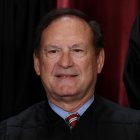
In writing the majority opinion, Justice Neil Gorsuch noted that RLUIPA, which applies to federally funded local prisons, does not allow for claims for damages against individual officials. He added that the case could only proceed if those officials had expressly agreed to assume liability under that federal law.
The prison system amended its personal hygiene policy
Landor’s attorneys had asked the Supreme Court to authorize damage claims under RLUIPA, citing a 2020 decision that allowed for damages under a similar law known as the Religious Liberty Restoration Act. However, Louisiana argued that it should not be liable for those damages because RLUIPA applies to federal officials, not state officials.
LATEST