ANALYSIS
Alito and Thomas warn the Supreme Court has opened the door to breaking with the principle that the ‘Constitution is color-blind’
In the case “U.S. v. Donte J. Carter,” the justices warned that considering race as a key factor in police stops is dangerous and leads to special rules for certain groups.
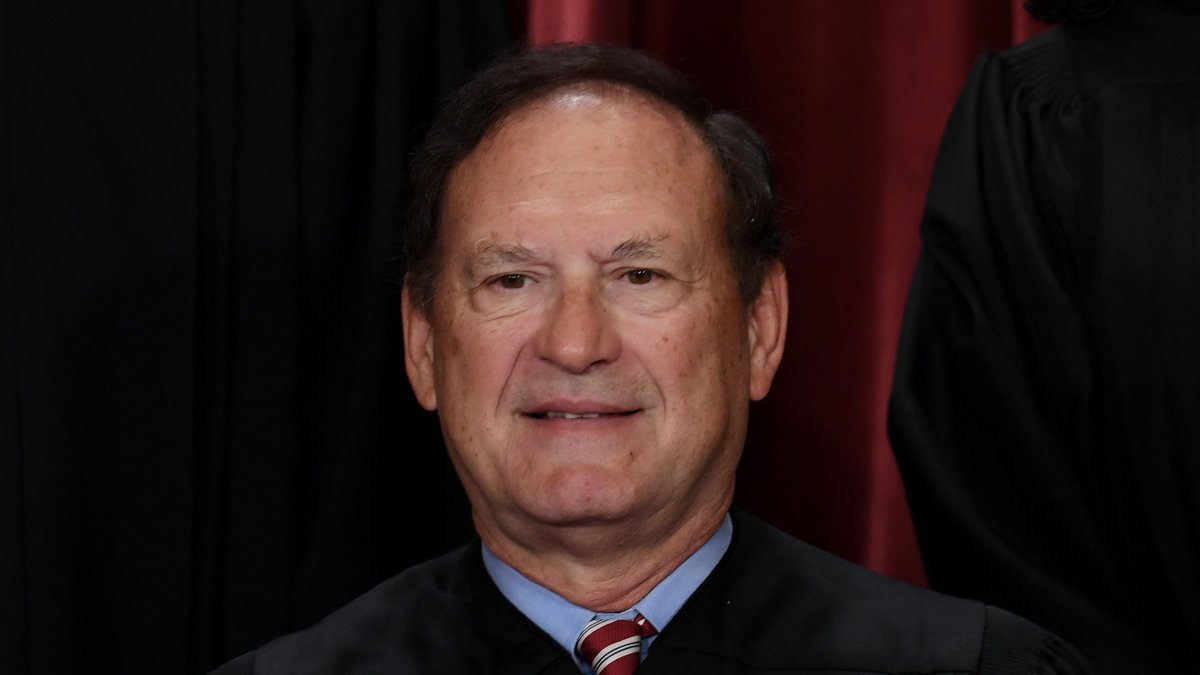
Supreme Court Associate Justice Samuel Alito

Supreme Court (SCOTUS) Justices Samuel Alito and Clarence Thomas expressed their disagreement on Monday following the court’s decision not to review a controversial case that, according to them, compels police officers to apply different rules based on people’s race.
The case, known as U.S. v. Donte J. Carter, involves a black man who was stopped by police in Washington, D.C. During the search, officers recovered a .40-caliber handgun allegedly stolen from an FBI vehicle. However, the U.S. Court of Appeals for the District of Columbia overturned the convictions for gun possession and theft, arguing that the arrest was unlawful because there was no reasonable suspicion from the outset.
Alito rejects the use of racial stereotypes by police
The Court of Appeals considered Carter’s race a key factor and held that black people are “especially distrustful of law enforcement” and, as a result, less likely to comply with officers for fear that their constitutional rights will not be respected.
Politics
Supreme Court limits federal government's ability to confiscate weapons from drug users
Williams Perdomo
According to Fox News, Alito and Thomas warned that this approach is dangerous because it allows an individual to be treated differently based on statistics or racial stereotypes that “purports to show that members of the racial or ethnic group to which he belongs are more likely to act in a certain way than are members of other groups.”
According to Alito, “Here, the special treatment helped the individual; in other situations it will not,” he noted.
Justices argue that the Constitution does not distinguish by race
The justices argued that the ruling forces police officers to quickly assess people’s race and create special rules for certain groups. Alito asked: “If officers and courts must craft special rules for black persons, what about dark-skinned Latinos, other Latinos, and members of other minority groups?”
Politics
SCOTUS orders lower courts to reexamine Voting Rights Act rulings in Mississippi and North Dakota
Carlos Dominguez
Both justices noted that the Constitution is “color-blind” and that, with very limited exceptions, it does not allow the government to treat people differently based on their race. They cited important precedents such as Students for Fair Admissions v. Harvard and Shaw v. Reno, rejecting the idea that it can be assumed that all people within the same racial group think or act in the same way.
This case reignites the debate over the extent to which racial factors can be incorporated into police and judicial proceedings, and upholds a standard that could complicate the work of law enforcement in the District of Columbia.
LATEST