The empire of privilege is crumbling: The heirs of the Cuban regime who ended up in the US
From the Sierra Maestra to Miami: Washington’s growing crackdown on relatives of the Castro elite is focusing on dozens of cases.
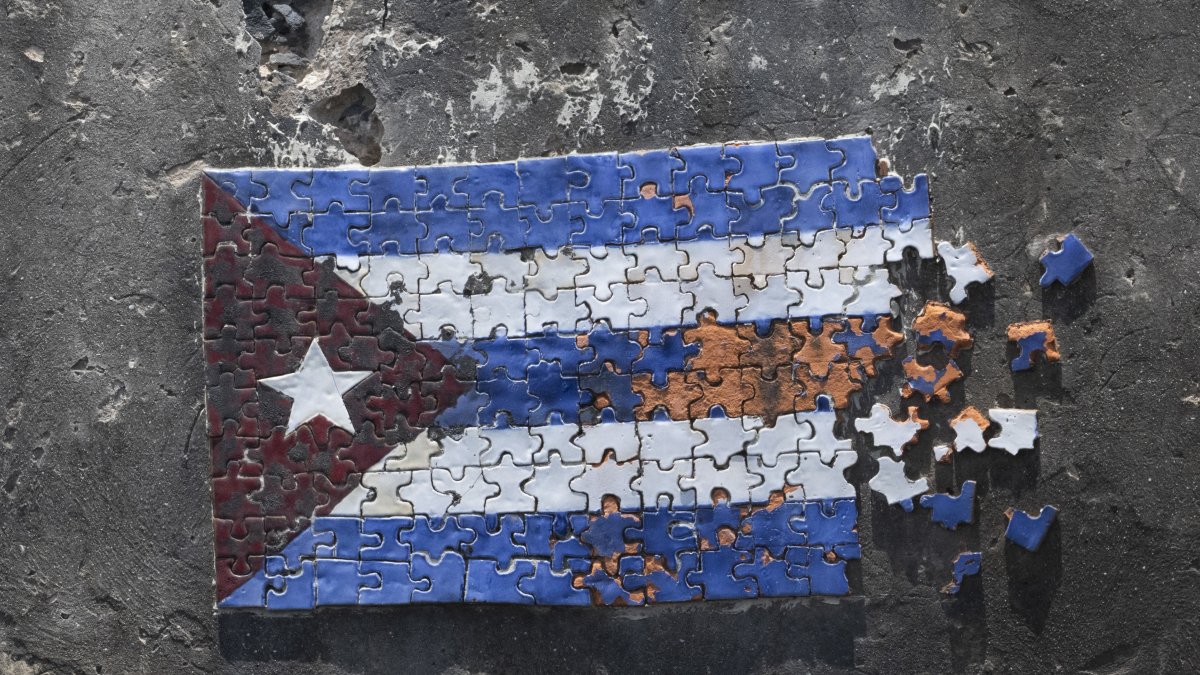
A mosaic of the Cuban flag, weathered by time (Archive)

While millions of Cubans struggle to survive amid power outages, shortages and unprecedented emigration, one question has haunted the Cuban "nomenklatura" for years: Why do so many relatives of the men and women who govern the island end up living, studying, investing or doing business outside of it, often in the United States?
The question returned to the center of the debate following a series of actions by U.S. authorities against individuals with family ties to key figures in Cuba’s political, military and economic apparatus. In just a few weeks, two high-profile cases put direct relatives of members of the revolutionary leadership in the spotlight.
What until recently seemed like a political discussion within the Cuban exile community began to transform into a visible public policy of Washington.
Washington’s message
For years, U.S. sanctions focused on Cuban leaders, state-owned enterprises, and high-ranking military officials.
What’s new is that the scrutiny now appears to be extending to close relatives and individuals linked to Havana’s power structures.
The strategy has been driven by the State Department and the U.S. immigration apparatus on the grounds that the United States should not serve as a refuge for individuals closely related to those who prop up the Cuban regime.
Case 1: The daughter of the general who fought alongside Fidel
The most recent case is that of Alina Rosales Aguirreurreta.
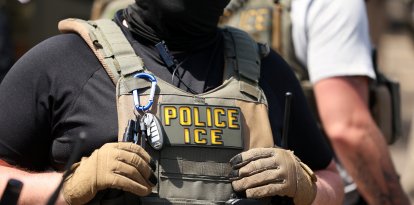
ICE confirmed that the woman was detained in Florida and remains in immigration custody while awaiting a hearing. Authorities maintain that she entered the country on a tourist visa and remained there after her authorized stay expired.
But the significance of the case lies not solely in her immigration status. Rosales Aguirreurreta is the daughter of Ulises Rosales del Toro, one of the historical figures of the Cuban Revolution and one of the regime’s most powerful figures.
A veteran of the Sierra Maestra, a commander in Angola, former chief of the general staff of the Revolutionary Armed Forces, former minister and member of the Political Bureau, Rosales del Toro was for decades part of Castro's inner circle.
His daughter lived in Miami. The image had an enormous symbolic impact within the Cuban community.
Case 2: The sister of the woman who runs the GAESA military-economic empire
A month earlier, Washington took an even more forceful action.
Adys Lastres Morera was arrested after the State Department revoked her permanent residency. She remained in immigration custody while removal proceedings were underway.
Her sister is Ania Guillermina Lastres Morera, CEO of GAESA.
GAESA is not just any company.
It is the business conglomerate controlled by the Revolutionary Armed Forces that dominates a large part of the Cuban economy, including tourism, finance, foreign trade, ports and infrastructure. Various estimates rank it as the most powerful economic entity in the country.
According to statements cited by U.S. authorities, Adys Lastres resided in Florida and was involved in real estate activities while maintaining ties to structures linked to the regime.
Politics
No more business in Florida? US arrests a direct relative of the Cuban military leadership in Miami
Andrés Ignacio Henríquez
Beyond the arrests: The world of the heirs to power
The two arrests did not occur in a vacuum.
For years, journalistic investigations, television reports and specialized media outlets in the exile community have documented the presence in the United States of children, grandchildren and relatives of high-ranking Cuban leaders.
Among the names that have appeared repeatedly are descendants and relatives of:
- Senior executives of GAESA.
- Long-standing members of the Revolutionary Armed Forces.
- Communist Party leaders.
- Officials of the Council of State.
- Diplomats and ambassadors of the regime.
In many cases there are no criminal charges or immigration proceedings.
However, this political contradiction has been repeatedly exploited by critics of the regime: while the official narrative claims “U.S. imperialism,” numerous relatives of leaders have sought academic, business or residential opportunities outside of Cuba.
The Castro clan and its legacy
No family better symbolizes this debate than the Castros.
For years, international media have documented the lifestyles, businesses, travels and activities of the children and grandchildren of Fidel and Raúl Castro, some with business ties in Europe and others with international connections that contrast sharply with the daily reality of the average Cuban.
There have also been reports about Raúl Guillermo Rodríguez Castro, known as “El Cangrejo,” Raúl Castro’s grandson and for years associated with the most exclusive circles of Cuban economic power.
Although he is not facing any known immigration proceedings in the United States, his name often comes up in discussions of the wealth and privileges accumulated by the families of the ruling elite.
Cases that may follow
The arrests of Alina Rosales Aguirreurreta and Adys Lastres Morera suggest that Washington is willing to scrutinize not only regime officials but also individuals who benefited from family ties to Cuban power structures.
For now, both cases remain exceptional. But within the Cuban exile community, many believe they may be just the beginning.
Other names under scrutiny
In June 2026, journalistic investigations revealed that Ana Adis Cardero Pacheco, the mother-in-law of Alejandro Castro Espín, resides in Hialeah, Fla., and travels regularly between the United States and Cuba. Alejandro Castro Espín is the son of Raúl Castro, a brigadier general and one of the most influential figures in the Cuban security apparatus.
After the case came to light, U.S. Rep. Mario Díaz-Balart formally requested a review of the immigration status of family members of high-ranking Cuban officials living in the United States.
So far, no public charges have been filed, nor have any immigration proceedings been announced against Cardero Pacheco.
The same investigation identified Meurys Yisell Rueda Cardero, the sister of Annalie Lilliam Rueda Cardero—wife of Alejandro Castro Espín—as a resident of South Florida.
Cuban media reports indicated that holds U.S. citizenship and appears to be linked to business activities in the United States.
As in the previous case, there are no public records of arrests, criminal investigations or deportation proceedings.
The contradiction that haunts the Castro regime and its families
For more than six decades, the Cuban regime has built much of its political legitimacy on its confrontation with the United States. However, the same paradox arises time and again.
When it comes time to study, invest, buy property, develop businesses or build a future for their families, numerous members of the inner circle end up looking toward the very country that for decades was portrayed as the Revolution’s historic enemy.
That contradiction, more than any sanction, is perhaps what causes the most political damage to Havana’s official narrative.
LATEST