ANALYSIS
Haiti, Jamaica and Cuba try to get back on their feet after Hurricane Melissa's devastation
The weather phenomenon is battering the Bahamas with “damaging winds and torrential rains” after killing at least 34 people across the Caribbean.
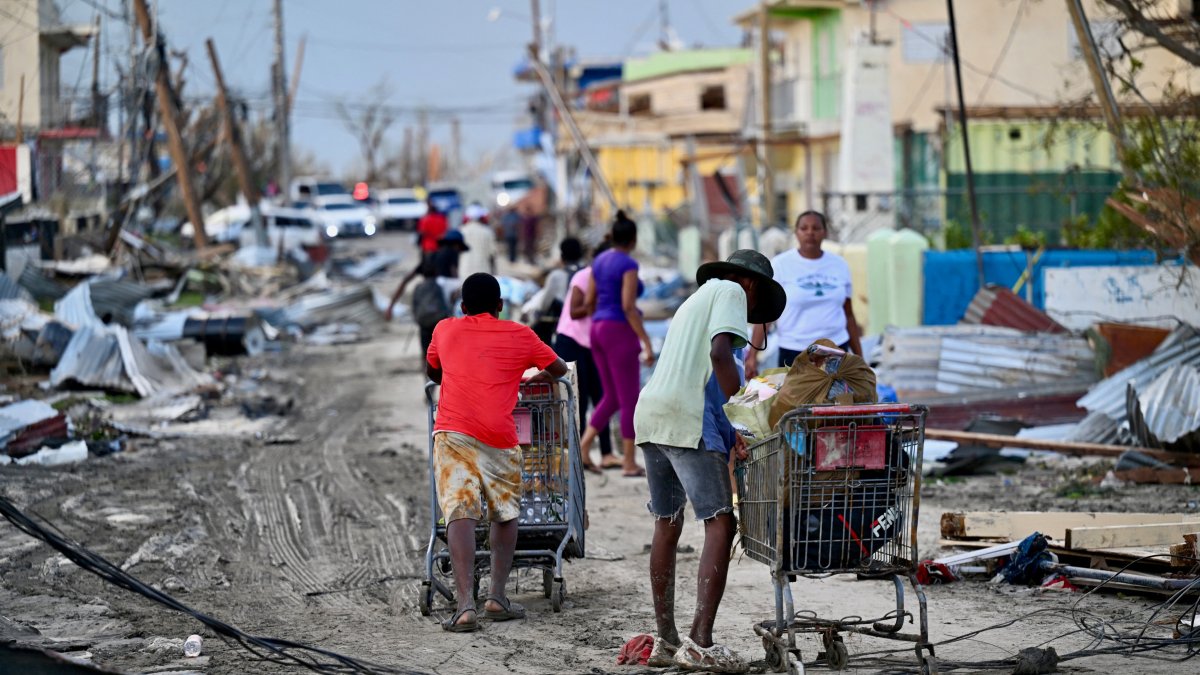
Jamaican residents try to retrieve belongings in the wake of Melissa

The Caribbean awakens amid the rubble as Haiti, Jamaica and Cuba begin a long road to recovery following Hurricane Melissa, one of the most powerful storms ever recorded in the Atlantic, which left a trail of destruction, death and isolated communities.
In Jamaica, where Melissa made landfall as a Category 5 hurricane—the highest level on the Saffir Simpson scale—the roar of chainsaws and heavy machinery marked the start of reconstruction on Thursday. In the island’s southeast, government brigades and volunteers worked to clear roads blocked by trees and debris, attempting to reach completely isolated communities.
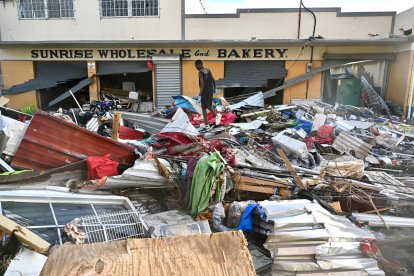
Community of Black River, Jamaica, in the aftermath of Hurricane Melissa.
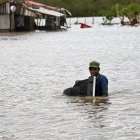
“I don’t have a home now, but I have a life,” Sheryl Smith, a resident of St. Elizabeth Parish who lost the roof of her house, told AP. Her neighbor, Sylvester Guthrie, clung to a bicycle—it was all he had left. For thousands of Caribbean residents in the storm’s aftermath, survival is their only consolation: they are alive.
Authorities estimate that up to 90% of the roofs in the coastal town of Black River were destroyed. Prime Minister Andrew Holness called the area “the epicenter of the devastation” and confirmed that more than 25,000 people remain in shelters. About 77% of the island is still without power.
Humanitarian flights began landing at Kingston International Airport, which reopened Wednesday night, carrying shipments of food, water, and medicine. The U.N. urged the international community to increase aid describing the damage in Jamaica as "unprecedented."
Where is Melissa headed?
Although it has weakened to a Category 2 storm, it still brings high winds, torrential rains, and storm surge to the southeastern Bahamas.
The National Hurricane Center reported that the system will move rapidly northeast and could re-intensify before approaching Bermuda Thursday night.
Afterward, it is expected to gradually weaken offshore, leaving a trail of destruction and flooding across the Caribbean.
Pain and flooding in Haiti
In Haiti, torrential rains have caused catastrophic flooding, particularly in the southern region, where at least 25 have died and 18 remain missing. In the capital, Port-au-Prince, floodwaters swept through camps of displaced people already struggling with gang violence.
"Melissa took everything from me," Steven Guadard, a resident of Petit-Goâve who lost his four children during the hurricane, told reporters in tears. The Civil Protection Agency reported that 20 people died in the locality, including 10 children.
The presidential transitional council, led by Laurent Saint-Cyr, warned that the death toll could rise and requested urgent aid, particularly food and shelter for more than 11,000 displaced people.
Society
Hurricane Melissa hits Cuba: Strong wind, rain and flooding damage eastern part of the country
Diane Hernández
Cuba moves slowly through the rubble and in the dark
In Cuba, Hurricane Melissa made landfall in the eastern part of the island as a Category 3 storm, leaving collapsed houses, blocked roads, and downed power lines in its wake. Thanks to the preventive evacuation of more than 735,000 people, no fatalities were reported, according to government sources.
The town of El Cobre, near Santiago de Cuba, was one of the hardest hit. "The wind tore off the zinc roofs, the houses collapsed... it was a disaster," reported Odalys Ojeda, a 61-year-old retiree. Even the iconic Basilica de la Virgen de la Caridad del Cobre, a national and spiritual symbol for Cubans, suffered structural damage.
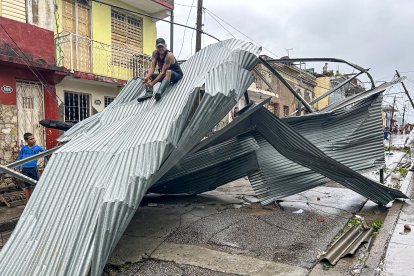
The Cuban population in the aftermath of Hurricane Melissa.
Cuban leader Miguel Díaz-Canel led a televised Civil Defense meeting, calling for accelerated recovery efforts in the provinces of Santiago, Granma, Holguín, Guantánamo, and Las Tunas, where agricultural losses—particularly to banana, cassava, and coffee plantations—are considered “significant.”
The country, grappling with one of the largest economic, energy, and public health crises in its history, still has its eastern region disconnected from the electrical grid, and many areas remain isolated by flooding rivers.
The government has not yet released official figures on those affected, nor provided an assessment of the damage. Thousands of people in Cuba remain in temporary shelters or are waiting for assistance to recover from previous hurricanes—some for more than a decade.
A historic storm
Authorities in Haiti reported at least 25 deaths, including children. In Jamaica, eight fatalities have been confirmed, and one has been reported in the Dominican Republic, bringing the Caribbean death toll to 34. Cuba has yet to report casualties but has suffered widespread destruction.
The Caribbean is beginning to assess its losses. Amid ruins, mud, and tears, the people of Haiti, Jamaica, and Cuba share a common hope: to start over.
LATEST