ANALYSIS
Melissa is the most powerful hurricane to make landfall in 90 years
Since NOAA began recording data in 1842, Hurricane Patricia, which formed in the Pacific before hitting Mexico in October 2015, holds the all-time record for strongest winds at 343 km/h, tied with Typhoon Nancy in 1961.
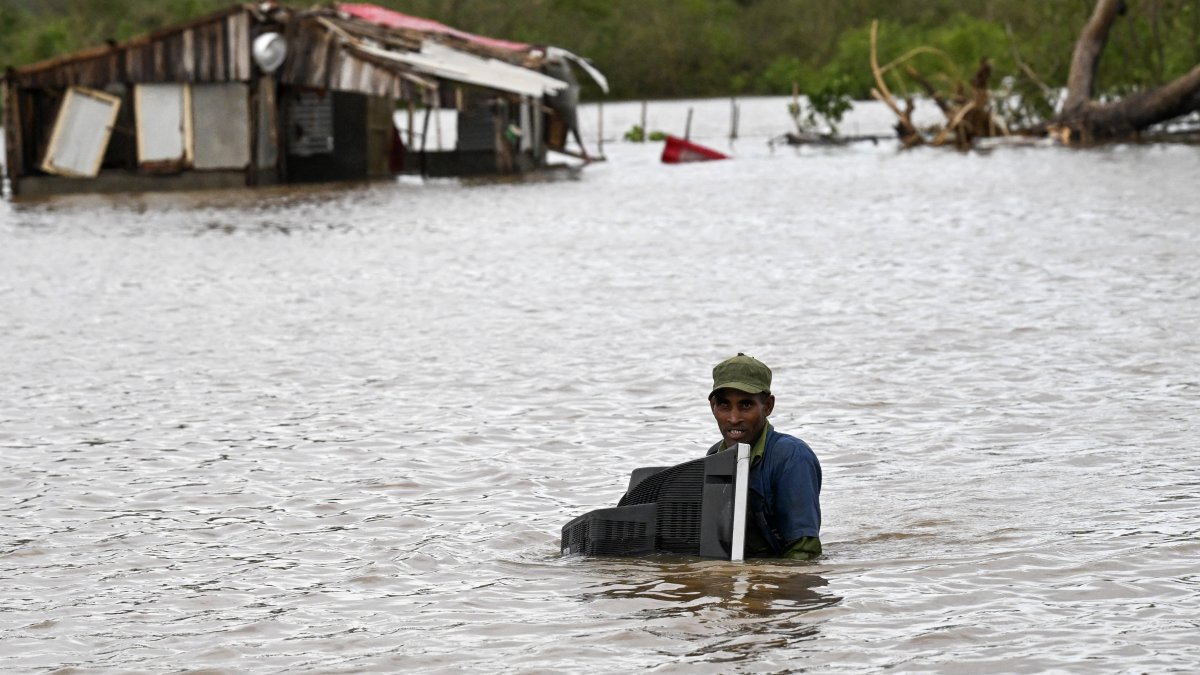
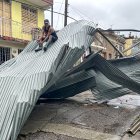
A Cuban man rescues his belongings after Hurricane Melissa hit.

Hitting Jamaica on Tuesday, Melissa was the most powerful hurricane in 90 years at the time of landfall, according to an AFP analysis of weather data from the U.S. National Oceanic and Atmospheric agency (NOAA).
Melissa made landfall in Cuba on Wednesday after sweeping across Jamaica hours earlier as a Category 5 hurricane with sustained winds of about 300 km/h.
The Labor Day hurricane devastated the Florida Keys in 1935 with winds also near 300 km/h, and an atmospheric pressure of 892 millibars.
Hurricanes are tropical storms that occur in the north Atlantic and northeast Pacific.
If typhoons (Pacific Northwest) and cyclones (Indian Ocean and South Pacific) are included, only storm Goni, which struck the Philippines in 2020, had more violent winds and lower pressure than Melissa near land.
However, the NOAA data do not specify whether Goni maintained that intensity at the exact time it hit the archipelago.
Since the NOAA began recording data in 1842, Hurricane Patricia, which formed in the Pacific before hitting Mexico in October 2015, holds the absolute record for strongest winds, at 343 km/h, tied with 1961 Typhoon Nancy.
But these records were set in mid-ocean, and both storms made landfall at lower intensity.

Typhoon Mawar in 2023 was more intense than Melissa in terms of wind and pressure, but also farther from land. Pressure dropped to 891 mb, while its sustained winds (the average of wind speeds in one minute) exceeded 305 km/h.
In the Atlantic, Dorian in 2019 hit the Bahamas with winds comparable to Melissa and the Labor Day hurricane, but its pressure was higher, synonymous with a less intense phenomenon. Just like Gilbert when it ravaged Jamaica in 1988, leaving 40 dead and massive property damage.
Melissa, the fifth category 5 tropical storm of the year, surpassed Typhoon Ragasa, which hit East Asia in September and was until now considered the most violent of 2025, with winds reaching 267 km/h and a minimum pressure of 910 mb.
Hurricane Melissa was downgraded to category 3 after hitting Jamaica and before reaching Cuba.
According to scientists, climate change is causing more frequent and intense extreme weather events around the world.
Katrina in 2005
- Category 5 (reaching its maximum intensity)
- More than 1,800 people lost their lives (approximately 1833 according to official figures).
- The economic damage exceeded $186 billion.
- The storm not only unleashed destructive winds and storm surge, but also exposed profound social, urban and emergency preparedness vulnerabilities, becoming a turning point in disaster management in the United States.
Why was Hurricane Katrina the most devastating hurricane?
Although it occurred two decades ago, no other hurricane has surpassed Katrina's level of total destruction. The disaster came not only from winds or rain, but from the collapse of the levee system that protected New Orleans.
80% of the city was underwater, and hundreds of thousands of people were displaced.
"Katrina was not just a natural disaster; it was a social and political disaster," congressional analysts said in their 2006 report.
Although more recent hurricanes such as Harvey (2017), Maria (2017) and Ian (2022) have caused close damage in economic value, none match Katrina's humanitarian and social magnitude.
LATEST