The Trump administration seeks to allow foreign students to only stay up to 4 years in the U.S.
"For too long, past Administrations have allowed foreign students and other visa holders to remain in the U.S. virtually indefinitely, posing safety risks," DHS said.
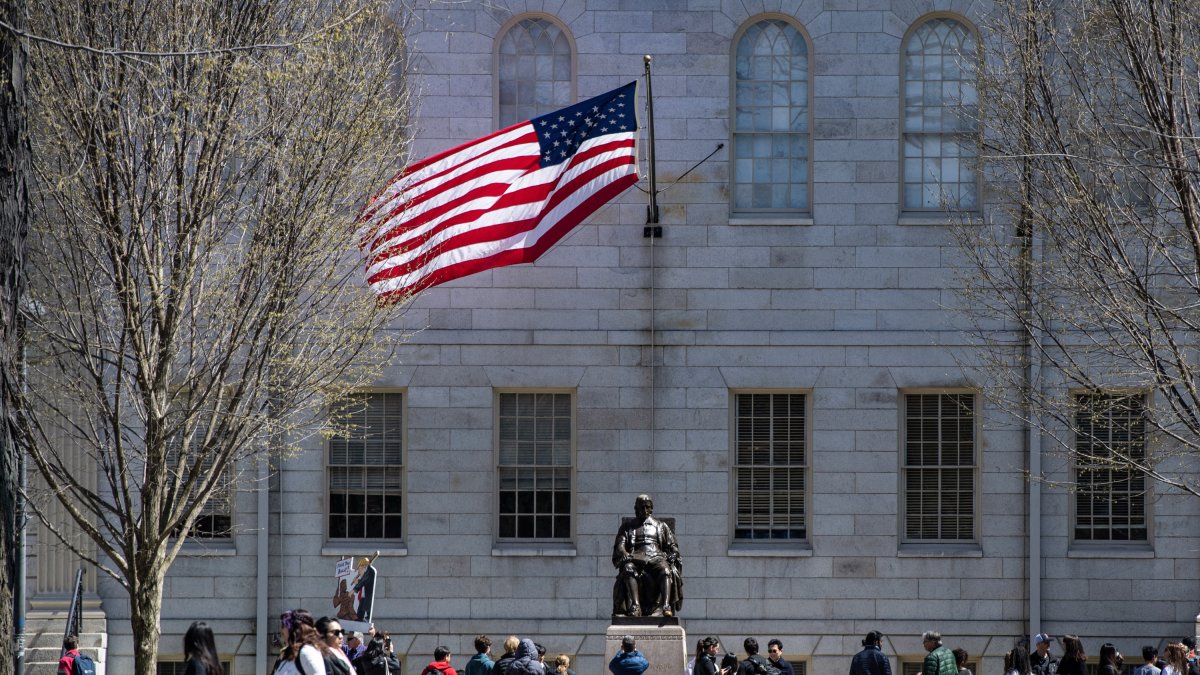
Harvard University campus in a file image

President Donald Trump's administration is preparing a new immigration rule change that would directly affect international students settling in the country. The Department of Homeland Security (DHS) announced that it will file a rule limiting the length of stay for "F visa" holders to the duration of their academic programs, with a maximum of four years.
Until now, students could remain in the U.S. as long as they maintained full-time study status, a scheme in place since 1978 known as "duration of status." According to DHS, that flexibility allowed abuses and spawned the figure of "permanent students."
“For too long, past Administrations have allowed foreign students and other visa holders to remain in the U.S. virtually indefinitely, posing safety risks, costing untold amounts of taxpayer dollars, and disadvantaging U.S. citizens,” a DHS spokesperson said in a statement. “This new proposed rule would end that abuse once and for all by limiting the amount of time certain visa holders are allowed to remain in the U.S., easing the burden on the federal government to properly oversee foreign students and history.”

Politics
Trump administration halts issuance of work visas for commercial truck drivers
Luis Francisco Orozco

Academia reacts negatively
According to Politico, some university organizations questioned the DHS proposal due to the immigration issues it would create among the more than one million foreign students in the country. Miriam Feldblum, of the Presidents' Alliance, stated that the university community coming from abroad is the "most closely monitored population in the U.S." and that imposing more requirements will only further complicate their situation.
Likewise, Fanta Aw, executive director of NAFSA: Association of International Educators, warned that the change could discourage young people from considering the U.S. as an academic destination, affecting the economy and global competitiveness.
Universities, in addition to the academic risks, also face a potential financial problem as a plausible concern. A report by the Institute of International Education, cited by Politico, revealed that 35% of the centers consulted registered fewer applications for this semester, compared to 17% in the previous cycle. A sustained drop could affect revenues, as international students tend to pay higher tuition and access fewer scholarships than local students.
LATEST