'This was a homicide': independent coroner's inquest questions official autopsy of Kurt Cobain that determined death by suicide
Although the King County Medical Examiner's Office claims to be open to revising conclusions if new evidence emerges, it stated that so far there is nothing to warrant reopening the case.
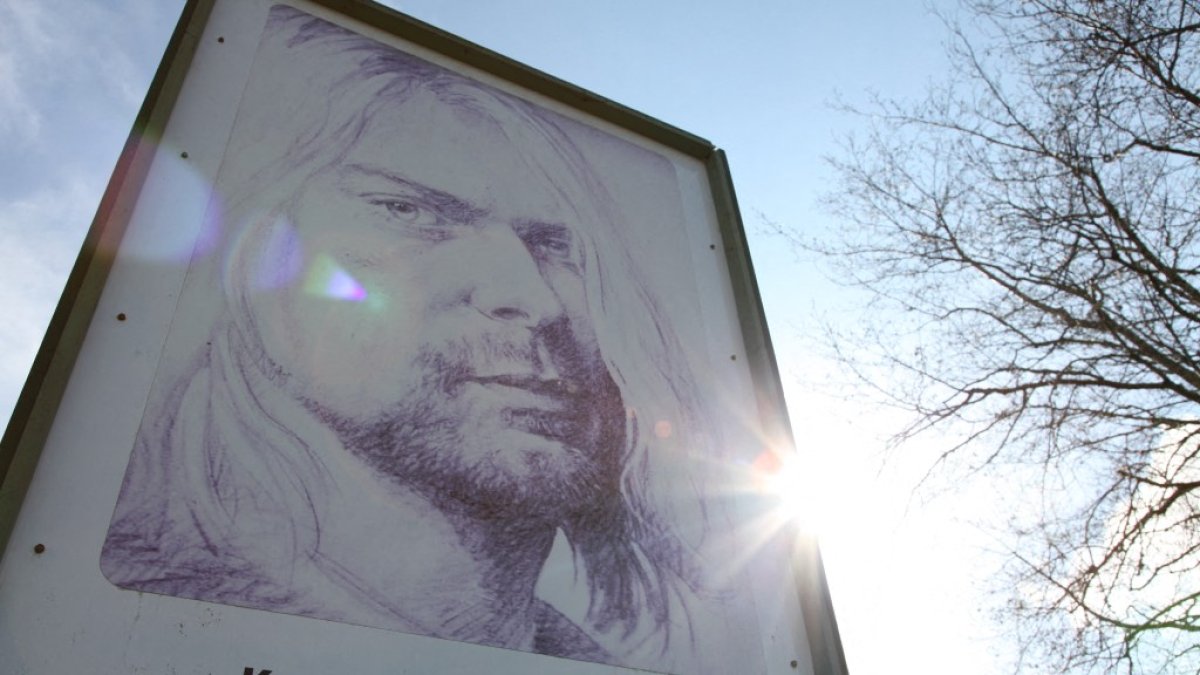
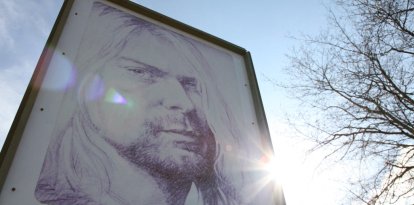
A sign at Kurt Cobain Park in Aberdeen, Washington, April 1, 2014

More than three decades after the death of rock legend Kurt Cobain, an independent coroner's inquest cast doubt on the official version that concluded the Nirvana frontman died in a suicide, from a self-inflicted gunshot wound. The report, released by the British tabloid Daily Mail, argues that there are medical and forensic inconsistencies that could point to murder.
Cobain, a native of Aberdeen, Washington, died on April 5, 1994, at age 27, after a shotgun blast at his Seattle home. At the time, the King County medical examiner determined his case to be a suicide. However, the new analysis—prepared by a private group of specialists—reviewed both the autopsy and the crime scene materials and came to conclusions opposite to the official version.
One of the central names in the study is Brian Burnett, an analyst with decades of experience in scene reconstruction and evaluation of complex evidence in similar cases. According to the report cited by the Daily Mail, Burnett has been involved in other controversial investigations, including the death of the US Navy James Sabow and the case of Billy Joe Johnson Jr., where his forensic findings challenged official versions.
Independent investigator Michelle Wilkins was also part of the task force. After examining the material for several days, she said specialist Burnett was categorical: "This is a homicide. We've got to do something about this."
The investigation, which went through an academic review process before being accepted in a journal specializing in forensic science, lists a series of elements from the crime scene and autopsy that, according to the authors, do not fit with an immediate death by firearm.
Among the discrepancy elements they mention organic damage associated with oxygen deprivation, findings that usually appear in cases of overdose.

Culture
Bad Bunny divides the U.S. right with his halftime show: 'Not everything in life has to be ruined by politics'
Emmanuel Alejandro Rondón
The hypothesis put forward is that a group of people on heroin may have previously incapacitated the musician and that the shooting would have occurred after that potential event. Wilkins stated that some signs do not correspond with someone who died very quickly from a shotgun blast and that the necrosis detected in organs such as the brain and liver is more compatible with an overdose than an instantaneous gunshot.
The report also questions the organization of the crime scene. The heroin kit, according to the report, was found tidy, with capped syringes, and the singer's left hand, which was allegedly near the gun with which he officially committed suicide, appeared unusually clean, something investigators consider rare in shotgun suicides. They also analyzed the position of the cartridge and the mechanics of the gun, concluding that certain details did not match the original narrative.
The rocker's suicide note also came under scrutiny. According to Wilkins, the top portion appears to have been written by Cobain and focuses on his intention to quit music, while the final lines exhibit differences in the stroke.
Despite the repercussions of the report, the authorities maintain their official stance. A spokesman for the King County Medical Examiner's Office indicated to the Daily Mail that the agency worked alongside law enforcement, conducted a full autopsy, and followed all procedures before determining the death was a suicide. While the office claims to be open to revising conclusions if new evidence emerges, it stated that so far, there is nothing to warrant reopening the case.
In the same vein, the Seattle Police Department reiterated that it does not plan to reopen the investigation and that the official conclusion remains the same.
Wilkins stressed that the team's goal is not to promote immediate arrests but to achieve greater transparency and have the evidence reconsidered. "If we're wrong, just prove it to us,” she said.
LATEST