Russia and Iran accuse Starlink at United Nations of violating international law
Tehran's objections stem from an episode in January, when the company owned by fellow X and Tesla owner Starlink began offering free internet access inside the Persian nation amid a regime-imposed communications blackout.
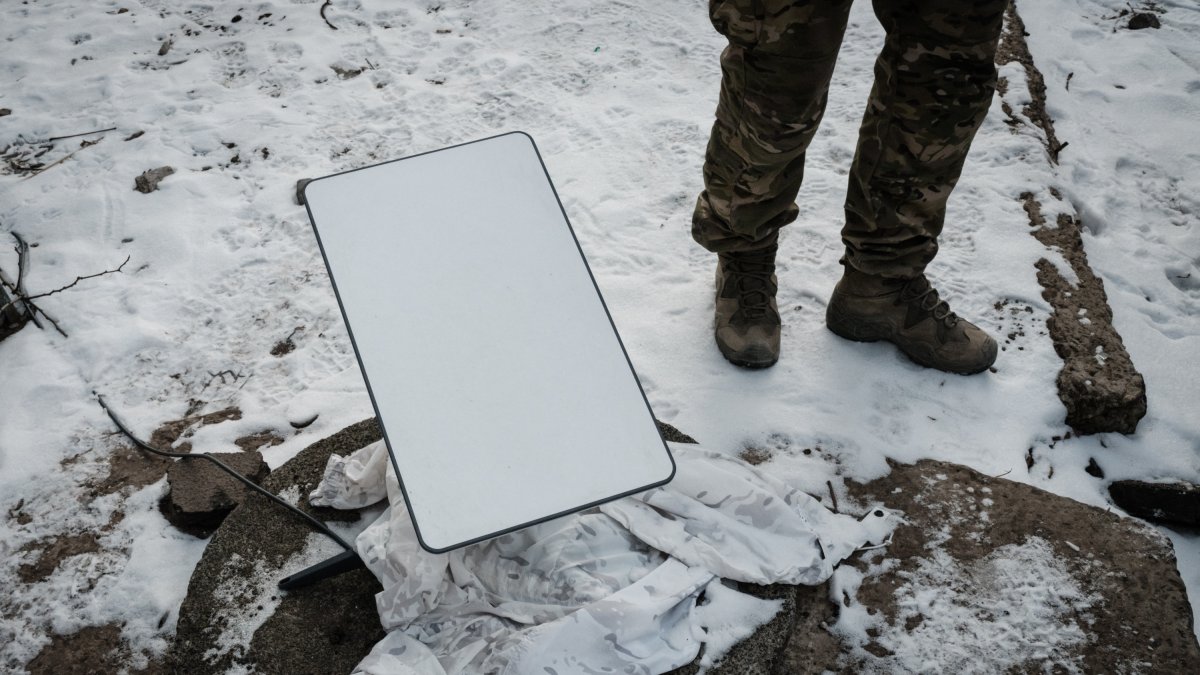
A Ukrainian serviceman next to Starlink's antenna.
The regimes of Russia and Iran sharply criticized Elon Musk's Starlink satellite internet service during a United Nations meeting Monday of the Committee on the Peaceful Uses of Outer Space, accusing the company of violating international law. Both dictatorships argued that the operation of Starlink's satellite constellation violates existing legal frameworks regulating space activities.
Tehran's objections stem from an episode in January, when the company owned by X and Tesla began offering free internet access inside the Persian nation amid a communications blackout imposed by the regime. During the meeting, rrepresentatives of the Shiite theocracy accused the company of carrying out what they described as the "unauthorized military use of a commercial satellite mega-constellation." Iranian officials who criticized the service during the meeting at the United Nations claimed that about 50,000 Starlink terminals have been smuggled into the country in recent years, allowing protesters to circumvent state-backed Internet outages.

World
US Ambassador to Israel: 'If Iran does not give up its nuclear ambitions, everything could end in war'
Luis Francisco Orozco
Russia's claims
For its part, the Russian regime raised similar concerns by pointing to Starlink's use in the war in Ukraine, suggesting that Musk's actions could violate the 1967 Outer Space Treaty. That treaty lays the foundation for international space law and states that the use of outer space must be for the benefit and in the interest of all countries, and that it constitutes the heritage of all mankind.
According to several media reports in recent days, Starlink terminals have been used by Russian forces to facilitate drone operations and maintain communications in areas where conventional military radio systems were unreliable or easily jammed. After learning of Russia's use of the service, Musk took steps last week to restrict access to Starlink. "Looks like the steps we took to stop the unauthorized use of Starlink by Russia have worked. Let us know if more needs to be done," Musk wrote on his X account.
In a statement, Russian officials argued that satellite networks operated by private companies are "is hardly in line with the interest of the long-term sustainability of outer space activities and use of outer space."
LATEST