Trump administration warns U.S. commercial vessels to avoid waters near Iran
In a safety advisory, the Department of Transportation's Maritime Administration warned U.S.-flagged vessels to avoid operating near the Strait of Hormuz and the Gulf of Oman.
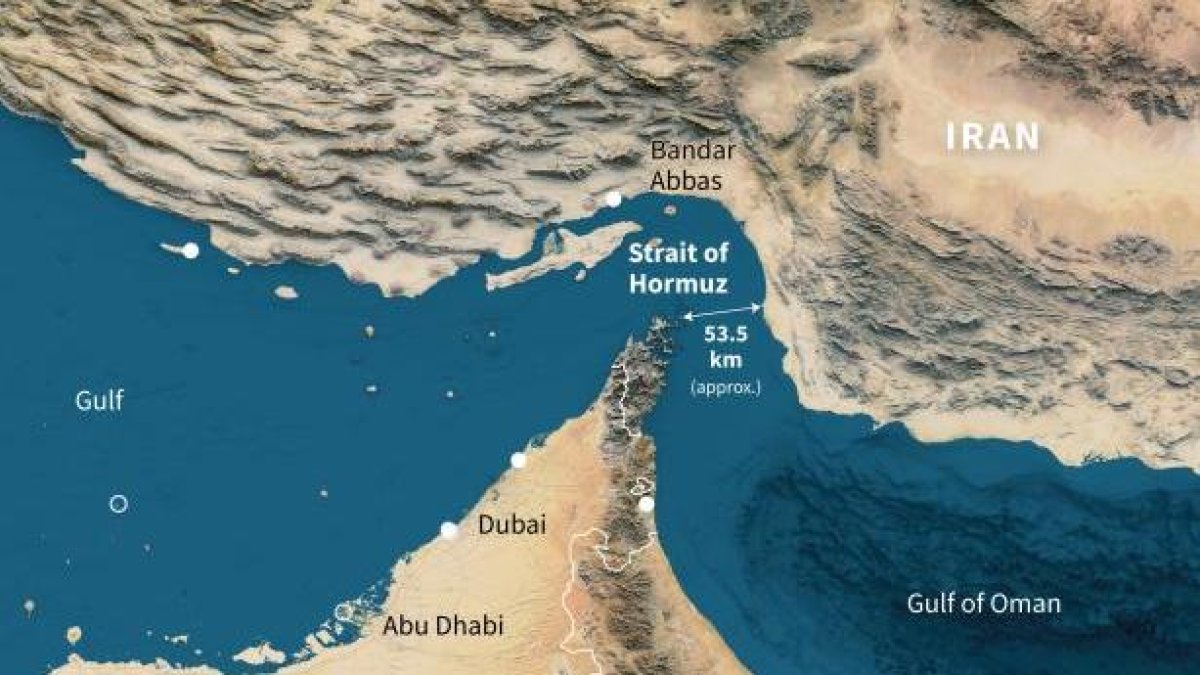
The Strait of Hormuz
The administration of President Donald Trump issued a warning Tuesday urging US commercial shipping to stay away from waters near Iran, amid rising tensions between Washington and Tehran and as US naval forces maintain a strong presence in the region. In a security advisory, the Department of Transportation's Maritime Administration warned U.S.-flagged vessels to avoid operating near the Strait of Hormuz and the Gulf of Oman. The guidance notes that, if Iranian forces attempt to communicate with a vessel, crews "should provide vessel name and flag state and affirm that they are proceeding in accordance with international law as reflected in the Law of the Sea Convention."
In addition, the notice instructs commercial vessels to deny access to Iranian personnel, and indicates that, in the event that Iranian forces board a vessel without authorization, "the crew should not forcibly resist the boarding party." Officials also stressed that choosing not to resist should not be interpreted as condoning such actions. "Refraining from forcible resistance does not imply consent or agreement to that boarding," the agency clarified.
World
Russia and Iran accuse Starlink at United Nations of violating international law
Luis Francisco Orozco
Effective through Aug. 8
The Maritime Administration also urged vessels to keep as much distance as possible from Iranian territorial waters when operating in the area, provided that the safety of navigation is not compromised. "It is recommended that U.S.-flagged commercial vessels transiting these waters remain as far as possible from Iran’s territorial sea without compromising navigational safety," the advisory said. For ships sailing eastbound through the Strait of Hormuz, authorities recommended transiting close to Oman's territorial waters.
The guidance, which will remain in effect until Aug. 8, is issued as diplomatic contacts continue between the United States and Iran. President Trump said Friday that talks between the two sides had been "very good," although he warned that Iran could face "very severe" consequences if negotiations over its nuclear program fail. Meanwhile, Iranian President Masoud Pezeshkian called the indirect negotiations held in Oman "a step forward," while eForeign Minister Abbas Araghchi, expressed cautious optimism in an interview with Al Jazeera media, in which he also threatened harsh retaliation against the United States if it attacked Iran.
LATEST