How to create a Trump Account for your child: A guide to the new investment fund for kids
Are you curious about how to open a Trump Account for your child? Find out the steps to register on the new official website and claim the $1,000 seed funding. Find out IRS Form 4547 requirements, deadlines and guidance here.
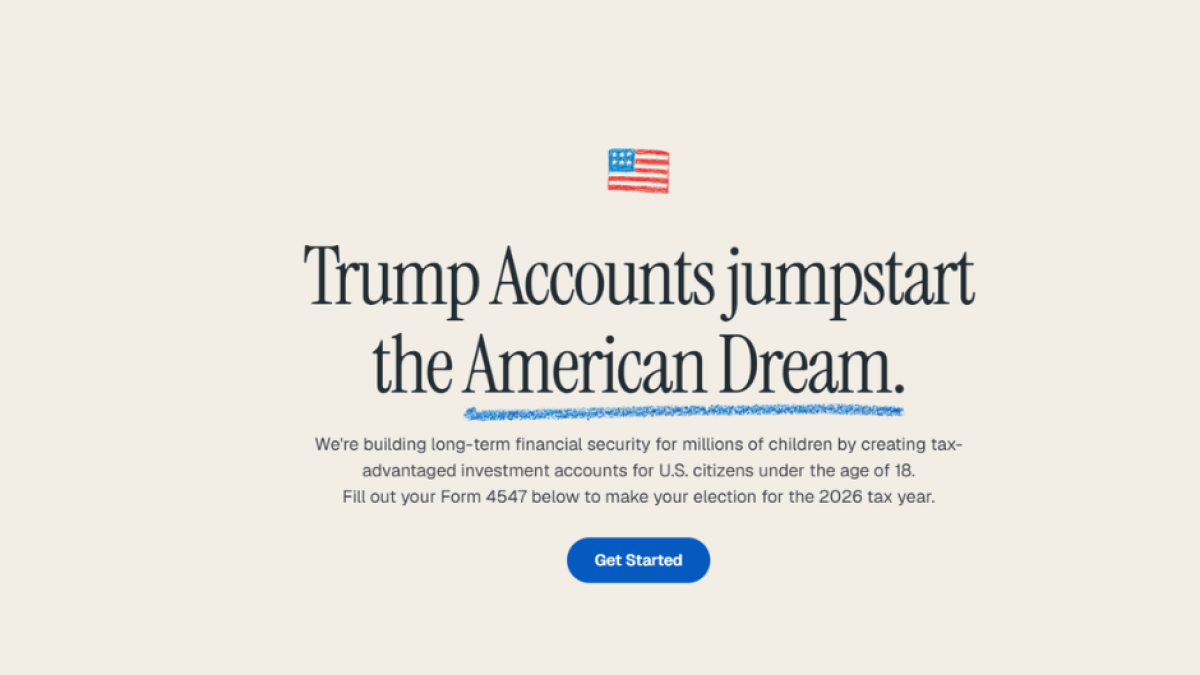
Official Trump Accounts website

The administration has officially inaugurated a new digital pathway to claim access to Children's Investment Accounts, a program designed to encourage long-term savings that in some cases starts with seed capital of up to $1,000.
Parents or legal guardians now have the ability to open a Trump Account using two main channels for registration:
- Tax Return: by sending IRS Form 4547 along with their 2025 tax return.
- Official website: through the form.trumpaccounts.gov page, where you can now complete the online enrollment process.
What is a Trump Account and how does it work?
A Trump Account is similar to a traditional Individual Retirement Account (IRA) established by an authorized adult for the exclusive benefit of a minor identified in Part II of Form 4547.
Under this legal structure, the child is the legal beneficiary of the account, while the adult acts as the initial trustee. This instrument seeks to open up access to financial markets from birth.
Eligibility requirements: Who can apply for a Trump Account? What about the initial $1,000?
For a minor to be eligible as a beneficiary of a Trump Account, he/she must meet the following general requirements:
- Age: must be under the age of 18 at the end of the year in which he or she completes the paperwork to open the account. For paperwork completed in 2026, this means the child must have been born after Dec. 31, 2008.
- Identification: must possess a Social Security Number (SSN) valid for employment purposes, issued before the account is made.
- One per child: must not have had a previous Trump account application filed on your behalf.
Not everyone is eligible for the initial $1,000 amount. Of those who meet the above requirements, only those born between Jan. 1, 2025 and Dec. 31, 2028 may apply.
How is the money in these accounts invested?
Investments must be chosen by the responsible adult. To protect the assets of minors and ensure steady growth, the regulations require that the funds be invested in:
- American equity index funds or low-cost Exchange-Traded Funds (ETFs).
- Broad diversification: assets must be diversified to minimize risks.
- Low fees: the expense ratio cannot exceed 0.10%. This means that for every $1,000 invested, the annual fee must not exceed $1.
Additional contributions: Who can contribute funds?
Although additional deposits are not required, contributions of up to $5,000 per year are permitted to maximize compound interest. Allowable funding sources include:
- Parents and family members: direct deposits of personal savings.
- Employers: contributions that may be exempt from gross income under section 128.
- Governments and NGOs: qualified contributions from states, districts or 501(c)(3) institutions.
- Rollovers: transfers of funds from other qualified accounts.
Key dates and what happens when the child turns 18
The deadline to enroll minors is now open. However, it is important to consider the following time milestones:
- July 4, 2026: official date when accounts will begin to be effective and the first pilot program funds will be deposited.
- When the child reaches adulthood: upon turning 18, the account is fully transferred to the young person. The adult ceases to be custodian and the holder decides whether to keep the investment or withdraw it, for example to invest in higher education or allocate it to the purchase of a home.
- End of growth period: special investment restrictions end on Dec. 31 of the year before the account holder turns 18.
Private sector support: Massive donations
- Michael and Susan Dell: $6.25 billion donation aimed at strengthening the accounts of 25 million children.
- Ray and Barbara Dalio: $75 million contribution, initially focused on benefiting 300,000 children in the state of Connecticut with $250 bonds.

Politics
Dell family donates $6.25 billion to 'Trump accounts' for 25 million children
Joaquín Núñez
Economy
Billionaire Ray Dalio to donate $75 million to Trump accounts for 300,000 children
Joaquín Núñez
LATEST