






Washington DC, la nueva capital del atasco / Washington DC sobrepasa a Los Ángeles como la ciudad (?) con peor tráfico del país
A ConsumerAffairs Research study reveals the 10 worst and 10 best urban areas to drive in. "The cities with the worst traffic in the U.S. are among those with the highest economic output," the report's authors note.
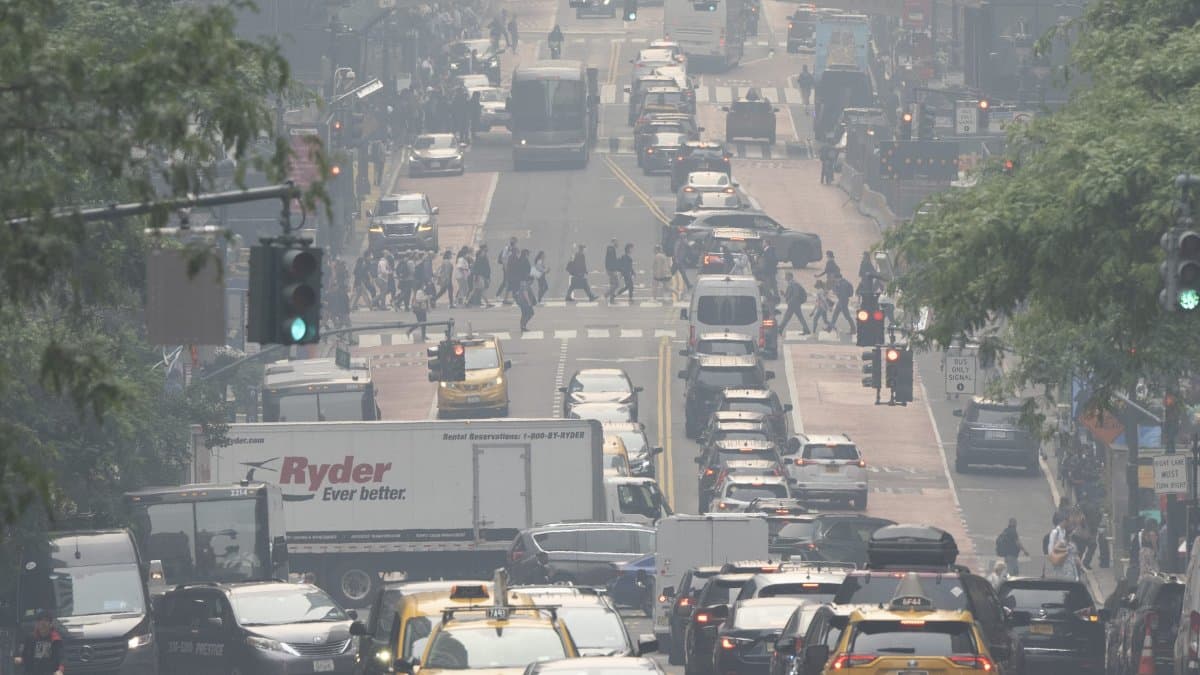

Washington, D.C. is the new capital of terrible traffic, stealing the title from Los Angeles. A capital city dweller takes 33.4 minutes on average to get to work, the highest average in the country. Per week, a D.C. driver faces about 6:35 hours of congestion. That is equivalent to 71 days a year stranded in traffic.
That's according to a study by ConsumerAffairs Research, which compared metrics on commute times, hours of congestion and fatal accidents in the 50 most populous metropolitan areas. The final ranking combines all three, so the higher up the rankings, the worse the overall result.
Although the figures represent a deterioration in D.C.'s roads from last year, the research team notes that the nation’s capital is among the 10 areas with the fewest fatal crashes (fewer than six per 100,000 residents).
Los Angeles came in second. Its drivers spend three minutes less on the road per week than their peers in the capital. But weekday congestion, taken from Federal Highway Administration data, is worse in the Californian city: some 7:51 hours on average per week, the longest in the country. So is its driving fatality rate (more than 7 fatal accidents per 100,000 residents).

Politics
For the third consecutive year, Florida is the strongest economy in the country
Joaquín Núñez
Third is Miami. The Floridian city represents a "complex" case, according to the study. High levels of congestion are usually accompanied by lower levels of fatal accidents, as drivers are forced to slow down. This is not the case in Miami. It is ranked 11th city in fatal crashes (11.40 per 100,000 residents), placing it above the national average (11.33).
Closing out the top five are San Francisco and Atlanta. In the case of the former, it is worth noting that despite its long hours of congestion, its routes are relatively safe. It ranks 46th out of 50 in the number of fatal accidents (just over five accidents per 100,000 inhabitants).
Top 10 cities with the worst traffic
Top 10 metro areas with the best traffic
More than a waste of time
An obvious and immediate consequence of terrible traffic is driver frustration, as the study points out. However, in the long term there, are economic consequences such as subjecting vehicles to more wear and tear, forcing more frequent trips to the mechanic.
If the consequences are varied, so are the causes. For example, a high density of cars during rush hour can be a sign of economic well-being, because it indicates that more people are heading to metropolitan areas to work. According to the study's authors, this year's results validate that theory:
"The cities with the worst traffic in America are among the cities with the highest economic output. Geographically, the top-ranked cities are clustered in two regions: Three of the worst cities for traffic are in the South, and the remaining two are located in California," the authors state.
The same seems to be true in the opposite direction: fewer traffic jams indicate less economic activity. As the study explains, citing Michael Manville, professor of urban planning at UCLA's Luskin School of Public Affairs, "broadly," the cities with the best traffic are also "places that have struggled for a long time with urban decline, particularly with regard to population loss in city centers."
"[Several of these cities] still have the physical footprint of places that were once centers of industry, but they are no longer," Manville explains. They thus have "excess infrastructure," such as wide roads, more typical of their traffic of yesteryear than today.

🛠 Do you think there is an error in this article?
Recommendations







LATEST