The House and Senate vote on different resolutions regarding the war with Iran, with opposing results
The House of Representatives passed a resolution requiring congressional authorization before extending military operations against Iran, while the Senate rejected a joint resolution that could have become law.
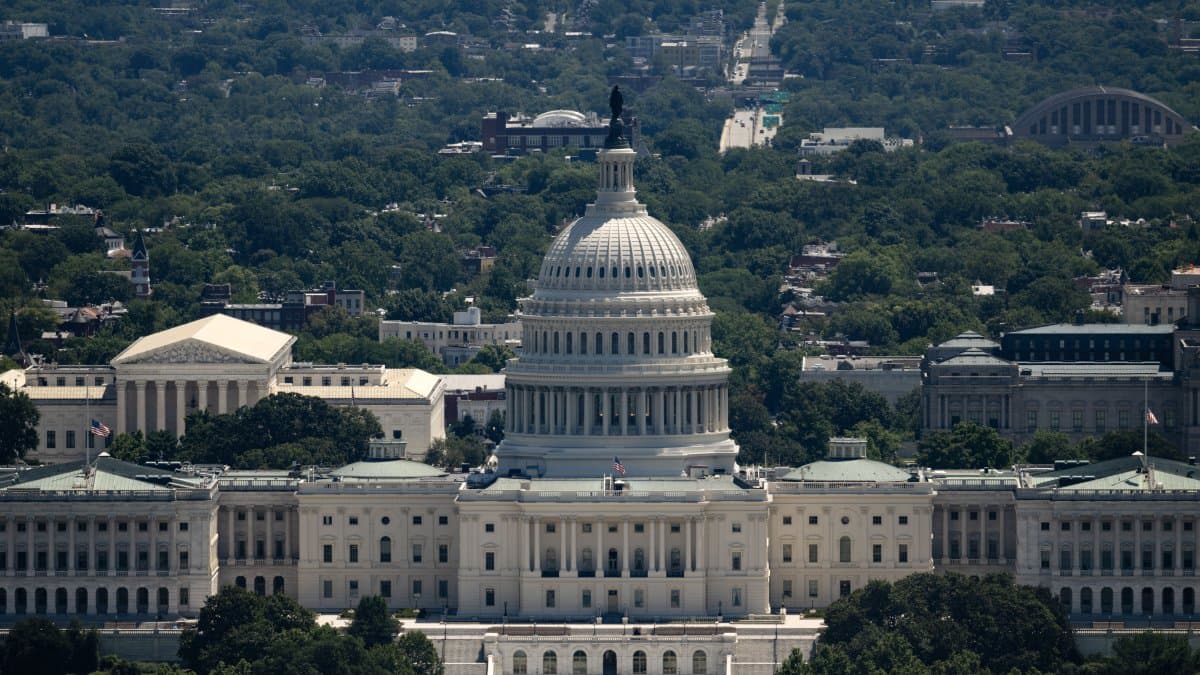

The House of Representatives passed a resolution on Wednesday requiring President Donald Trump to obtain authorization from Congress before continuing military operations against Iran. However, hours later, the Senate rejected a similar measure, allowing the administration to continue its strategy in the Middle East.
In the House, the resolution introduced by Democratic Representative Pramila Jayapal passed with 214 votes in favor and 208 against. Specifically, the resolution would direct the president to "withdraw the use of the United States Armed Forces from hostilities against the Islamic Republic of Iran or any part of its government or military, including any ground forces engaged in combat or used for occupation," without the express authorization of Congress.
The measure invoked the War Powers Resolution of 1973, legislation passed in the wake of the Vietnam War that limits the executive branch's ability to conduct prolonged military operations without congressional authorization. Four Republicans joined all the Democrats in voting in favor: Thomas Massie of Kentucky, Tom Barrett of Michigan, Warren Davidson of Ohio, and Brian Fitzpatrick of Pennsylvania.
However, the Senate later rejected a joint resolution to end the war with Iran by a vote of 49 to 47. Republican Senator Susan Collins of Maine was the only member of her party to support the resolution, joining all Democrats except Senator John Fetterman, who voted against it.
The main difference between the two initiatives lay in their legal scope. While the resolution passed by the House expressed that chamber's position on the need for Congress to authorize a prolonged war, the joint resolution debated in the Senate could become law if approved by both chambers.
The votes took place just one day after the House passed a budget resolution that triggered the process for Budget Reconciliation, a mechanism that will allow Republicans to attempt to pass, by a simple majority in the Senate, a package of approximately $95 billion, with a significant portion allocated to defense. Among other things, the package will help fund the U.S. military campaign in Iran.
🛠 Do you think there is an error in this article?
Recommendations








LATEST