Vance's unconventional agenda in the succession race
The vice president's recent setbacks — from the collapse of the Iran deal to the controversy over his remarks on Israel and the lukewarm reception of his new book — have reignited the debate over the direction of the Republican Party and fueled the emerging rivalry with Marco Rubio for leadership in the post-Trump era.
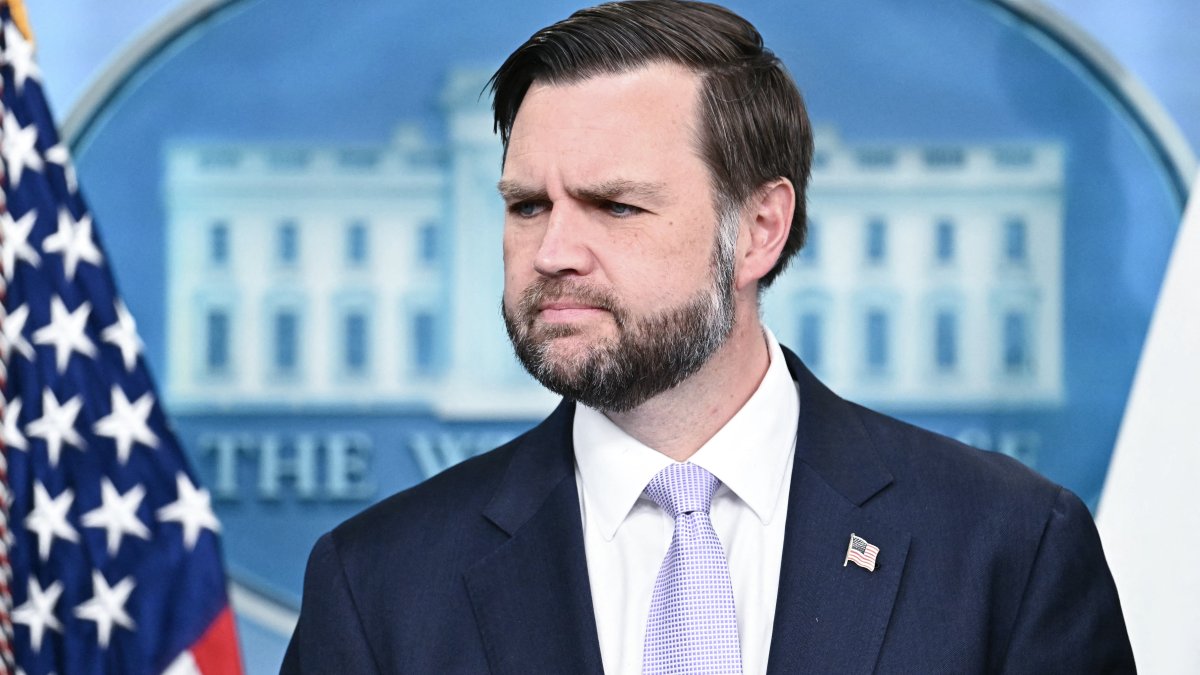
Image of Vice President Vance
Naturally, the race for the presidential succession is drawing ever closer. According to nearly all early polls, JD Vance remains the favorite to secure the Republican nomination in 2028, but Marco Rubio is hot on his heels. And in recent weeks, the vice president has had the kind of stretch that a presidential candidate would avoid if he could: a book that generated more controversy than acclaim, a diplomatic agreement that fell apart days after it was signed, and a lengthy interview with Joe Rogan that left him on the defensive against his own camp.
Taken separately, these are anecdotes from a hectic vice presidency. Together, they paint a more interesting picture: a worldview vying for the soul of the post-Trump Republican Party, the full scope of which we do not yet know.
Vance's second appearance on "The Joe Rogan Experience" was supposed to be, on paper, just another stop on his book tour. It ended up being something else entirely. For nearly three hours, Vance spoke about the UFC, Michelle Obama, immigration policy… and, above all, Israel and Jeffrey Epstein — two topics whose selection speaks not only to the vice president's agenda, but also to his priorities and narrative strategies.
On Israel, Vance was unusually direct: he claimed that there were Israeli officials trying to sabotage the negotiations with Iran indefinitely, and even played the victim by suggesting that there was a well-funded influence campaign aimed at shaping U.S. public opinion against him. Regarding Epstein, he speculated about the late financier's ties to Israeli and U.S. intelligence, and acknowledged — this time without mincing words — that the White House made a serious mistake in handling the release of the files, pointing the finger at former Attorney General Pam Bondi.
The reaction was not long in coming. Ben Shapiro published an ironic comparison in which he likened the economic and foreign policy rhetoric he had heard on the podcast to that of figures on the Democratic left, making it clear that this was not the kind of candidate he wants for 2028. On his own show, he went even further: he argued that the vice president had constructed an argument against the free market and meritocracy, and that his worldview was troubling to him. Other commentators were harsher in their criticism of the idea that the failure of the MOU with Iran was due to Israeli sabotage. These positions add to the criticism he has received for his neutrality regarding the comments made by his friend Tucker Carlson and his reluctance to cut ties with him — which is precisely what his critics point to as the underlying problem.
Amid the latest media uproar, a more concrete foreign policy defeat took a back seat. Vance negotiated, promoted, defended, and signed the memorandum of understanding (MOU) that was supposed to be the first step toward a peace agreement with Iran. Trump had delegated oversight of the negotiations to Vance, and it was during his handling of them that the fighting ceased.
The MOU was short-lived, and the United States and Iran resumed exchanging attacks; traffic through the Strait of Hormuz became even more complicated, and critics of that failed agreement rightly recalled what they had already warned: that the agreement underestimated the fanaticism and malice of a regime whose primary objective is hatred of the U.S. On the Rogan podcast, Vance offered a controversial defense in which he chose to explain the failure by pointing the finger at Israel rather than at the limitations of his own negotiating strategy. This pattern begins to raise concerns: when the results don't pan out, the explanation tends to shift blame rather than reevaluate the premise.
Amid all this, Vance recently published his second book, Communion: Finding My Way Back to Faith, the chronicle of his conversion to Catholicism in 2019. If Hillbilly Elegy served to explain Trump's rise in certain regions of the country, Communion aspires to be the spiritual manifesto of the man who wants to succeed him: less politics and more autobiography of the soul.
Politics
Donald Trump Responds Clearly to Mamdani: Netanyahu Will Not Be Arrested in the United States
Emmanuel Alejandro Rondón
But the book's reception was, to say the least, mixed. Fox News highlighted passages where Vance questions whether "Reaganite" conservatism is clinging to assumptions from a Cold War that has already been won. From more critical perspectives, the reading was different. Quillette described the book as weak in its arguments, noting that, despite the author's supposed erudition, he fails to make a convincing case for either Catholicism or the Christian faith in general. America Magazine, a Jesuit publication, went further: it suggested that Vance's conversion appears to have drawn authority from the Church, but not obedience to it when the magisterium disagrees with his immigration policy. Added to this was a minor yet symbolic detail: the book's cover features a Methodist church in Virginia, not a Catholic one — an oversight that generated more headlines than the book's content itself.
None of this invalidates the sincerity of the spiritual quest described in the book. But if the goal — more or less explicit — was to cement a presidential narrative (faith, family, roots), the result was a work that divided critics exactly along the line separating its supporters from its skeptics.
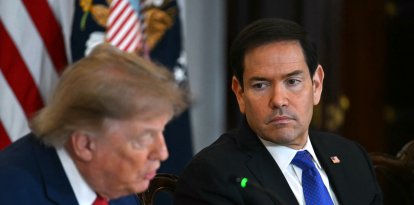
All of this is better understood in context. While Vance was racking up these missteps, the Secretary of State — who had appeared disfigured in the days when the MOU was signed — later shone in Lebanon and at the conference against leftist terrorism. Rubio, moreover, has avoided Vance's ambiguity on the issues of Israel and antisemitism, aligning himself unambiguously with the party's pro-Israel majority.
Differences in style and vision are becoming increasingly apparent. Vance represents the isolationist wing that has grown within Trumpism: skeptical and willing to question historic alliances if they do not serve a specific definition of the national interest. Rubio embodies the more classic tradition of Republican internationalism. Neither of these two currents is marginal today. The House vote on Thomas Massie's amendment to cut aid to Israel suggested that, for now, the party remains firmly on Rubio's side, but the polls do not clearly show that favoritism, and in many cases, Vance leads Rubio.
A poll by Washington Free Beacon among likely Republican primary voters supports this interpretation: they want a 2028 candidate who maintains a strong relationship with Israel and firmly condemns antisemitism. This is an electorate that, on paper, resembles Rubio more than the line Vance defended in his interview with Rogan.
Conversely, a study by Tufts University suggests that young men favored Trump by fourteen points over Kamala Harris in 2024, and that demographic (more skeptical of interventionism, more prone to distrust of institutions) is precisely the ground where Vance seems to be betting on growth ahead of 2028. The result is a paradox: Vance may be accurately gauging where a segment of the younger electorate is heading, while moving away from the center of gravity — which is even larger today — of the Republican primary electorate.
Rubio, for his part, has indicated that he will not challenge Vance if the latter decides to run, which leaves many questions unanswered and nothing resolved. The only thing clear, for now, is that Vance has decided not to hide where his sympathies lie and to open up an uncomfortable flank for Rubio, whether he decides to run or to endorse the vice president's candidacy. It's a risky move, and yet, in its own way, consistent with the image Vance has been building for himself. The race, by the way, has become more interesting.
LATEST