ANALYSIS
Democratic gerrymandering boomerangs, winking at the GOP
The approval of new maps by the Florida Legislature coupled with court decisions in Texas, Louisiana and Virginia has reshaped the congressional district landscape, with key gains for Republicans and a major blow to Democratic plans ahead of the November midterms.

Florida Gov. Ron DeSantis

In a week loaded with strategic moves around electoral maps, Republicans have managed to shore up key positions ahead of the 2026 midterms.
In Florida, Gov. Ron DeSantis got the Legislature to rush through a new congressional map that could give the GOP as many as four additional seats. At the same time, the Supreme Court on Monday definitively endorsed the Texas map and, just two days later, overturned the Louisiana map, drawn using racial criteria and favorable to Democrats.
Meanwhile, in Virginia, the Democratic attempt to redraw districts through a constitutional amendment approved by voters on April 21 was stopped almost immediately by the state courts, which kept the current map in effect.
Taken together, these steps show a well-coordinated Republican offensive in the redistricting arena with an eye on the upcoming legislative elections.
Florida: Approval of new map that could give four extra seats to the GOP
Gov. Ron DeSantis unveiled a proposed congressional map Monday just 24 hours before the beginning of a special session of the state legislature.
The proposal, which could raise the Republican delegation from 20-8 to potentially 24-4 in Florida's 28 districts, passed with alacrity Wednesday. The House of Representatives endorsed it by 83-28 and the Senate by 21-17, mostly along party lines. The map now awaits DeSantis' signature to go into effect in the November elections.

DeSantis justified the measure as a necessary demographic correction. "Florida got shortchanged in the 2020 Census, and we’ve been fighting for fair representation ever since. Our population has since grown dramatically, and we have moved from a Democrat majority to a 1.5 million Republican advantage," he stated in an interview with Fox News Digital. "Drawing maps based on race... is unconstitutional and should be prohibited." He added: "Our new map for 2026 makes good on my promise to conduct mid-decade redistricting, and it more fairly represents the makeup of Florida today."
Democrats sharply criticized the process as a mid-decade "partisan gerrymandering" explicitly prohibited by Florida constitutional amendments approved by voters in 2010. However, Republicans, with supermajorities in both chambers, pushed for quick passage despite objections.
The map faces predictable judicial challenges, but the timing coincides with favorable Supreme Court rulings.
Louisiana: Supreme Court strikes down map with two majority-black districts
Hours before the final vote in Florida on Wednesday, the High Court of ruled 6-3 that Louisiana's congressional map, which included two majority-black districts, constituted "racial gerrymandering declared unconstitutional." The decision invalidates the second district created in 2024 to comply with Section 2 of the Voting Rights Act.
Justice Samuel Alito, author of the majority opinion, argued that race cannot be the predominant factor in redistricting: "Because the Voting Rights Act did not require Louisiana to create an additional majority-minority district, no compelling interest justified the State’s use of race in creating SB8, and that map is an unconstitutional racial gerrymander."

Politics
Supreme Court strikes down Louisiana's race-based congressional map in landmark voting rights ruling
Carlos Dominguez
Justices Clarence Thomas and Neil Gorsuch joined the majority. Justices Elena Kagan, Sonia Sotomayor and Ketanji Brown Jackson voted in dissent.
Justice Kagan stated: "I dissent, then, from this latest chapter in the majority’s now-completed demolition of the Voting Rights Act."
For her part, Louisiana Attorney General, Liz Murrill (R), celebrated the decision, "The Supreme Court has ended Louisiana’s long-running nightmare of federal courts coercing the state to draw a racially discriminatory map."
President Trump called it "a BIG WIN for Equal Protection under the Law."
"Thank you to brilliant Justice Samuel Alito for authoring this important and appropriate Opinion," he added.
This ruling strengthens the GOP's position nationally and comes at a key time for electoral redistricting processes in states such as Florida.
Texas: Supreme Court definitively ratifies the new Republican map
The Supreme Court on Monday permanently validated Texas' new congressional map, redrawn in 2025 by the Republican legislature, by issuing a summary judgment 6-3 reversing a lower court decision that had blocked it for presumed racial gerrymandering.
The decision, made the same day Gov. Ron DeSantis filed his map in Florida, allows Texas Republicans to consolidate and possibly expand their current 25-13 lead in the state's 38 districts. It is estimated that the map could deliver as many as five additional seats to the GOP at the November midterms.
The six conservative justices formed the majority, while the three progressive female justices issued a dissent.

Gov. Greg Abbott immediately celebrated the victory: "HUGE WIN at the Supreme Court validating the new Texas Congressional Map," wrote Abbott on X. "We added more new Republican seats than any state."
"We're just catching up with what Democrats have done," the Texas governor added.
The ruling comes just two days before the landmark ruling in the Louisiana case, reinforcing the high court's line of limiting the use of race as a primary criterion in redistricting.
With this map now ironclad, Texas becomes one of the biggest Republican strongholds heading into the 2026 midterms.
Virginia: Democratic attempt to redraw districts blocked
The Virginia Democrats' attempt to redraw congressional maps was temporarily stalled in court.
On April 21, voters narrowly approved (51.7%) a constitutional amendment allowing the General Assembly, controlled by Democrats, to conduct an extraordinary mid-decade redistricting. The goal was to win up to 10 of Virginia's 11 seats in the House of Representatives.
However, a day later Tazewell County Circuit Judge Jack Hurley ordered a halt to the certification of the results, citing procedural violations and the irregular use of a special session.
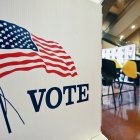
Democratic Attorney General Jay Jones immediately appealed. This Tuesday, the Virginia Supreme Court rejected the emergency request to lift the block, keeping the amendment in abeyance.
Following the decision, the Republican leader in the state House, Terry Kilgore, celebrated, "We still lost but we’re going to win, ultimately, in the courts."
For his part, Jones responded, "Virginia voters have spoken, and an activist judge should not have veto power over the People’s vote."
For now, the current map, drawn by the courts in 2023, remains in effect. The Virginia Supreme Court has yet to issue a final decision on the validity of the amendment, amid the country's intense redistricting war.
Here's how the gerrymandering battle stands: GOP +14 seats, Democrats +6
- Democratic advantages
- Republican advantages
In Utah, that same month, a state judge declared the Republican map unconstitutional for violating the ban on partisan gerrymandering and imposed an alternative map that creates a competitive district in Salt Lake City. This would allow Democrats to gain one seat (from 4R-0D to 3R-1D).
In Missouri, Republican Gov. Mike Kehoe in September 2025 signed a map that raises the advantage to a potential 7R-1D by eliminating a Democratic district in Kansas City. The map is in effect, though it faces a referendum and pending lawsuits.
In North Carolina, the Republican legislature in October 2025 approved a map consolidating 11R-3D. A federal court refused to block it and the lawsuits were withdrawn in January 2026.
LATEST