ANALYSIS
Supreme Court strikes down Louisiana's race-based congressional map in landmark voting rights ruling
Justice Samuel Alito, author of the majority opinion, wrote: "Because the Voting Rights Act did not require Louisiana to create an additional majority-minority district, no compelling interest justified the State’s use of race in creating SB8, and that map is an unconstitutional racial gerrymander."

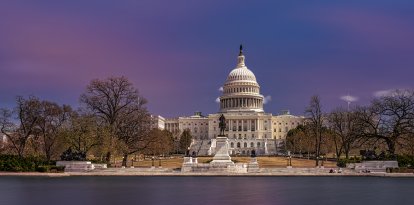
Supreme Court building

The Supreme Court on Tuesday declared the congressional map of Louisiana that created a second majority-black district unconstitutional, finding that the predominant use of race violates the Equal Protection Clause of the 14th Amendment. The landmark ruling could be a major boost for Republicans in the November congressional election.
The case, known as Louisiana v. Callais, arose after the 2020 post-census redistricting, when the state approved a map with two majority-black districts. A group of voters, led by Phillip Callais, sued, arguing that it was "unconstitutional racial gerrymandering." The case reached the Supreme Court in 2025.
">📹 Un fallo dividido de 6 a 3 en la Corte Suprema acaba de cambiar las reglas del juego para las delimitaciones distritales. El máximo tribunal ha restringido a los estados el uso de criterios raciales para dibujar sus mapas electorales, centrándose específicamente en el caso de… pic.twitter.com/h062betvrZ
— VOZ (@VozMediaUSA) April 29, 2026
A split ruling that redraws the boundaries of the electoral map
By a 6-3 vote, the court struck down the SB8 state map that was approved in 2024. Justice Samuel Alito, author of the majority opinion, wrote: "Because the Voting Rights Act did not require Louisiana to create an additional majority-minority district, no compelling interest justified the State’s use of race in creating SB8, and that map is an unconstitutional racial gerrymander."
Justices Clarence Thomas and Neil Gorsuch joined the majority. Justices Elena Kagan, Sonia Sotomayor and Ketanji Brown Jackson voted in dissent.
Justice Kagan stated: "I dissent, then, from this latest chapter in the majority’s now-completed demolition of the Voting Rights Act."
Louisiana Attorney General Liz Murrill, a Republican, celebrated the decision. "The Supreme Court has ended Louisiana’s long-running nightmare of federal courts coercing the state to draw a racially discriminatory map," she said.
LATEST