ANALYSIS.
Make America Pray Again: Trump allows federal workers to pray and preach on the job
"Federal employees should never have to choose between their faith and their career," Scott Kupor, director of the administration's Office of Personnel Management said in a memo with directions to agencies.
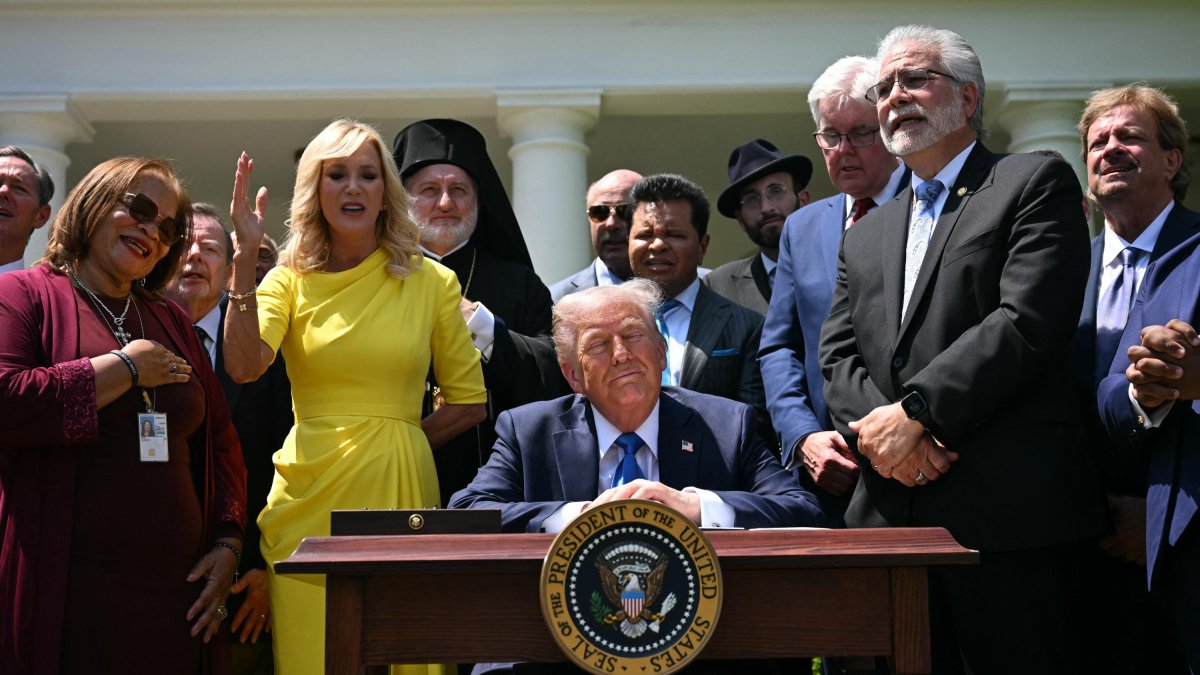
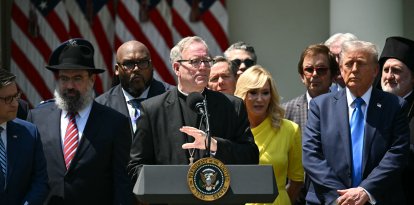
Religious leaders pray with Trump at the White House.

"Federal employees should never have to choose between their faith and their career," said Scott Kupor, director of the administration's Office of Personnel Management, regarding a memo issued Monday with directions to federal agencies to protect employees' religious freedom. The measure will extend to believers of all religions.
Among other aspects, employees can no longer be penalized for praying or preaching their faith in the workplace, nor for wearing symbols that identify them as believers of a particular creed. Kupor said that "the memo provides clear guidance to ensure federal employees may express their religious beliefs through prayer, personal items, group gatherings, and conversations without fear of discrimination or retaliation."
Make the government "a place where people of faith are respected, not sidelined"
"Federal employees should never have to choose between their faith and their career. This guidance ensures the federal workplace is not just compliant with the law but welcoming to Americans of all faiths. Under President Trumpʼs leadership, we are restoring constitutional freedoms and making government a place where people of faith are respected, not sidelined."
The new guidance specifies that "Title VII defines 'religion' to include 'all aspects of religious observance and practice as well as belief,' not just practices that are mandated or prohibited by a tenet of the individual’s faith. However, Title VII does not cover all beliefs. For example, social, political, or economic philosophies, and mere personal preferences, are not 'religious' beliefs within the meaning of the statute."
Further, "Employees must be allowed to engage in private religious expression in work areas to the same extent that they may engage in nonreligious private expression. Agencies may, however, reasonably regulate the time, place and manner of all employee speech, provided such regulations do not discriminate based on content or viewpoint (including religious viewpoints). Agencies may require that employees perform official work while on duty, as opposed to engaging in personal religious observances."
LATEST