






Willie Colón, a major architect of salsa and a key figure in Latin music, dies
With his death, salsa music loses one of its fundamental pillars; his work, however, remains a testimony of an era and a sound that he helped define.
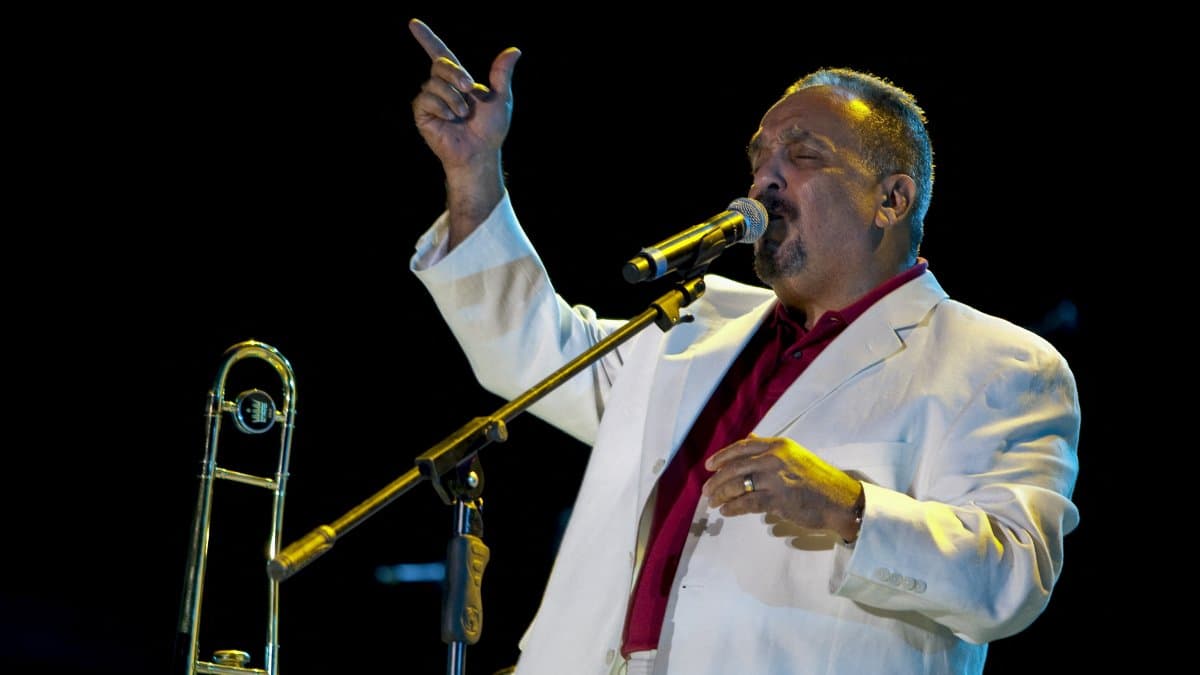

Puerto Rican-American trombonist, composer and producer Willie Colón died Feb. 21, 2026 at the age of 75, according to a report from his family via his official Facebook page.
"It is with deep sadness that we announce the passing of our beloved husband, father and renowned musician, Willie Colón. He passed away peacefully this morning, surrounded by his beloved family," said the statement. His loved ones thanked fans for the show of support and asked for privacy during the mourning.
In recent days, fellow members of the salsa scene had requested public prayers for his health. The musician was hospitalized in New York due to respiratory complications.
From the South Bronx to the Heart of Salsa
Born on April 28, 1950 in the South Bronx, New York, to Puerto Rican parents, William Anthony Colón Román grew up in an environment marked by the Puerto Rican diaspora. He began playing trumpet as a teenager, but soon adopted the trombone as his signature instrument, with which he would forge one of salsa's most recognizable sounds.
At the age of 15 he signed with the nascent Fania Records label, founded by Johnny Pacheco and Jerry Masucci. At just 17 he recorded his first album and, shortly thereafter, began one of the most influential alliances of the genre with singer Héctor Lavoe.
With Lavoe he developed a musical and visual aesthetic inspired by the imaginary of the gangsters of the 1920s, while his songs dealt with life in the Latino neighborhoods of New York and the social problems of the immigrant community. From that stage came emblematic albums such as “The Hustler” (1968), “Guisando” (1969), “Cosa Nuestra” (1970) and “Asalto Navideño” (1971), among others.

“Siembra,” before and after
In 1977 he began a new creative partnership with Panamanian musician Rubén Blades. Two years later they released “Siembra” (1979), considered by many as the most influential album in the history of salsa. The album included tracks such as "Plástico," "Buscando Guayaba" and "Pedro Navaja," which elevated the social and narrative content of the genre to new levels of sophistication.
Colón also developed a solid career as a soloist and producer, with works such as “Fantasmas” (1981), “Corazón Guerrero” (1982) and “Pa' Matar” (1983). Throughout his career, he was nominated on multiple occasions for a Grammy, although he never won a competitive one.
In 2000 he was inducted into the International Latin Music Hall of Fame and in 2019 into the Latin Songwriters Hall of Fame, recognitions that consolidated his place as one of the great architects of 20th-century Latin music.
Hoy se apaga una de las luminarias más grandes que ha dado la salsa en toda su historia, un verdadero genio de la música. Descanse en paz MAESTRISIMO “Willie Colon”. La salsa y Z 93 vuelven a estar de luto. #zeta93 pic.twitter.com/pzW2X7NLzJ
Willie Colón's influence on the evolution of salsa is indisputable. His musical vision expanded the boundaries of the genre, incorporating social commentary, innovative arrangements and an identity of his own that marked generations.
His rough and powerful trombone, his audacious productions and his ability to turn the Latin experience into a musical narrative made him an unrepeatable figure. With his death, salsa loses one of its fundamental pillars; his work, however, remains as a testimony of an era and a sound that he helped to define.
🛠 Do you think there is an error in this article?
Recommendations




LATEST