Supreme Court ruling puts more than $133 billion of Trump's tariffs in limbo
The amount represents about 67% of all tariff revenue in fiscal year 2025.
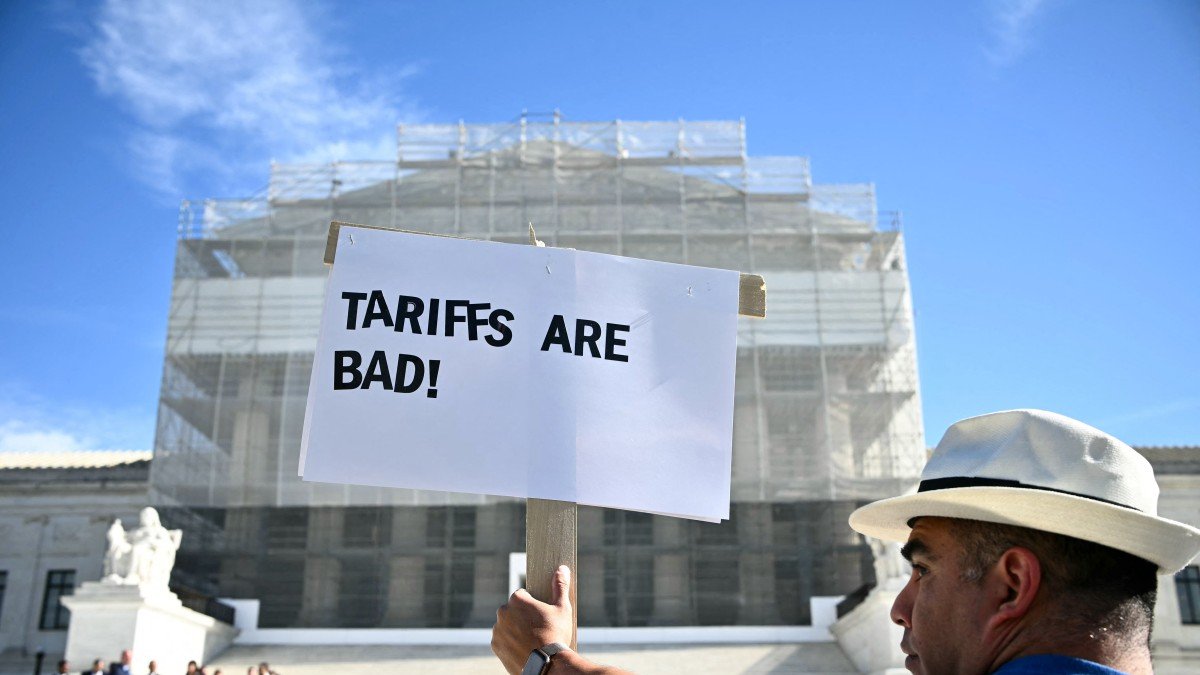
A protester holds a sign reading "Tariffs are bad" in front of the Supreme Court

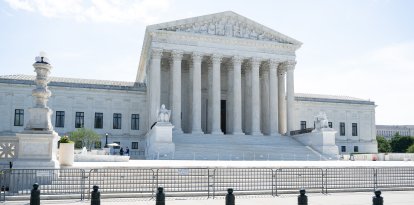
The Supreme Court on Friday struck down a substantial portion of tariffs imposed by President Donald Trump over the past year, a decision that leaves in legal limbo and uncertainty more than $133 billion collected under the scheme and opens the door to a wave of litigation by companies that want to recover money paid to the federal government.
As reported by The Wall Street Journal, the measure affects tariffs imposed under the International Emergency Economic Powers Act (IEEPA), the legal instrument that enabled the White House to impose wide-ranging tariffs on trading partners worldwide.
According to figures cited by the newspaper, Customs and Border Protection had collected around $133.5 billion in tariffs under that law as of mid-December. That amount represented about 67% of all tariff revenue in fiscal year 2025 and 57% of what was collected between the end of September and Dec. 14.
In total, including other charges not directly linked to presidential trade measures, duty collections reached about $202 billion in that same period, about 2.4 times more than the previous year, according to the WSJ.

Politics
La Corte Suprema anula buena parte de la política arancelaria de Donald Trump
Diane Hernández
The court decision is a setback for Trump's economic strategy, which had defended tariffs as a central tool of his trade policy. The president himself had argued that those revenues could be used to reduce the federal debt, fund citizen rebates and even compensate affected sectors, such as farmers.
The tariff scheme included a 10% general levy on imports, along with higher tariffs on imports from certain countries. The administration called them "reciprocal," arguing that they sought to level the playing field for U.S. companies in international trade.
Among the main sources of revenue, as reported by the Wall Street Journal, are some $81.74 billion from these general tariffs. This is in addition to other tariffs under the same law: approximately $37.87 billion related to China and Hong Kong, plus smaller amounts from countries such as Mexico, Canada, Japan, India, and Brazil.
In the case of China, the tariff policy reached particularly high levels at certain times, with rates of up to 125%, to which an additional 20% related to fentanyl trafficking was added. Both rates were subsequently reduced to 10% as part of trade negotiations.
The Supreme Court did not specify whether the tariffs should be refunded, nor the mechanism for doing so. This lack of guidelines leaves the resolution of potential refund claims in the hands of lower courts. Meanwhile, trade lawyers quoted by the WSJ note that hundreds of lawsuits have already been filed by companies seeking to recover payments made.
The ruling thus introduces a new legal and economic front around United States trade policy, with direct implications for both public finances and companies operating in international trade.
LATEST