The 13-ton bomb that could change the war between Israel and Iran
The anti-bunker warhead, which Israel does not possess, can penetrate dozens of meters below the surface before detonating—an almost unique capability in the hands of Donald Trump, should he decide to intervene.
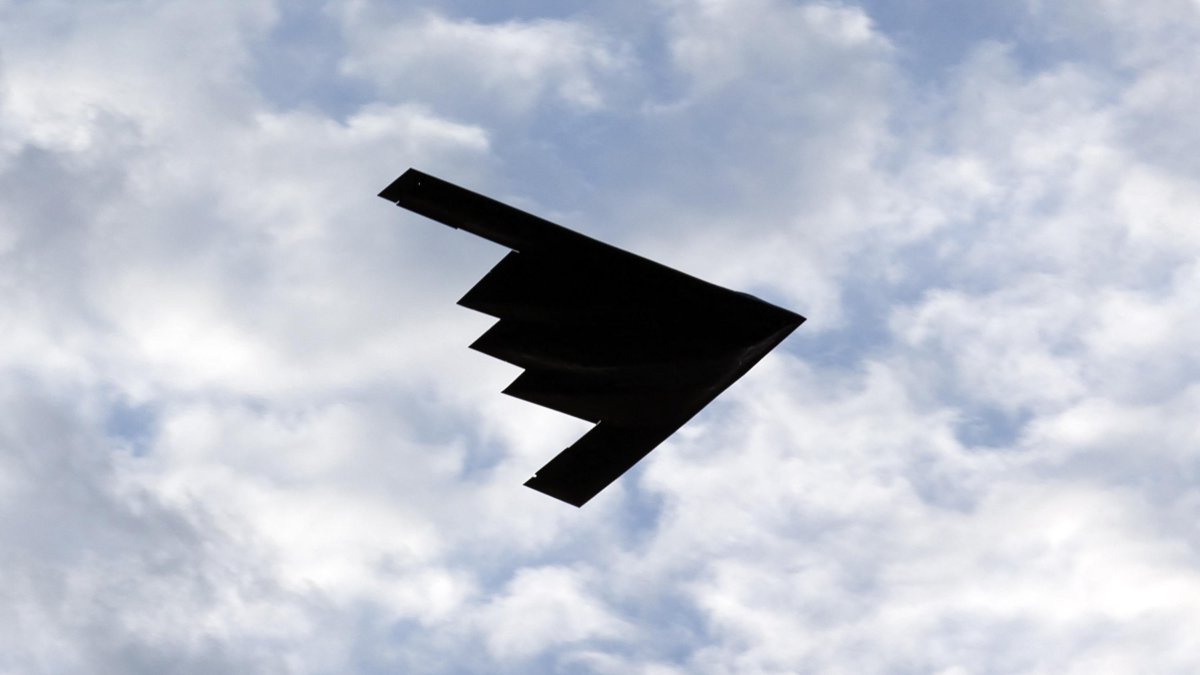
(FILES) A B-2 stealth bomber.

The GBU-57, the only conventional bomb capable of destroying Iran’s underground nuclear facilities, is one of the United States’ key strategic weapons in the conflict between Israel and Iran.
The 13-ton anti-bunker warhead, which Israel does not have, can penetrate tens of meters below the surface before detonating. It’s an almost unique weapon in the hands of Donald Trump, should he choose to intervene.
Why this bomb?
Although the Israeli army succeeded in decimating the Iranian military command and numerous installations within five days, Behnam Ben Taleblu told AFP, “There are still major questions about how effective Israel’s strike was against the core of Iran’s nuclear program.”
According to the expert from the Foundation for Defense of Democracies, a U.S. think tank, "all eyes will be on Fordo, which is buried under about 300 feet of rock in central Iran."
According to the International Atomic Energy Agency (IAEA), "no damage has been observed" at this uranium enrichment plant.
Unlike the Natanz and Isfahan facilities, this one is located deep underground—about 100 meters down—beyond the reach of Israeli bombs.
“Only the United States has the conventional capability” to destroy such a facility, Mark Schwartz, a U.S. general who served in the Middle East and is now an expert at the Rand Corporation think tank, told AFP.
This “conventional capability,” meaning non-nuclear, refers to the GBU-57.

Politics
MAGA civil war over Trump's Iran policy? The right debates whether or not to go to war
Joaquín Núñez
Range
What makes this U.S. bomb unique is its ability to penetrate both rock and concrete.
The U.S. military states that the GBU-57 “was designed to penetrate up to 200 feet (61 meters) underground before detonating.”
Unlike many missiles or bombs that detonate on impact, these bunker-busting warheads first bury themselves underground and only explode when they reach the target facility.
Masao Dahlgren, a weapons specialist at the CSIS research center in Washington, told AFP that these weapons are built with a very thick reinforced steel casing to help penetrate these rock layers.
This explains its weight—over 13 tons—and its length of about 21 feet 8 inches.
Its effectiveness also comes from its detonator, which doesn’t trigger on impact but “detects when the bomb reaches an open cavity” and “detonates upon entering the bunker,” Dahlgren explains.
The design for this bomb began in the early 2000s. In 2009, Boeing received an order for 20 units.
How is it launched?
Only U.S. B-2 aircraft are capable of delivering this bomb.
Some of these stealthy strategic bombers were deployed in early May to the U.S. base at Diego Garcia in the Indian Ocean, but by mid-June, satellite images from PlanetLabs analyzed by AFP showed no sign of them.
Thanks to their long range, B-2s taking off from the United States “are capable of flying as far as the Middle East for bombing runs; it’s been done before,” says CSIS’s Dahlgren.
Each B-2 can carry two GBU-57s.
If they decide to use them, “they won’t just drop one bomb and call it a day—they’ll use several to ensure a 100% chance of success,” predicts Mark Schwartz.
Israel’s air superiority over Iran “reduces the risk” of such an operation, adds the retired general.
Consequences
Without access to this U.S. bomb, an Israeli strike on an underground complex like Fordo would likely involve “targeting the entrances, collapsing what you can, cutting off the electricity,” the expert explains. This approach appears to have been used at the Natanz plant.
Additionally, there’s a recent, little-known nuclear facility near Natanz that’s “probably even deeper than Fordo” and “raises questions about what’s happening there,” he concludes.
LATEST