Caricom Summit: Rubio anticipates free elections in Venezuela and presses the Cuban regime before Caribbean leaders
During the event, the secretary of state met with leaders from the region, highlighted the U.S. partnership with the Caribbean and pledged continued cooperation on national security.
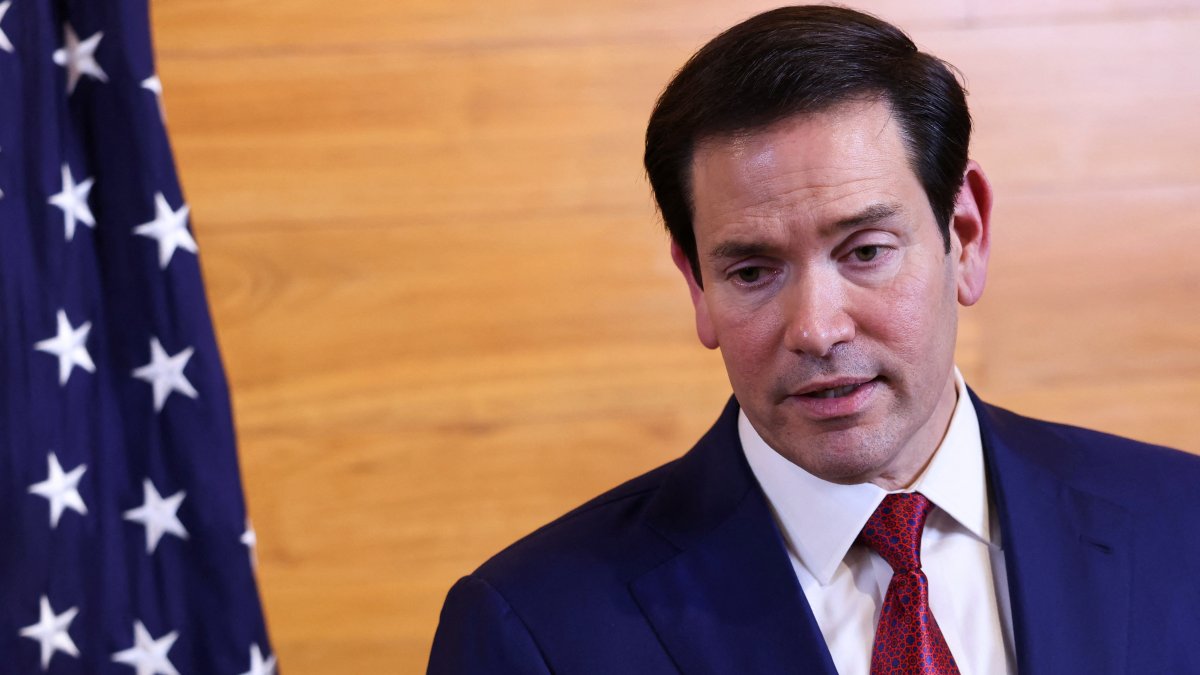
Marco Rubio speaking to journalists at Caricom/ Jonathan Ernst.

Marco Rubio participated in the Conference of Heads of State of the Caribbean Community (Caricom). The event was held between February 24 and 27 in Basseterre. There, he took aim at the Cuba regimeand emphasized the need for Venezuela to hold free elections as part of the "next step" of the transition.
During the event, the secretary of state met with leaders from the region, highlighted theU.S. partnership with the Caribbean and pledged continued cooperation on national security.
"We believe that perhaps the most urgent security threat in the region—that includes us, but obviously all of you—is the threat of these transnational criminal organizations. This is a danger in the countries that they transit, and it’s ultimately a danger to the national security of the United States," he said.

World
El régimen cubano mata a cuatro tripulantes de una embarcación proveniente de EEUU
Emmanuel Alejandro Rondón
Politics
Diplomacy in action: Rubio meets with Caribbean leaders at historic CARICOM meeting
Diane Hernández
"We are interested in rebuilding and constructing a new dynamic in this Western Hemisphere in which we partner with all of you on the issues we share in common.The stronger, the safer, the more prosperous, and the more secure that all of your countries are, the stronger, safer, more secure, and prosperous the United States is going to be," Rubio continued.
One of his most important definitions was in relation to Venezuela, which is currently cooperating with the Trump Administration almost two months after the capture of Nicolás Maduro.
"Ultimately, in order for them to take the next step to truly develop that country and to truly benefit from that country’s riches for the benefit of their people, they will need the legitimacy of fair, democratic elections. (...) A prosperous, free Venezuela who’s governed by a legitimate government could also be an extraordinary partner and asset to many of the countries represented here today," the Secretary of State said during his speech.
Marco Rubio's reaction: "We're not going to base our conclusions on what they've told us"
As reported by the Cuban regime, Cuban security forces killed four crew members and wounded six others after an armed confrontation with a U.S.-registered speedboat. According to the official version of the regime, the speedboat, registered in Florida with license plate FL7726SH, entered Cuban territorial waters.
A few hours later, Rubio spoke to reporters as he left Caricom. There, he referred to the strange nature of the case and anticipated the White House's next steps.
"But we're going to find out exactly what happened here, and then we'll respond accordingly. Suffice it to say, it is highly unusual to see shootouts in open sea like that. It's not something that happens every day. It's something, frankly, that hasn't happened with Cuba in a very long time. But we're going to find out. We're not going to base our conclusions on what they've told us," he said.
In addition, he referred to the island's economic situation under the regime: "The reason why things are as bad as they are is that they have an economic model that does not exist, that does not work, and that doesn't exist anywhere in the world. It is not functional. And the only way Cuba is going to have a better future is if it has a different economic model."
Rubio also spoke about Cuban healthcare and questioned the state of the doctors.
"The other thing with the Cuban medical program is that the fact that these people are working basically is human trafficking. I mean, they're barely even being paid. Their freedom of movement is tightly restricted. And we want these countries to understand that that's what they're participating in. They're paying this money to the regime, which collects the funds. You know, they get paid for these medical missions. Virtually none of this money goes to these doctors who are, in many cases, you know, being, we think it's like a version of human trafficking, labor trafficking," he said.
LATEST