






Analysis
Trump and Johnson's plan to codify DOGE cuts: here's how the Rescissions Package works
Since its introduction on June 3, Congress has 45 days to approve the bill. The Speaker of the House of Representatives hopes to pass it "as soon as possible".
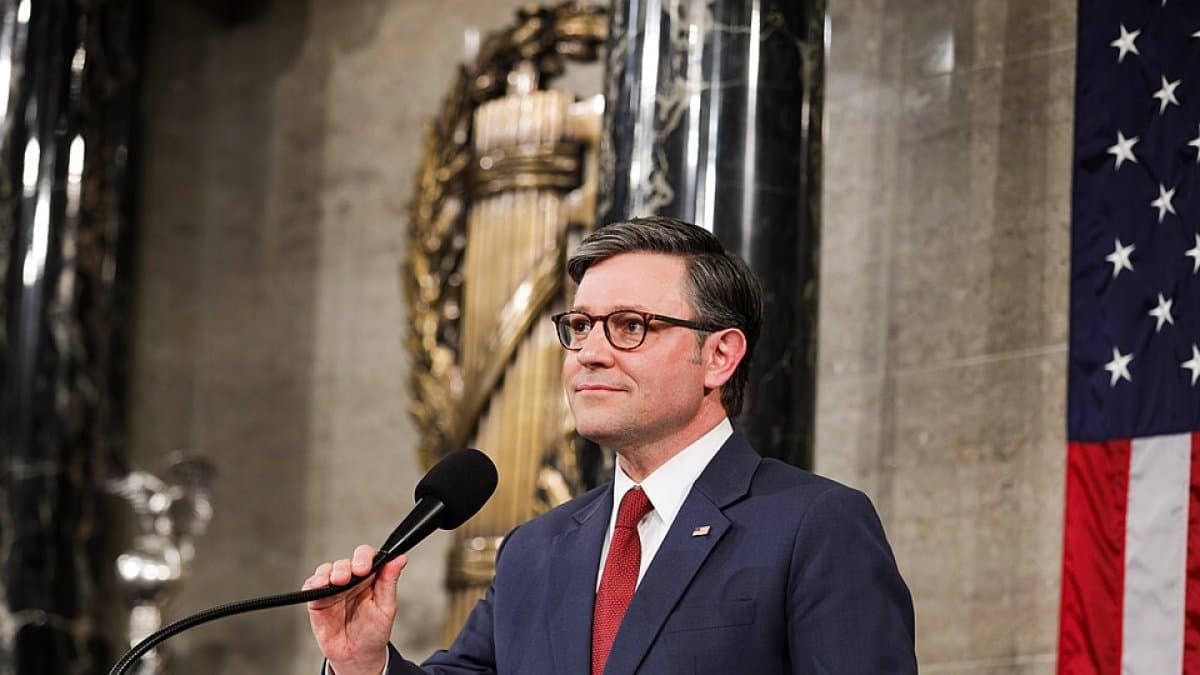

Donald Trump, Mike Johnson, and other Republicans in Congress have insisted on the need to codify spending cuts made by the Department of Government Efficiency (DOGE). While this effort was put on the back burner, given that it coexists with the discussion on the "One Big, Beautiful Bill," it aims to cut $9.4 billion.
Indeed, the White House formally initiated the process last June 3, when it sent the Rescissions Package to Congress. It is the formal legislative vehicle to give effect to the advisory agency's proposals, which until recently was led by Elon Musk.
"This rescissions package reflects many of DOGE ’s findings and is one of the many legislative tools Republicans are using to restore fiscal sanity… Congress will continue working closely with the White House to codify these recommendations, and the House will bring the package to the floor as quickly as possible," House Speaker Johnson said.
While some of these cuts have already been implemented administratively by the White House, they now seek to legitimize them in law. The 9.4 billion breaks down to 8.300 in foreign aid through the State Department or USAID, as well as another 1.1 billion for the Corporation for Public Broadcasting (CPB), which funds the Public Broadcasting Service (PBS) and National Public Radio (NPR).
Although this legislative action offers some advantages to speed up the process, there is no consensus among Republicans themselves on whether or not to move forward with the cuts. The discord is specifically over funding to public media. Some members of Congress, such as Mark Amodei, argue that they play a key role in rural communities.
How does the Rescissions Package work?
This legislative gimmick stems from the Impoundment Control Act of 1974, which prohibits the president from preventing the spending of funds previously approved by Congress.
The legislation was passed at the time to prevent President Richard Nixon from unilaterally withholding previously authorized spending items.
However, it provides for two exceptions to the rule: spending carryovers and spending recisions. In the latter case, the White House can ask Congress to approve the proposed cuts through a Funding Cancellation Package.
Politics
GOP plan to hold the House in 2026: Capitalize on Hispanic vote in key districts
Joaquín Núñez
This has a 45-day deadline from submission and is governed by a simple majority in both chambers, circumventing the 60-vote rule to break debate in the Senate. The White House can activate this process as many times as it likes, with no annual limits.
In addition, it can only be used to cut discretionary and expensing funds, but not mandatory spending such as Medicaid, Social Security, or interest on debt.
As for "on track for spending" items, these are items that have already been approved by Congress but not yet activated. For example, if an expenditure of 500 million is approved for an international aid program and the State Department signs a first contract for 200 million, the remaining 300 million are "on track" since they were authorized but not activated. In other words, they are like checks approved but not yet cashed. Therefore, they are subject to being cut.
If Congress approves the legislation, the questioned spending is stopped and those funds are returned to the Treasury, available for use on other priorities or deficit reduction. In this case, the amount is $9.4 billion.
Otherwise, if the legislators reject the bill or if they do not approve it within 45 days of its presentation, the challenged funds will be executed as planned.
Since the passage of the Impoundment Control Act of 1974, Presidents Gerald Ford, Jimmy Carter, Ronald Reagan, George H.W. Bush, and Bill Clinton used it successfully. With 200 rescission packages sent, Reagan exploited this tool the most. Congress approved more than half of them.
During his first term, Trump attempted one of the most ambitious packages of cuts but did not have congressional support. He hopes his luck will change on his return to the White House.
🛠 Do you think there is an error in this article?
Recommendations





LATEST