Trump, 1 - Rest of the World, 0
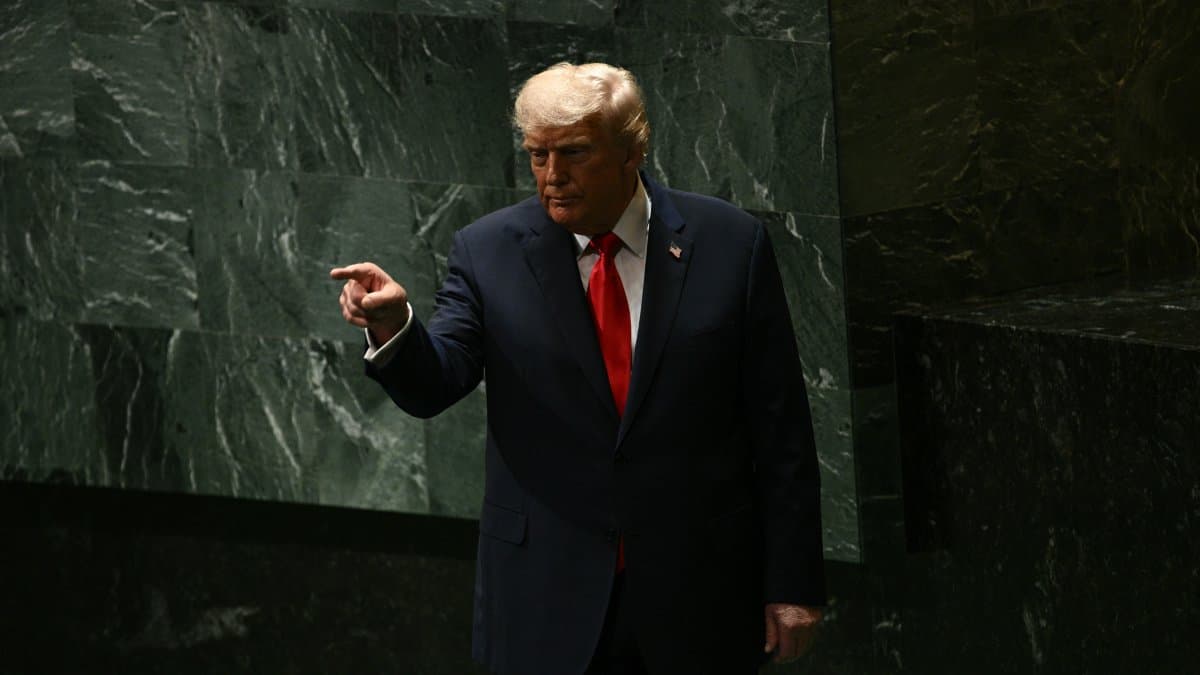
What Donald Trump has shown this year is that he is much more consistent than people thought or expected. His so-called outbursts are much more than the reactions of someone temperamental.
Published
After mostly betting on a Kamala Harris victory, Europeans greeted Donald Trump's victory like viewers of the Walt Disney movie "Pinocchio": he came back a capricious and lying child, prone to get into trouble, but, in the end, with the perseverance and help of his elders, the story ends well. He returns to the family fold and becomes a normal person.
A year later, now the first 12 months of Donald Trump in the White House, Europeans are beginning to recognize that they got the wrong movie and that, instead of Carlo Collodi's fable, what they are experiencing is actually a horror film. Take John Carpenter's "The Thing,": an alien that gradually takes over a team of scientists in Antarctica, one by one, working from within without ever fully revealing itself. A lethal being that inexorably dismantles the very foundation of the outpost. Europeans now see Trump as that alien, and the outpost in the film as the Western world as it has been known since the Second World War.
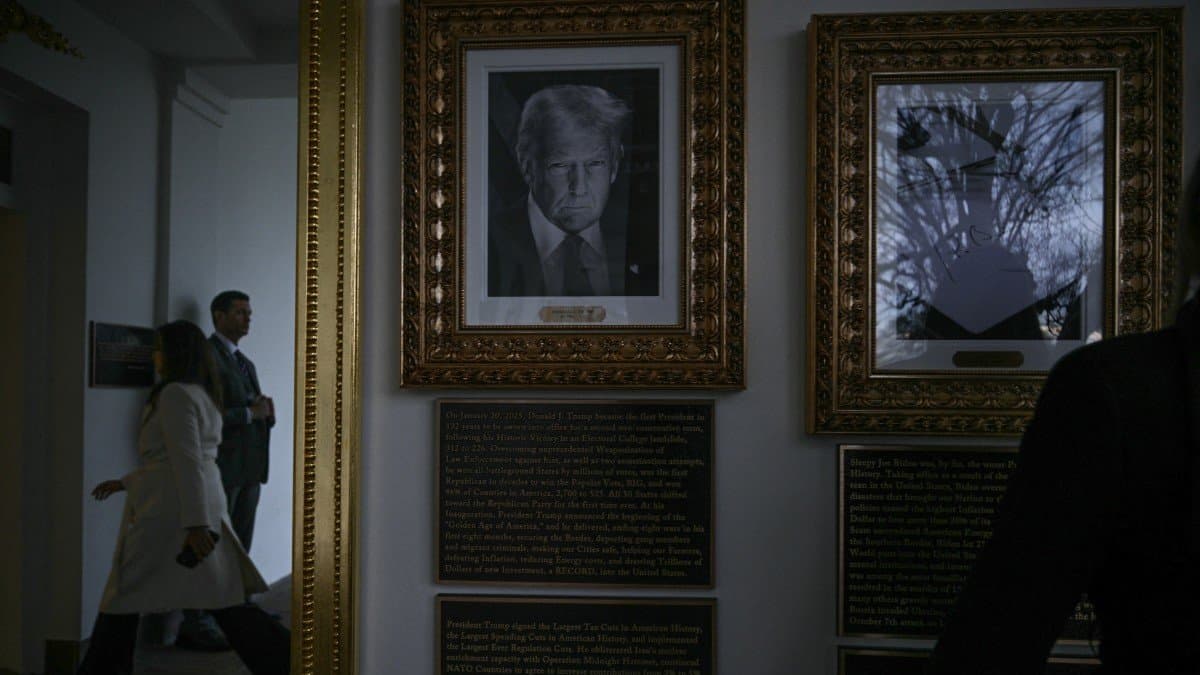
First came the tariffs, against all and with varying severity. Announcements of trade punishments of up to 50%, subsequent rebates and changes of effective date; the Europeans accepted a trade agreement that penalized them 15% on their exports to the United States, quietly thinking that the tariffs, in the end, would not apply for long, as it would cause inflation in America and the logical discontent of American consumers, who would lose purchasing power. That, at least, was what the theory of liberal economists said. However, a year later, this supposed inflation has not occurred and no one in the United States questions either the use of tariffs or, more importantly, the linking of economic and trade policy to the geostrategic design of the new administration. This is utterly incomprehensible in Europe, where the mercantilist ideas of a Colbert are a distant memory.
Then came Trump's support for Israel in the bombing campaign to destroy the Iranian nuclear program last June. Europeans had been self-convinced that Donald Trump was like soda pop, lots of bubbly but quickly dissipating. Barking dog but little biter, openly reluctant to use force. Even more, they have always scoffed that Trump could be restrained in the end by putting up some resistance: the famous "TACO" or "Trump Always Chicken Out." After all, he had not abandoned Ukraine with just a few European promises to send more aid, nor had he left NATO after a vague commitment that America's allies increase their spending on defense between now and 2030. The exception was Spanish Prime Minister Pedro Sánchez, who aspired to lead an international coalition against Trump. Trump deployed stealth planes to eliminate key Iranian nuclear facilities, to the fear of the Europeans, who have always said that such military action would provoke the apocalypse. But it didn't and today, as we know, the regime of the ayatollahs is on a tightrope, gripped by an emboldened population who can't stand it anymore.
Just as the world had begun to dismiss Trump's earlier, seemingly irresponsible bravado over Panama, Canada, and Greenland as forgotten bluster, his administration released a new national security strategy. It clearly articulated a modern version of the Monroe Doctrine, now dubbed the "Donroe Doctrine." Its core principle shifted from "America for the Americans" to "America without outsiders," with a specific focus on excluding China. European capitals were still processing the seriousness of this document when the next shock arrived: the detention, by U.S. special forces, of Venezuela's president, Nicolás Maduro, and his immediate extradition to face a court in New York. The shock was twofold. For the left, it meant the disappearance of a key pillar of so-called "21st-century socialism." For Europe's liberal-conservative moralists, it was the pragmatic realism of a Trump who did not seek to instantly restore democracy in Venezuela. Perhaps the most significant shock was felt in Tehran, which lost its primary market for gasoline, and in Beijing, which was deprived of cheap access to Venezuelan heavy crude. Russia too, which lost an ally on the continent. Not to mention Cuba, which was left without lifeblood.
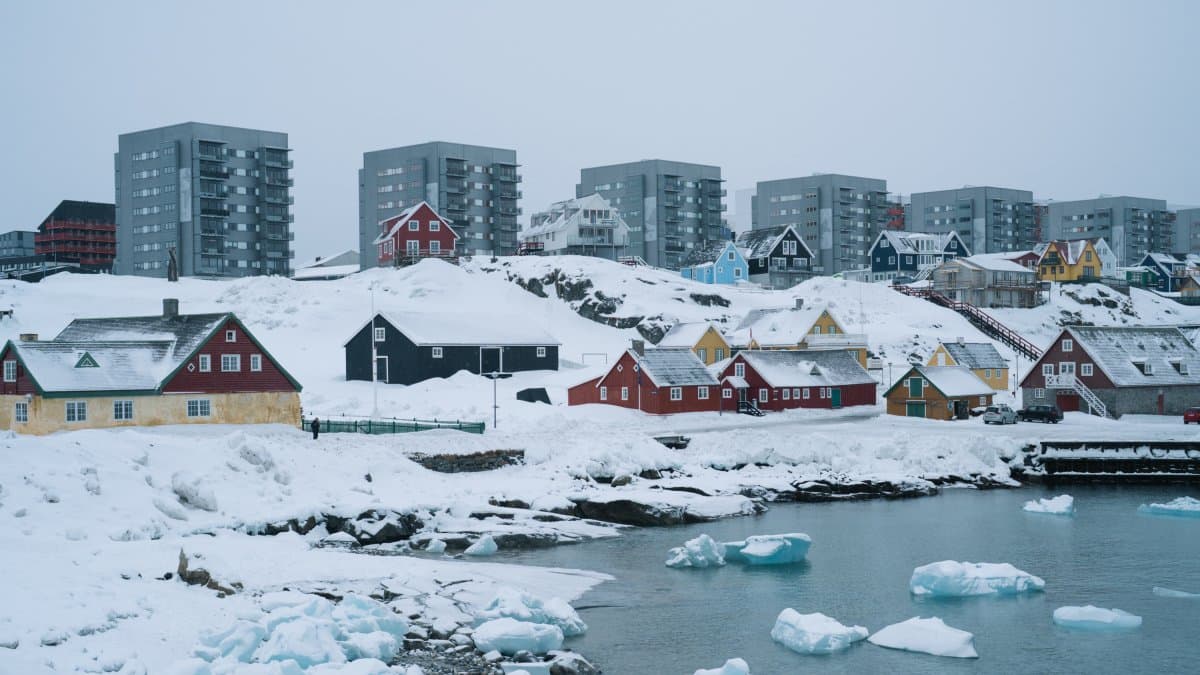
Finally, there were the popular demonstrations against the ayatollahs in Iran and the possibility of a new American attack, this time targeting the regime itself. Though the military buildup in the region continues, keeping all options on the table, the focus has shifted from the Persian Gulf to Greenland, an icy island, supposedly rich in rare minerals, but above all strategically positioned to control the Arctic. It lies just off North America, is dependent on Denmark, is not part of the European Union, is sparsely populated, and is circled by Chinese and Russian interests. Trump wants it as a core value of his national security and the Europeans are in revolt. Not because they have ever paid Greenland much attention, have plans to develop its resources, or feel compelled to defend it from Eastern threats. No, they are revolting because they cannot accept their chief ally taking it from them through what they see as pure coercion. Once again, for much of Europe, the principle matters more than the practical outcome. For the more battle-hardened, it is a matter of honor, even if the reality is that the military deployment to oppose Trump's plans was a dozen Germans, a few Norwegians, a Briton and little else. And only for a few days. By entrenching itself in a war of sentiment, as in Ukraine, the E.U. has single-handedly placed itself at the center of a crisis that threatens its cohesion and future, refusing to explore other options, such as long-term leasing. Europe will end up losing its honor, Greenland and who knows what else because of its blindness and stubbornness.
What Donald Trump has shown this year is that he is far more consistent than people believed or expected. His so-called outbursts are much more than the reactions of someone temperamental. Time, it is said, puts everything in its place, and we are seeing it in these first 12 months. Trump's world is condensed in what for Europe is the revenge of its classics, forgotten thanks to the postmodernism that has taken over the ruling elites of the "old continent," whether left, center or right. On the one hand, we have Lord Palmerston, who defended in his time that England had neither enemies nor permanent allies, only permanent interests. A view that Donald Trump now applies to the United States in a very clear and categorical manner; on the other hand, we have the mercantilists, such as the Frenchman Colbert, who advocated the protection of national wealth through the use of tariffs and quotas on international trade. Moreover, he defended the intervention of the State in economic and commercial policy with the instruments at its disposal. Something with which Donald Trump also agrees. We also have the British geographer MacKinder, one of the fathers of geopolitics and ideas about the control of maritime lines, the continental heartland and the vital space of states. Only from this forgotten thinking can one understand what Trump's America wants and how it wants it, not because of Jared Kushner's financial interests, as is always simplistically stated.
Trump's world is a bipolar one, with America competing directly with China at all levels. Russia lacks the capacity to be a major adversary unless it becomes a puppet of Beijing. Europe, meanwhile, is either irrelevant or a passing nuisance, largely due to its own choices. It has traded its values and principles to become a collection of aging, dependent nations, governed by a post-Western bureaucracy. This is a continent that regards the foundational purpose of U.S. Immigration and Customs Enforcement (ICE) with unease and views its tactics against illegal immigration with dread, precisely because it has accepted that law and order can be flouted by the left and anti-system actors with absolute impunity.
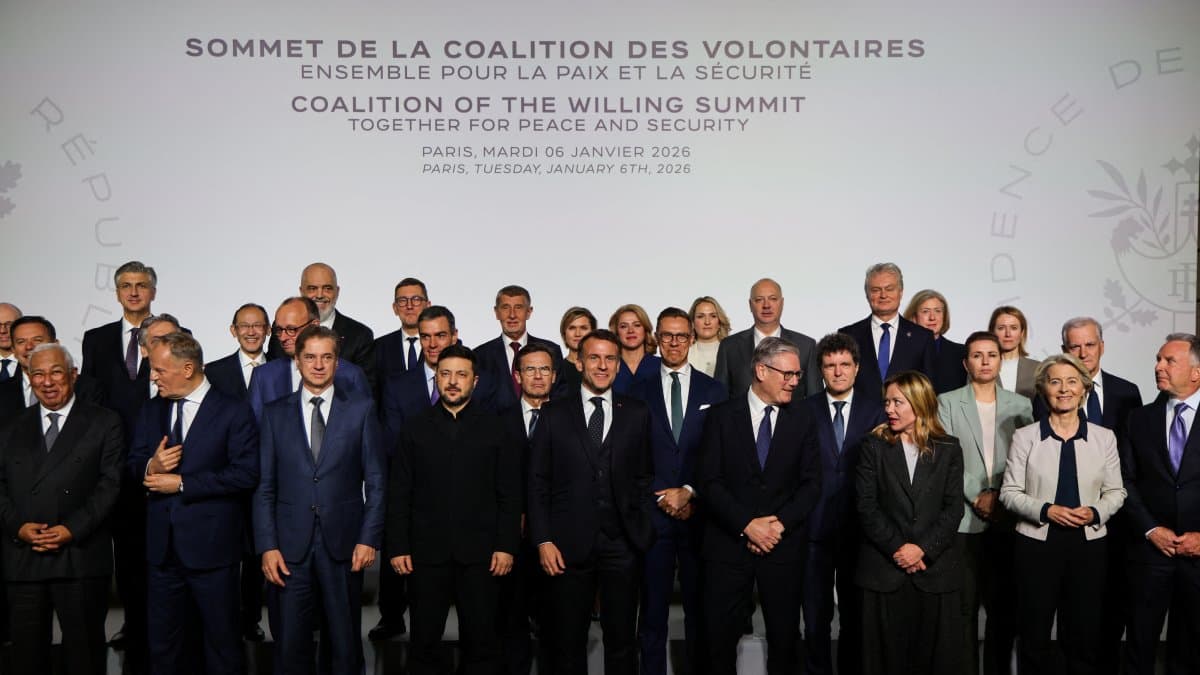
The reality is that Trump and Europe are clashing not merely over a piece of inhospitable land like Greenland, but over two ways of seeing and understanding life and the world, order, freedom and authority, family and faith, tradition and modernity. The strategic and historical mistake of Europeans is to run away from Trump to fall into the arms of China, as if that techno-totalitarian state under the power of the Communist Party would better protect our future. Only a soulless mind with authoritarian traits could come up with such a thing. Unfortunately, as Washington warns, that is what Brussels is leading us to.
🛠 Do you think there is an error in this article?
Recommendations

LATEST