
The term to use: Zionophobia
It exposes how “anti-Zionism” frequently operates not as principled dissent, but as a socially acceptable vehicle for antisemitism.
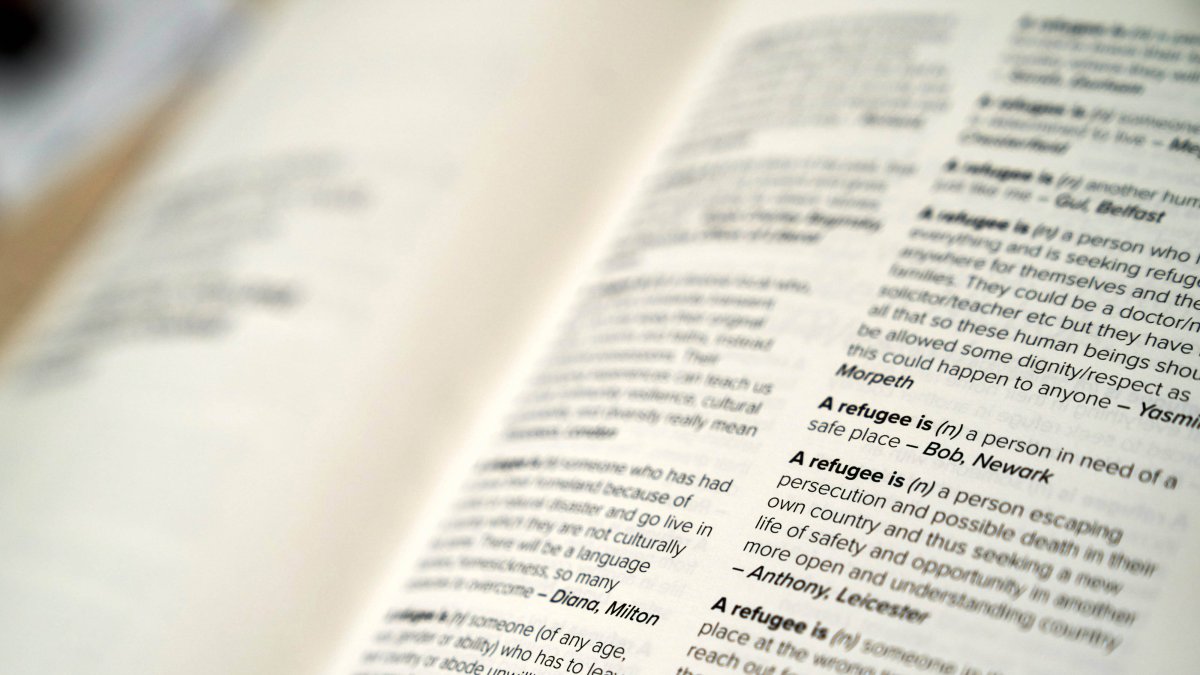
Diccionario
Zionophobia is a term people should get used to using. It deserves to be amplified far and wide.
According to Wiktionary, “Zionophobia means hostility toward Zionism or people who identify as Zionists, often extending into prejudice against Jews when Zionism is treated as an inherent Jewish trait.”
Judea Pearl, a computer scientist (and father of Daniel Pearl, employed by The Wall Street Journal, who was murdered by Al-Qaeda in 2002), has been trying to spread the word about this language change—and it is indeed worth spreading.
He says instead of trying to defend against the claim of being a Zionist, people ought to turn around and point to the accuser of being a Zionophobe. He says Jews and supporters of Israel have made a strategic error by constantly defending, denying or softening their identification with Zionism.
He contends that instead of treating “Zionist” as a charge that must be refuted, it should be recognized for what it often is—a marker used by others to justify hostility and bigotry. When that happens, the correct response is not an apology but identification of prejudice.
Words and approach matter. This tack shifts from a defensive posture to an offensive one. The power of naming this behavior has been proven. Terms like “Islamophobia” and “homophobia” have forced society to distinguish between critique and hostility. Once named, bigotry became harder to hide under the guise of virtue.
Zionophobia deserves the same treatment. It exposes how “anti-Zionism” frequently operates not as principled dissent, but as a socially acceptable vehicle for antisemitism: The word Zionist has replaced the word Jew. When Jewish individuals or even unrelated commercial brands are targeted simply for perceived Zionist affiliation, the line has already been crossed.

A recent campaign circulating online illustrates the point. The graphic places the word “boycott” in bold red letters above an image of Bernard Arnault, CEO and chairman of LVMH Moët Hennessy, surrounded by dozens of luxury brands. At the center of the image, beneath his name, is a single label: “Zionist.”
The explicit message is unmistakable. Support for Israel—or even perceived association with it—is treated as a moral stain. This is used to justify collective punishment of businesses, brands and individuals.
No other national movement is treated this way. No one organizes mass boycotts and sanctions of global companies because their leadership supports Chinese sovereignty, Irish nationalism or Palestinian self-determination. Only Zionism is singled out as uniquely disqualifying. That is Zionaphobia in its purest form.
The message is simple: Association with Jewish self-determination renders a person or company illegitimate. It harkens back to the Juden signs during Nazi Germany.
Repeating the obvious, Israel is the only democracy in the Middle East, and disagreement is part of its strength. But denying the Jewish people the right to national self-determination while affirming that right for every other group remains the problem.
The word Zionism has been weaponized, and it’s time to take the word back. Using the term Zionophobia is not about shutting down debate, but about restoring moral clarity. It shifts the burden back to where it belongs, forcing those who weaponize “Zionist” onto their back foot by implying the bigoted nature of their accusation.
Pearl has made it his mission to propagate this term, and he deserves to be commended. Zionophobia ought to be on the lips of every individual who is thrust into the Israel debate. The term should be broadcast far and wide on social media and beyond.
LATEST