TRUMP ANNOUNCES THAT DICTATOR MADURO AND HIS WIFE HAVE BEEN DETAINED AND TAKEN OUT OF THE COUNTRY
The bombings began around 2 a.m. local time and reports indicate that the operation is still ongoing.
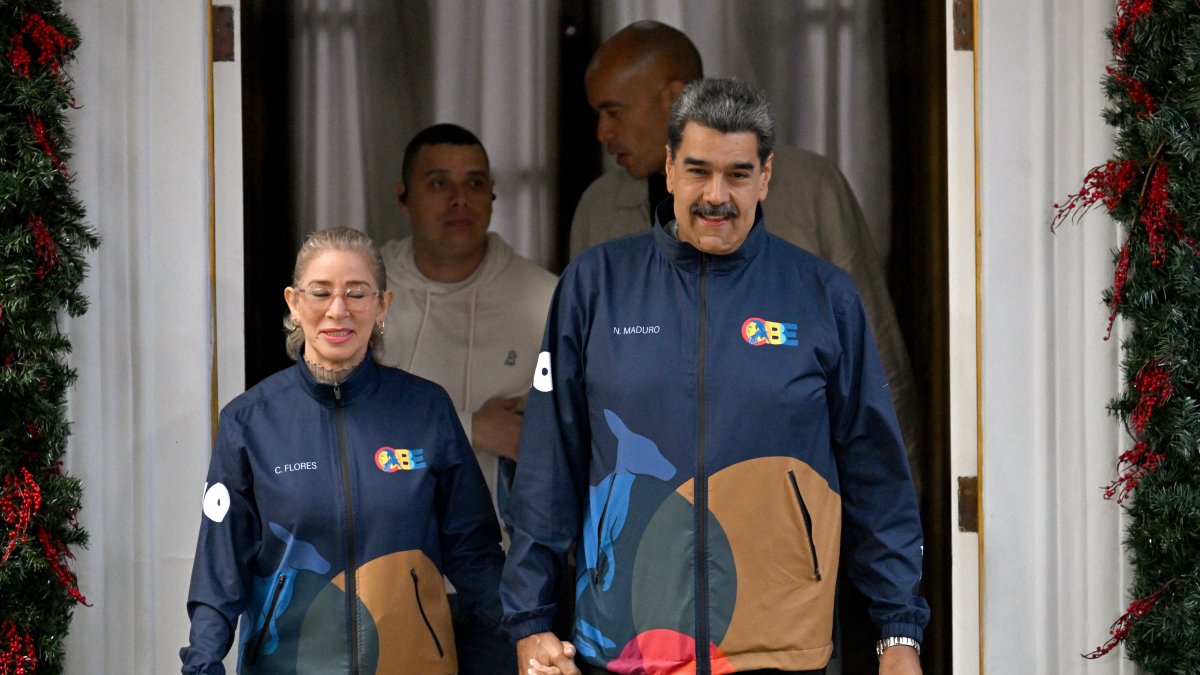
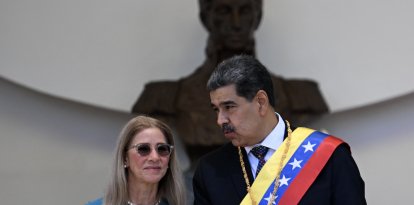
Nicolas Maduro and Cilia Flores

The United States carried out airstrikes in the early hours of Jan. 3 on several targets inside Venezuela, including the main military base of President Nicolas Maduro and an airport frequently used by his officials.
President Trump confirmed the attacks and the arrest of Nicolas Maduro and his wife, Cilia Flores, via his social network Truth Social.
"The United States of America has successfully carried out a large scale strike against Venezuela and its leader, President Nicolas Maduro, who has been, along with his wife, captured and flown out of the Country. This operation was done in conjunction with U.S. Law Enforcement. Details to follow. There will be a News Conference today at 11 A.M., at Mar-a-Lago. Thank you for your attention to this matter! President DONALD J. TRUMP."
Among the targets hit were airports, military bases, antennas and ports.
The bombing is part of the U.S. military operation against the Cartel de los Soles, which began with an unprecedented deployment in the Caribbean, continued with the destruction of narco-vessels and has now escalated to a point of no return.
For its part, Nicolas Maduro's regime issued a statement, read by journalists on state television, in which it denounced the bombing and announced the activation of a state of exception.
There is no clarity on the number of victims or the impact of the bombing.
CBS has reported that it is also possible that the operation includes troops on the ground.
The Noriega case as a precedent
Noriega, who had been a collaborator of the CIA, ended up losing the backing of United States due to allegations of drug trafficking, money laundering and connections with cartels such as the Medellín cartel.
In 1989, he invalidated the elections won by the opposition, led by Guillermo Endara, and proclaimed a "state of war" against the U.S. after several incidents with U.S. troops, including the death of a Marine.
On Dec. 20, 1989, President George H. W. Bush authorized a military intervention that would deploy the United States in the country. Bush authorized a military intervention that deployed more than 26,000 troops. The mission sought to capture Noriega, guarantee the safety of U.S. citizens, curb drug trafficking and reestablish democratic order.
U.S. troops attacked strategic installations, among them the Central Headquarters in the neighborhood of El Chorrillo, and quickly disbanded the Panamanian Defense Forces, which were disbanded after the operation.
Noriega managed to avoid capture at first and, on Dec. 24, 1989, sought asylum in the Apostolic Nunciature, the Vatican's diplomatic headquarters in Panama. U.S. forces surrounded the compound and resorted to psychological pressure tactics, such as the constant broadcasting of loud rock and heavy metal music.
After ten days of siege, Noriega surrendered on January 3, 1990, the same date on which, 36 years later, Nicolás Maduro would also fall.
The dictator was taken into custody by the DEA, transferred to Miami and put on trial in the United States, where he received a 40-year sentence for drug trafficking, extortion and money laundering, although the sentence was later reduced.
LATEST