SpaceX revenue jumps 92% in first earnings report, but shares slide
The company's results exceeded analysts' expectations by about $1 billion in its first earnings report following its IPO, but its stock price plummeted as investors remained skeptical about its ability to deliver on its ambitious promises.
SpaceX logo

SpaceX's revenue jumped 92 percent in the second quarter, beating analyst expectations by around $1 billion in its first post-IPO earnings report, but shares tumbled as investors remained skeptical about the company's ability to deliver on lofty promises.
AI computing deals and Starlink satellite growth fueled the results, the company said in a statement. But it also continued to spend heavily, with capital expenditures exceeding $18 billion in the three months ending in June. More than 86 percent of that spending went to its artificial intelligence division.
Starlink's satellite connectivity service grew to 12 million subscribers, doubling from a year earlier. Rocket launches, historically the core of SpaceX's business, brought in $962 million in revenue but also posted an operating loss of $542 million.
Starlink, the only segment not losing money
Starlink, its satellite internet business, accounted for just over half of the company's revenue and was the only segment not losing money.
SpaceX touted its connectivity partnerships with major airlines. United Airlines first added Starlink service in 2024; SpaceX now has agreements with American Airlines, Southwest, Virgin Atlantic, Iberia Airlines and Aer Lingus.
Its AI segment tripled to $2.6 billion in revenue but posted a $1.3 billion operating loss. The company reduced its net loss to $541 million.
Elon Musk sought to reassure investors that SpaceX is successfully evolving
During a call with analysts Tuesday afternoon, CEO Elon Musk and COO Gwynne Shotwell both sought to reassure investors that SpaceX is successfully evolving from being primarily a rocket company into a conglomerate with AI at its core.
"On the government side, we won more than $6 billion in US contracts in Q2, supporting major Space Force programs that offer our nation mission-critical communications and sensing capabilities, and we see even more room for growth in this sector in this coming year," Shotwell said.
SpaceX shares dropped more than 8 percent during after-hours trading. Investors remain skeptical even with SpaceX beating expectations, Emarketer Senior Analyst Gadjo Sevilla told AFP: "I don't think people want to hear promises about the next five years or a mission to Mars. Everyone knows that will take time. They want to see how the value can be turned around as quickly as possible."
Uncertainty will linger this week until a lockup period expires on Thursday, allowing a portion of SpaceX employees to sell their shares post-IPO. That could more than double the already limited number of shares in circulation, which currently sits at around 5 percent.
The future is IA
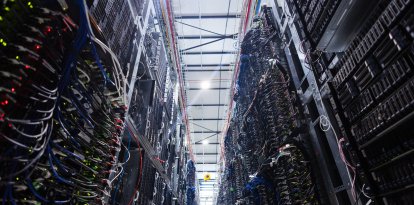
The AI division -- which includes the social network X, its Grok chatbot, and data centers -- is expected to become the company's leading source of revenue as early as the September quarter. SpaceX has signed agreements to lease unused computing power to companies including Anthropic and Google.
Those and other deals are expected to bring in an additional $6.7 billion in compute leases over the six months beginning in October, CFO Bret Johnsen said.
In July, AI lab Anthropic started paying $1.25 billion a month to use SpaceX's Colossus data center near Memphis, Tennessee. Google will start paying $920 million a month for computing power, and startup Relection AI inked its own computing deal, as well.
LATEST