US breaks Israel's historic air superiority in the Middle East with sale of 48 F-35 fighter jets to Saudi Arabia
According to Politico, the decision comes despite warnings from lawmakers and defense officials, who for years have been cautioning about the risks posed by Saudi Arabia's close military ties with Beijing, a situation that could give China access to highly sensitive military technology.
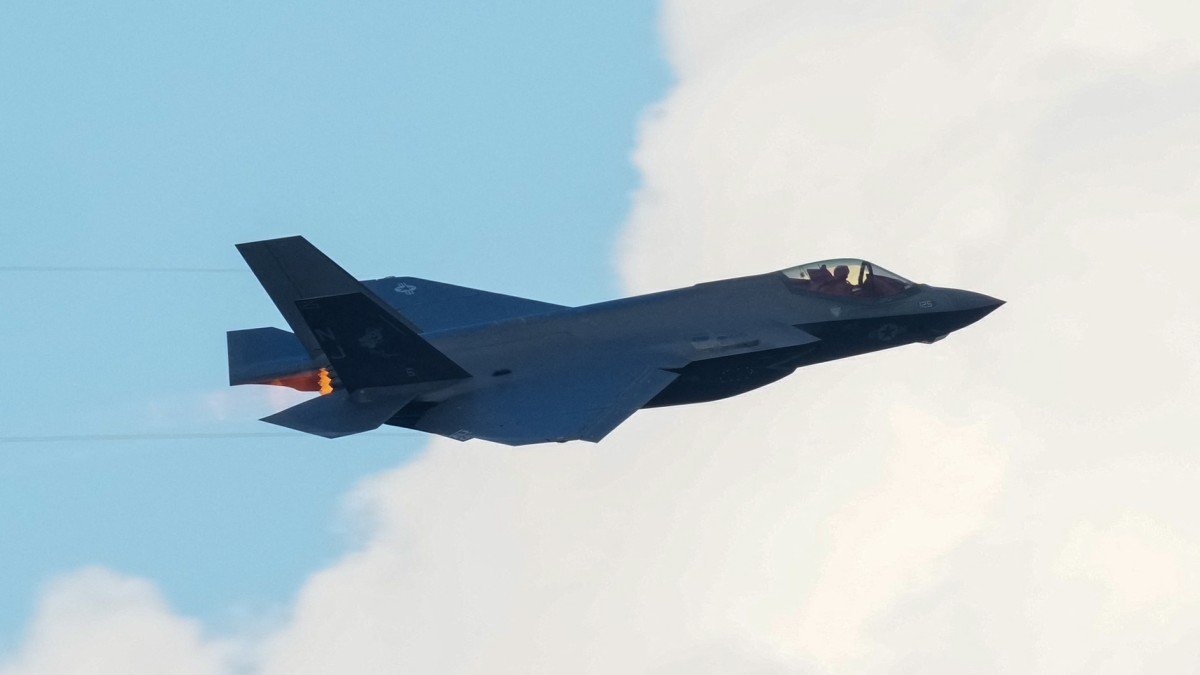
An Air Force F-35 fighter jet flies over the area during Independence Day celebrations

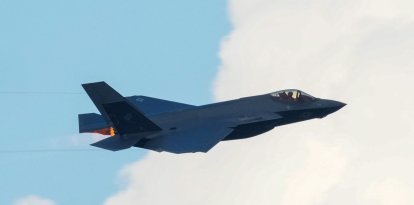
Since Israel became the first and only country in the Middle East to operate F-35s, Washington has committed to maintaining that exclusivity as part of its promise to guarantee Israel a "qualitative military edge" over any other country in the region. That commitment, upheld for years, appears to be nearing its end after the Trump administration approved on Thursday the sale of 48 F-35 fighter jets to Saudi Arabia, a $24 billion deal that would bring the Saudi fleet almost entirely in line with the 50 aircraft Israel currently operates.
According to a report by Politico, the decision comes despite warnings from lawmakers and defense officials, who for years have been cautioning about the risks of the close military ties that Saudi Arabia maintains with Beijing, a situation that could provide China a pathway to highly sensitive military technology.
Democratic Representative Raja Krishnamoorthi, a member of the House Intelligence Committee, summarized the agreement as follows: "It could put the crown jewels of American military technology within reach of the Chinese Communist Party."
Meanwhile, the Department of State sought to dispel any doubts about the agreement's regional impact. In the official notice announcing the sale, it stated that "the proposed sale of this equipment and related support will not alter the military balance in the region," a claim that, however, contrasts with the concrete fact that Saudi Arabia would come to operate nearly the same number of state-of-the-art aircraft as Israel. This leaves the Israeli government itself—perhaps the United States' greatest geopolitical ally worldwide—unaffected.
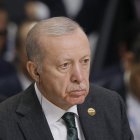
The geopolitical backdrop, precisely, also plays a role. Saudi Arabia is currently facing regular missile and drone attacks by Iran, as well as a resurgence of fighting with Houthi forces in Yemen, a scenario the Saudi government could use to justify the need to bolster its air power. Adding to this is Trump's personal relationship with the Saudi royal family through his son-in-law, Jared Kushner, who secured $2 billion from the kingdom's sovereign wealth fund for his private equity firm between his two presidential terms.
The deal, however, is still far from being finalized. Before any U.S. defense contractor can negotiate with Riyadh, Congress must approve it—something not guaranteed given the history of bipartisan skepticism toward these types of sales. Israel, moreover, has blocked similar attempts in the past and is expected to exert pressure again to halt the deal or impose conditions.
It would not be the first time that an F-35 order in the region has been derailed by controversy. In December 2021, the United Arab Emirates officially put a proposed $23 billion deal to acquire the same fighter jet on hold after the Biden administration expressed concern about Abu Dhabi's relationship with Beijing and its use of 5G technology from the Chinese firm Huawei within its infrastructure.
LATEST