Trump approves a $2.8 billion arms sale to Israel, including 40,000 one-ton bombs
The package includes 40,000 one-metric-ton bombs, divided equally between the MK-84 and BLU-117 models, both weighing 2,000 pounds.
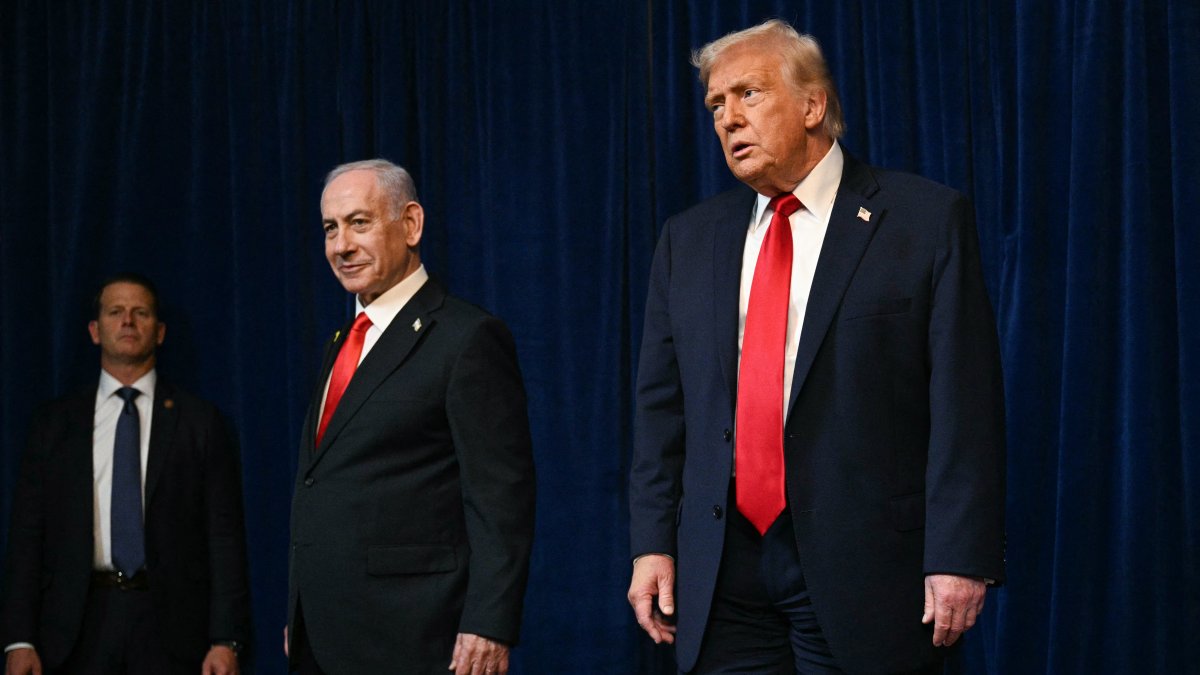
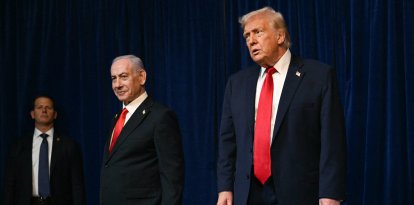
Benjamin Netanyahu and Donald Trump in Palm Beach

On Tuesday, the Trump administration approved a $2.8 billion sale of heavy bombs to Israel, a figure representing one of the largest munitions deliveries from the United States to that country in recent years, as confirmed by a U.S. official to the New York Times.
The news comes at a time when U.S. public support for Israel is at an all-time low following the toll of the war in Gaza, including the breakdown of bipartisan support for a historic ally in Washington.
The package includes 40,000 one-metric-ton bombs, divided equally between the MK-84 and BLU-117 models, both weighing 2,000 pounds, the NYT revealed. It also includes 20,000 I-2000 bunker-busting warheads, designed to penetrate earth, rock, or concrete before detonating. An explosion from this type of bomb can be lethal at a distance of more than 1,000 feet and leave a crater up to 50 feet deep.
The use of these weapons in densely populated areas of Gaza and Lebanon had already drawn strong criticism from human rights organizations and several foreign governments that condemn the offensive in what they consider Palestinian territory.

World
New report reveals the impact of the war: Iran causes $184 million in damage to US
Luis Francisco Orozco

Politics
The Pentagon acknowledges ammunition shortages due to the war in Iran and calls for faster production
Carlos Dominguez
However, this is not the first time Trump has authorized a shipment of this magnitude. In February, his administration had already approved a similar sale worth $2.7 billion, which included 35,000 one-metric-ton bombs of the same models. Months earlier, shortly after taking office for his second term, Trump had also approved a shipment of 2,000-pound bombs that the Biden Administration had been holding up since mid-2024, due to concerns about their impact on the civilian population.
The mechanism for moving forward with these types of sales gives the White House considerable leeway. Although the State Department typically submits such proposals to Congress for informal approval, Secretary of State, Marco Rubio, can invoke emergency powers to proceed with the sale without that step, something he has done in the past. To block a deal of this kind, both the House of Representatives and the Senate would need to pass a resolution with the support of two-thirds of each chamber, the threshold required to override a potential presidential veto. In this context, that would be a truly surprising development.
The approval comes at a particular moment in the relationship between Trump and Israeli Prime Minister Benjamin Netanyahu. Despite recent tensions between the two over Israel's military operations in Gaza, Lebanon, and Iran, Trump maintains strong support for the country. Netanyahu, in fact, is expected to travel to New York next week to participate in the UN General Assembly.
Israel, meanwhile, has defended the use of this type of munition, arguing that Hamas and Hezbollah deliberately hide among the civilian population, in bunkers and tunnels that can only be destroyed with weapons of this caliber. However, several military analysts and former U.S. officials question whether Israel truly exhausted less destructive alternatives before resorting to these high-impact bombs.
LATEST