ANALYSIS
The roar of 'El Tigre': Is Abelardo de la Espriella Colombia's Bukele?
Now that he has completed his first month in office, the Colombian president is following through on the hard-line stance against narcoterrorism he promised during the campaign, is working on El Salvador-style mega-prisons and has solidified ties with the U.S. through Marco Rubio's successful visit to the country to strengthen military cooperation within the Shield of the Americas.
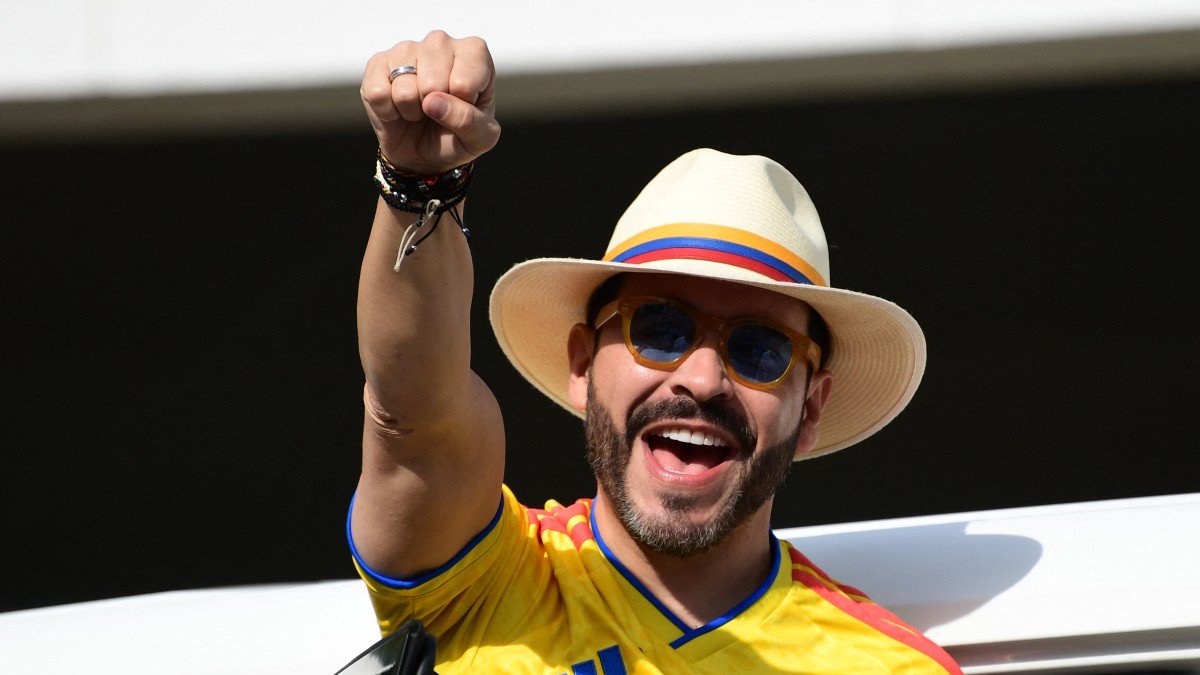
Abelardo de la Espriella

One month into his term in Colombia, "El Tigre" Abelardo de la Espriella has made it clear that his roars are not mere noise. The president has launched the most forceful strike against narcoterrorism in years in the form of the most intense airstrikes in recent decades against the insurgents and has begun working on the creation of mega-prisons in the style of the man with whom many identify him and whom he himself has admitted to admiring: Salvadoran President Nayib Bukele.
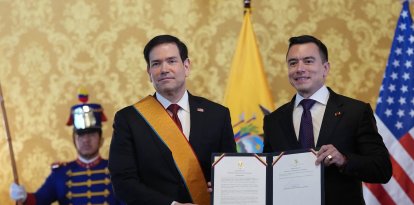
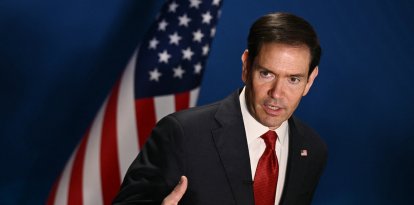
Furthermore, de la Espriella has rushed to move beyond the policy of confrontation with the U.S. pursued by Gustavo Petro in order to build closer ties with Washington. The successful trip by Secretary of State Marco Rubio vividly illustrates the new path of cooperation between the two countries within the framework of the Shield of the Americas promoted by Donald Trump.
After defeating the left-wing candidate Iván Cepeda, heir to the Petrista movement, by a razor-thin margin, de la Espriella wasted no time in getting to work on his platform, adopting an unapologetically right-wing stance in line with Javier Milei in Argentina, Trump in the U.S., Giorgia Meloni in Italy and Bukele himself.
"The option of dialogue has been exhausted; the state was noble enough—and complicit"
His priority, like Bukele's in his day in El Salvador, is to ensure security and that criminals submit to the rule of law. The message is clear: "The option of dialogue has been exhausted; the state was noble enough—and complicit."
This is not a populist phrase or a slogan designed to win the support of a people weary of the abuses committed by narco-terrorists and organized crime groups. Data from the Attorney General's Office and the police confirm the failure of the path of dialogue opened by Gustavo Petro: 752 social leaders and human rights defenders murdered, 429 massacres, 767 kidnappings and 1,541 terrorist attacks in just four years. These figures are up to 40% worse than those recorded while Iván Duque was in power.
For this reason, de la Espriella has made it clear: "Members of criminal gangs and narcoterrorist groups have two paths: submit to the rule of law, or face the resolute force of the Colombian state and its security forces."
To that end, his government will publish "a list of narcoterrorist groups with the aim of equipping [its] glorious security forces with the tools" to combat them. Late Thursday night, the president insisted that the publication of the list was imminent.
Most intense bombings in recent decades against insurgents
However, de la Espriella has not waited for the list to begin his war against narcoterrorism. In his first days in office, he has already launched the most intense airstrikes in recent years against the positions of the insurgents led by Iván Mordisco, the country's most wanted insurgent and supreme commander of the Central General Staff (EMC), the dissident group that brings together thousands of guerrillas who did not accept the 2016 peace agreement.

Bukele-Style mega-prisons and prisoner transfers
He has also announced the creation of giant detention centers, in the style of Bukele. "My administration will build mega-prisons designed to house those who pose the greatest threat to the people's security," he stated clearly. He has also imitated the aesthetics of prisoner transfers, such as shaved heads. His plan is to build about 10 centers modeled after CECOT.
In the prison system, he has also begun implementing his changes without delay. Already in the first few days, transfers of around a hundred drug lords and other notorious criminals began from La Paz Prison in Itagüí (near Medellín) to prisons throughout the country.
Many of them were allegedly engaged in talks with Petro's government to dismantle urban gangs in the Aburrá Valley and other areas of Antioquia. The reality is that nothing concrete ever came of it, and the drug lords continued with their illicit businesses. Among them are the powerful mobster José Leonardo Muñoz, aka "Douglas," leader of La Terraza and a former member of the bloodthirsty Oficina de Envigado (which settles disputes among drug traffickers), as well as "El Indio" and Carlos Pesebre.
Cooperation with the U.S. on the Shield of the Americas
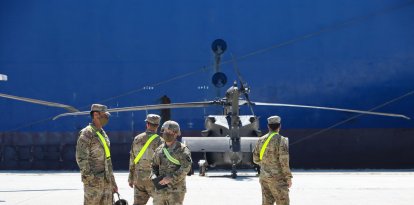
Another important point is participation in Trump's Shield of the Americas. Marco Rubio's visit last week showcased Colombia's new international approach, which hopes to find a steadfast ally in the U.S. in the fight against narcoterrorism and in the country's reconstruction following Petro's time in office.
Rubio himself sought to highlight this aspect during their meeting: "Unfortunately this government has inherited a series of disasters, bad decisions that were made. We felt the same way to some extent when we took office a year and a half ago. But you are facing the mistakes of the last four years and have to fix that."
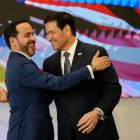
The goal of the secretary of state's trip was "to usher in a golden age of relations between our two countries and our peoples." Following the meeting, de la Espriella dubbed the agreements the "Barranquilla Accords," structured around three pillars: rebuilding the country after the recent earthquake that left more than 300 dead, reviving the economy, and "fortifying the hemisphere" in terms of security.
Differences with Bukele: From the origin of his beard to the political and judicial landscape
On a more serious note, de la Espriella does not control Congress, as Bukele does, so his measures face greater resistance and difficulty in getting approved. Furthermore, the left remains strong and organizes protests or files legal challenges against the president's measures. In fact, a motion of no confidence has already been filed against the defense minister over the deaths of minors during airstrikes against narcoterrorists.
The judiciary is also curbing the new government's most aggressive actions. For example, it has banned airstrikes when there are indications that minors may be present in the areas to be targeted. In addition, a judge ordered him to delete photos posted on social media showing the bodies of insurgents killed by security forces.
LATEST