






Ratko Mladic, the 'Butcher of Bosnia' who was sentenced to life in prison for genocide, dies
The former Bosnian Serb military commander was serving a life sentence after a UN tribunal found him guilty in 2017 of his responsibility for crimes committed during the Bosnian War between 1992 and 1995. The sentence was upheld on appeal in 2021.
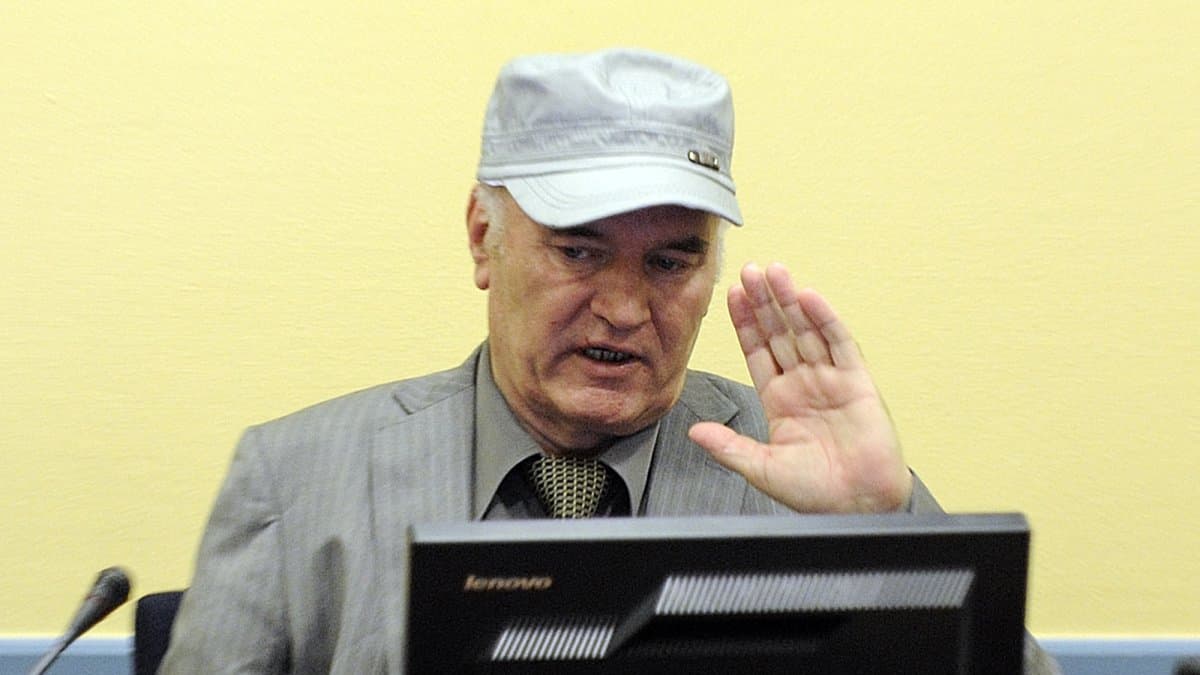

Ratko Mladic, former Bosnian Serb military leader and sentenced to life in prison for genocide, war crimes and crimes against humanity, died Thursday while serving his sentence in The Hague, Netherlands. He was 84 years old.
Mladic, known as the "Butcher of Bosnia" for his role in the 1995 Srebrenica massacre, had suffered several strokes in recent months, according to AFP. Serbian public broadcaster RTS also reported his death.
The former Bosnian Serb military commander was serving a life sentence after a U.N. tribunal found him guilty in 2017 for his responsibility in crimes committed during the Bosnian War between 1992 and 1995. The sentence was upheld on appeal in 2021.
Serbian authorities and Mladic's family had requested his release due to his deteriorating health, but the court in The Hague rejected those requests.
Mladic's role in the Bosnian War
Mladic was the military figurehead of a Bosnian Serb leadership that also included former Yugoslav President Slobodan Milosevic and former Bosnian Serb political leader Radovan Karadzic.
The Bosnian War, which lasted from 1992 to 1995, left approximately 100,000 dead and 2.2 million displaced.
The Srebrenica massacre was the most notorious atrocity of the conflict. In July 1995, Bosnian Serb forces under Mladic's command executed some 8,000 Bosnian Muslim men and boys who had sought refuge in an enclave that was supposed to be protected by the United Nations.
The victims were taken from the area and subsequently killed. Their bodies were buried in mass graves, some of which were later excavated and the remains moved in an attempt to conceal evidence of the crimes.
The few survivors recounted murders, torture and rapes committed by Bosnian Serb forces.
16 years on the run
In November 1995, the International Criminal Tribunal for the Former Yugoslavia (ICTY) indicted Mladic. Although he was removed from his military post, he remained a fugitive for another 16 years.
During the early years of his flight, he lived in comfort and received protection from military circles in Serbia, where some people still consider him a hero.
The pressure on him increased after Milosevic lost power in 2000. Finally, Mladic was arrested in May 2011 and transferred to The Hague.
"Epitome of evil"
During the hearings, he engaged in several verbal confrontations with the judges. He described the court as a "child of the Western powers" and portrayed himself as a target of the NATO alliance.
In 2017, he was sentenced to life in prison. The sentence was upheld in 2021.
The tribunal also found him guilty of participating in a broader campaign of ethnic cleansing aimed at expelling Muslims and Bosniaks from strategic areas to establish a so-called Greater Serbia.
Following his conviction, former U.N. High Commissioner for Human Rights Zeid Ra'ad al Hussein, described him as "the epitome of evil."
Despite international condemnation, Mladic continued to be revered by some Serbs, who viewed him as a military commander who had defended his people.
🛠 Do you think there is an error in this article?
Recommendations








LATEST