Six months of war with Iran: Tension in the strait of Hormuz, economic pressure and markets watching oil prices
The situation in the Strait of Hormuz comes as the United States intensifies its economic pressure on Iran. U.S. Treasury Secretary Scott Bessent stated that the White House was declaring an "economic D-Day" against Tehran and threatened to take action against countries that maintain trade relations with Iran.
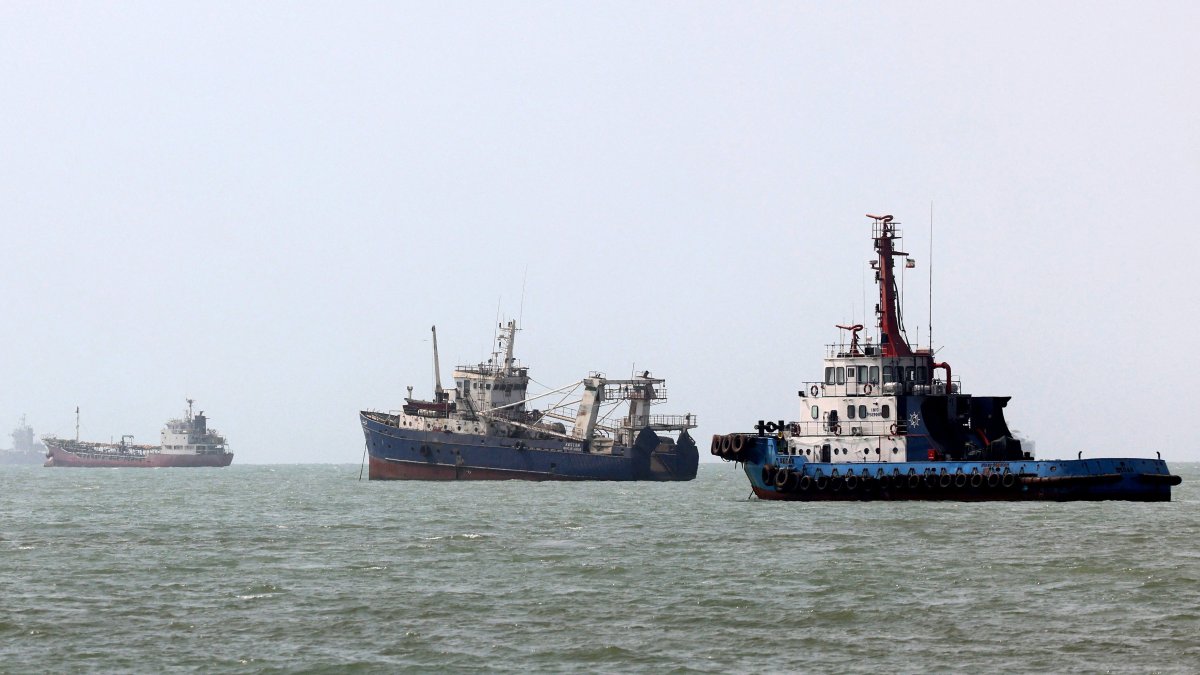
Ships passing through the Strait of Hormuz / Atta Kenare

Six months after the start of the war in the Middle East, the conflict with Iran has virtually paralyzed the strategic Strait of Hormuz, left thousands of sailors stranded in the Gulf and continues to put pressure on energy and financial markets.
According to an analysis by AFP based on data from the maritime tracking service Kpler, before Iran blocked the strait in response to joint U.S.-Israeli attacks in February, about one-fifth of global exports of oil and liquefied natural gas passed through this shipping lane.
After Iran closed the strait on March 1, cargo ship traffic fell to an average of 10 transits per day, compared to 95 recorded daily in February. An agreement signed between the United States and Iran in June allowed for a temporary recovery to 36 daily transits, but the figure fell again to an average of 15 between the resumption of hostilities on July 8 and Aug. 22.
Disrupted shipping routes
Before the war, ships crossed the strait via a central route adopted by the International Maritime Organization (IMO).
There are now two distinct routes: one to the north, near the Iranian coast, the only one authorized by Tehran, and another to the south, between the coast of Oman and areas where mines may be present.
During the period of relative calm between June 17 and July 7, an average of nine ships per day used the Iranian route and eight used the Omani route. The rest sailed along unidentified routes or through the traditional IMO corridor.
Since the collapse of the ceasefire on July 8, two-thirds of transits have become "dark" or unknown, compared to less than 1% before the war, according to Kpler.
These transits correspond to vessels whose exact route cannot be confirmed due to a lack of data caused by deactivated transponders, interfered-with signals, or the absence of satellite imagery.
The pressure is also affecting the markets
The situation in the Strait of Hormuz comes as the United States intensifies its economic pressure on Iran. U.S. Treasury Secretary Scott Bessent stated that the White House was declaring an "economic D-Day" against Tehran and threatened to take action against countries that maintain trade relations with Iran.
Bessent said Washington's goal was to cut off the economic lifelines sustaining the Iranian regime and warned that countries that do not join the sanctions would "share" in Iran's isolation.
The Treasury Department noted that the new sanctions will target Iran's digital assets, technology, gold, aviation and maritime transportation sectors.
The economic offensive comes as talks to reopen the Strait of Hormuz remain stalled and neither side shows signs of backing down. The uncertainty has helped keep oil prices high for much of August, fueling fears of long-term inflation and putting pressure on bond markets.
Oil, however, retreated on Tuesday after the two main contracts fell more than 2% on Monday following Bessent's announcements. Brent stood at $91.68 per barrel, while West Texas Intermediate traded at $84.46, according to figures available at 8:10 GMT.
Stock markets turn their attention to Nvidia
Asian stocks were mostly higher on Tuesday, despite Wall Street's negative performance the previous day. Tokyo, Seoul, Shanghai, Taipei, Singapore, Sydney and Wellington closed higher, while Hong Kong ended virtually unchanged.
Investors are also watching for upcoming earnings reports from tech companies such as Salesforce and Marvell, as well as any signals Federal Reserve Chairman Kevin Warsh may offer during the annual gathering of central bankers, economists, and financial leaders in Jackson Hole, Wyoming.
With the war entering its sixth month, the Strait of Hormuz remains one of the main points of tension for global energy trade, while uncertainty over its reopening keeps markets on alert for any changes.
LATEST