Trump sends the nuclear agreement with Saudi Arabia to Congress: Why is Israel the key?
When the agreement was announced last month, Trump administration officials presented it as an opportunity for U.S. companies to lead the development of Saudi nuclear infrastructure, sidelining foreign competition. But the most controversial aspect is that the pact could open the door to uranium enrichment on Saudi soil.
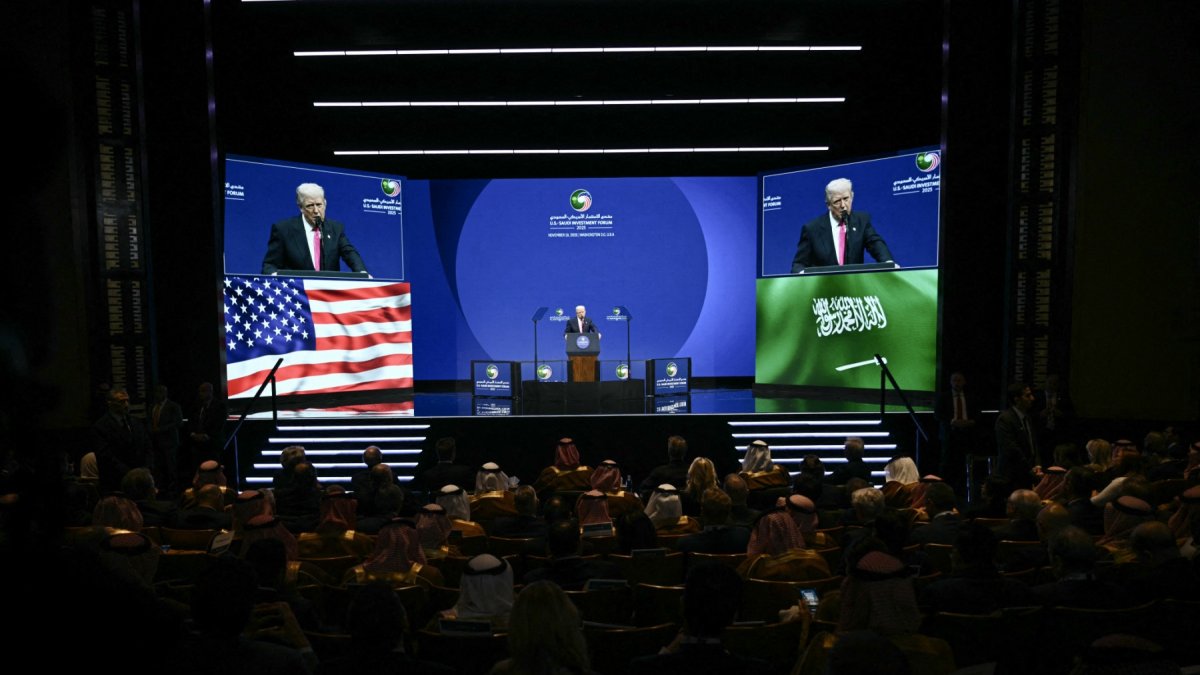
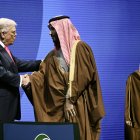
Donald Trump delivers a speech at the U.S.-Saudi Arabia Investment Forum

President Donald Trump submitted a historic 30-year nuclear agreement with Saudi Arabia, although he has not dropped the key condition he imposed for the deal to move forward: that the kingdom normalize relations with Israel, Washington's most important ally in the Middle East.
According to an exclusive report by The Wall Street Journal, the agreement was sent to lawmakers on Monday, and they will find it difficult to block it, since doing so would require a joint resolution and a two-thirds majority to override a potential presidential veto. The newspaper also reported that the review is expected to spark months of debate on how to boost the U.S. nuclear industry without opening the door to the proliferation of weapons of mass destruction in the Middle East.
When the agreement was announced last month, Trump administration officials presented it as an opportunity for U.S. companies to lead the development of Saudi nuclear infrastructure, sidelining foreign competition. But the most controversial aspect is that the pact could open the door to uranium enrichment on Saudi soil. As part of the plan, Washington and Riyadh will first conduct a two-year study to determine whether it is advisable to build a local plant, which, if the project moves forward, would be operated by U.S. companies, without any transfer of sensitive technology to the kingdom.
World
U.S. and Saudi Arabia sign historic nuclear agreement: Kingdom is free to enrich its own uranium
Emmanuel Alejandro Rondón
Saudi Arabia has defended the need to develop a civilian nuclear industry to leverage its uranium deposits and meet domestic energy demand, thereby freeing up more oil production for export. However, nonproliferation experts warn of the precedent that such a move would set. Andrea Stricker, of the think tank Foundation for the Defense of Democracies, was quoted by the WSJ advocating for the cancellation of the deal.
"Congress should oppose an agreement that opens the door to uranium enrichment on Saudi soil—even in a U.S.-operated plant—because it would end several decades of U.S. nonproliferation policy aimed at preventing the spread of sensitive nuclear fuel-making technology," Stricker said.
The real political obstacle, however, remains Israel. Trump introduced the requirement for recognition and normalization of relations after the agreement had already been negotiated and signed, and an official from his administration emphasized that the president's position "has not changed": the pact will only move forward if Saudi Arabia joins the historic Abraham Accords, signed in 2020 by the United States, Israel, the United Arab Emirates, and Bahrain.
Riyadh came close to normalizing relations with Israel during Joe Biden's administration, as part of broader negotiations that included a defense pact with Washington and civil nuclear cooperation. That rapprochement stalled after Hamas attacked Israel in October 2023 and the subsequent Israeli military offensive in Gaza.
LATEST