ANALYSIS
A luxury rental and three investigations: How Lula's son's lavish lifestyle in Spain is rocking the Brazilian presidential campaign
Fábio Luís Lula da Silva resides in an exclusive complex in La Moraleja, an affluent suburb of Madrid, where monthly maintenance costs are estimated at 5,800 euros (approximately $6,760), while the Brazilian Federal Police investigate his possible involvement in three influence-peddling cases. His defense team denies any wrongdoing.
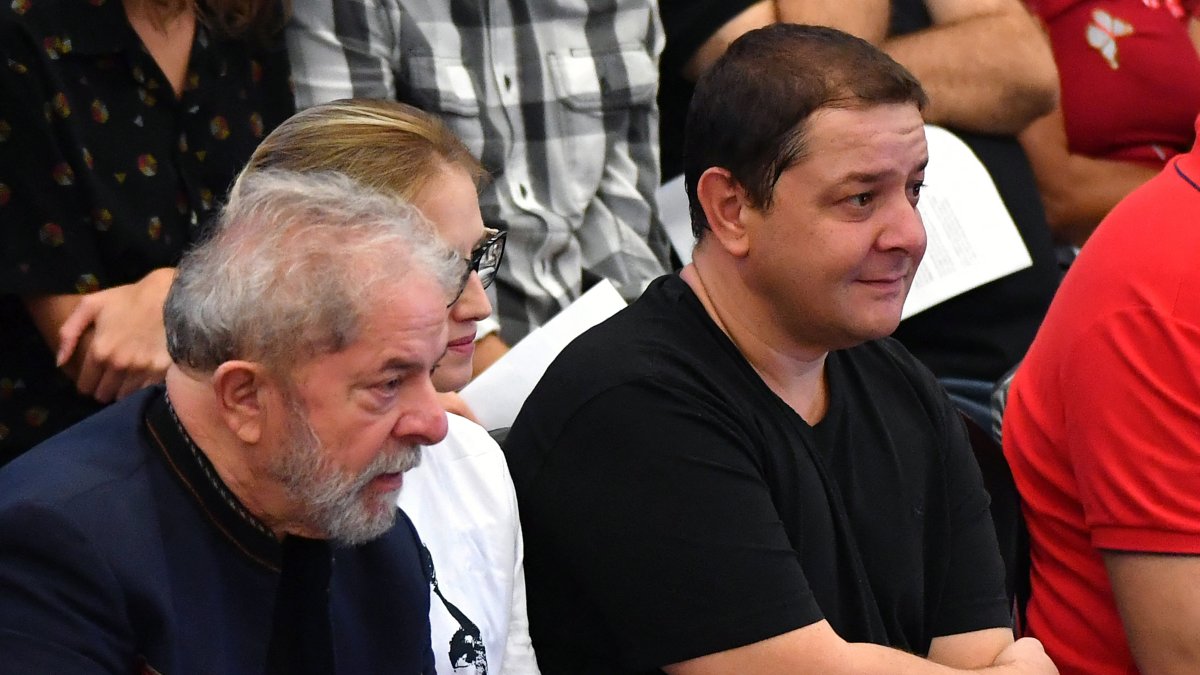
(File photo) Brazilian President Luiz Inácio Lula da Silva and his son Fábio Luís Lula da Silva

Fábio Luís Lula da Silva, known as "Lulinha" and the eldest son of Brazilian President Luiz Inácio Lula da Silva, maintains a standard of living just outside of Madrid, Spain, reserved for only a small fraction of the Spanish population, according to an investigation published by the Brazilian media outlet Poder360.
Lulinha lives with his wife and two children in an 2,700-square-foot apartment in El Jardín de La Moraleja, a luxury complex located in one of the most exclusive areas of the Madrid metropolitan area.
The apartment has three bedrooms, and the complex features swimming pools, a sauna, a gym, an event hall, coworking spaces, gardens and controlled access. Rent for similar properties is around 5,000 euros per month (approximately $5,828).
When community fees, maintenance costs, taxes, and utilities are added, Poder360 calculated—with the help of professionals in the Spanish real estate sector—that the total cost of the residence would amount to about 5,800 euros per month (approximately $6,760).
An income level reserved the top 1%
To qualify for a rental of this caliber, Lulinha would have to prove an income of around 208,800 euros per year ($243,373), if the standard rule of the Spanish housing market were applied—which requires the tenant to earn at least three times their rent.
This is not a legal requirement, but rather a widespread practice among landlords. A survey by the real estate agency Donpiso, published by Idealista, indicated that around 70% of the landlords surveyed apply this requirement.
This figure contrasts with the reality of wages in Spain. According to data from the National Institute of Statistics cited by the publication, the median gross annual salary is around 24,500 euros ($28,557). To be among the top 10% of highest-paid workers, one needs to earn about 52,000 euros ($60,610), while earning more than 97,500 euros ($113,644) places one in the top 1% of earners.
Only 0.8% of Spanish wage earners earn more than 100,000 euros ($116,558) per year. The income that the Brazilian president's son would presumably need to prove in order to support his home is more than double that amount.

Politics
The US imposes a new 25% tariff on Brazil, which has promised to activate its reciprocity law
Williams Perdomo
Mystery surrounding the source of the money
The report maintains that, so far, it has not been possible to identify a source of income in Spain consistent with those expenses.
In January 2026, Lulinha founded the company Synapta, formally dedicated to the IT sector and registered for tax purposes at a coworking space in Madrid. However, his defense claimed that the company is considered "inactive" by the Spanish Tax Agency.
Poder360 reported that it attempted to find out how the president's son finances his residence and what his professional activities are. The outlet even sent a letter to the residential complex, but the doorman—allegedly following instructions from Lulinha—refused to accept it and denied that he lived there.
Until the publication of the investigation, the businessman had not publicly explained the source of the funds used to support his lifestyle in Spain.
Three investigations into alleged influence peddling
The controversy arises as the Brazilian Federal Police are investigating Lulinha's possible involvement in three cases related to influence peddling and public contracts. The president's son has not been formally charged nor is he being prosecuted in any of these cases.
According to Poder360, the investigations include:
- A possible intervention with the Ministry of Health to favor businesses related to cannabis-derived medicinal products. This case involves lobbyist Roberta Luchsinger and Antônio Carlos Camilo Antunes, known as "Careca do INSS."
- Lulinha's ties to Cléber Ribas de Oliveira, a partner at the technology firm 3Structure IT. Investigators suspect that the businessman sought contracts with Dataprev and other public agencies and that he may have financed at least one trip by the president's son.
- A new investigation into Lulinha's possible role in facilitating contracts between 3Structure IT and the federal government. According to the cited data, the company holds public contracts worth approximately 81 million reais (about $15.7 million), of which it has reportedly already received more than 46 million ($8.9 million).
The defense rejects the allegations and maintains that there is no solid evidence against its client. It also accuses sectors of the Federal Police of "fishing for evidence" with the intent to influence the presidential elections.
Lula stated that his son will have to answer for any wrongdoing and will not receive special treatment. The president has also claimed that the accusations against Lulinha have been used for years to damage his political reputation.

World
Lula da Silva turns to Trump in an attempt to save his job and win the October election
Alejandro Baños
The case's shadow looms over an increasingly close election
Left-wing candidate Lula is seeking reelection against an opposition led by Senator Flávio Bolsonaro, son of former President Jair Bolsonaro. The latest national poll by Datafolha shows the incumbent with 39% of the vote and Flávio Bolsonaro with 33%. In a potential runoff, Lula would receive 47% compared to his rival's 43%.
Other polls show an even smaller margin. A Quaest poll placed Lula at 43% and Flávio Bolsonaro at 40%, a technical tie within the margin of error. PoderData/Aya also recorded a close race, with 46% for the president and 45% for the senator.
The Lulinha case could thus become one of the opposition's main lines of attack—something that would undoubtedly not benefit the 80-year-old veteran union leader.
LATEST