ANALYSIS
Pakistan says the US and the Iranian regime are negotiating a de-escalation following the latest airstrikes
Pakistani Foreign Ministry spokesperson Tahir Andrabi said his country is doing "everything possible" to revive the memorandum of understanding signed in June, which called for the launch of a round of peace talks.
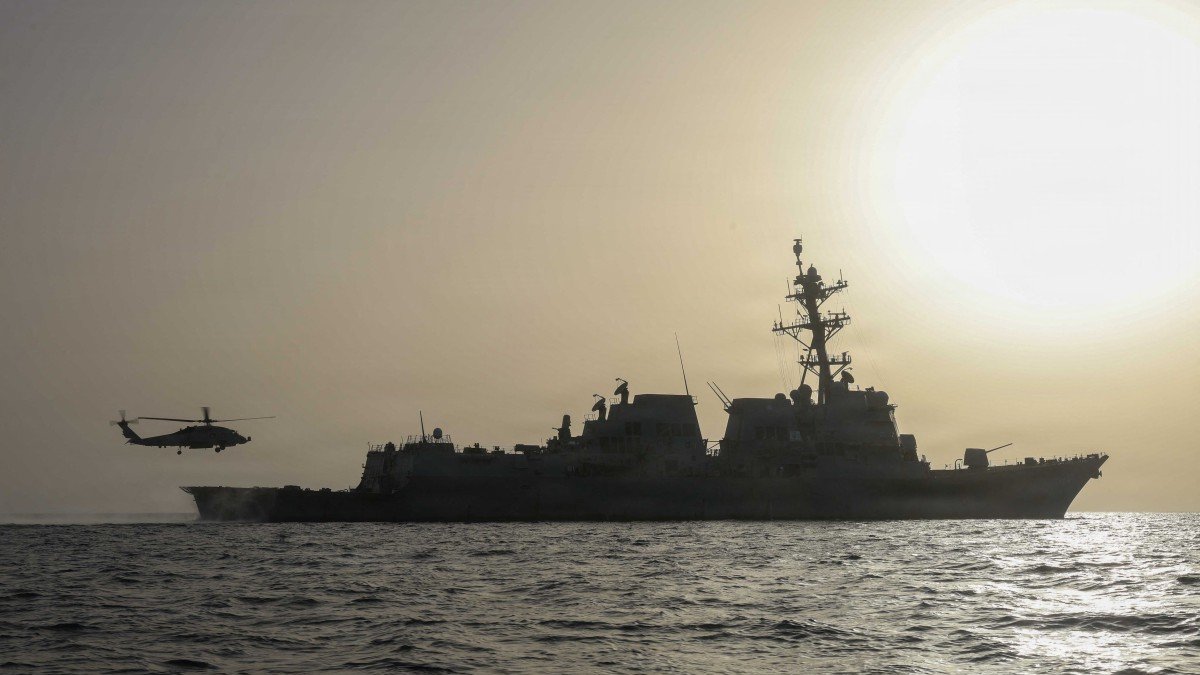
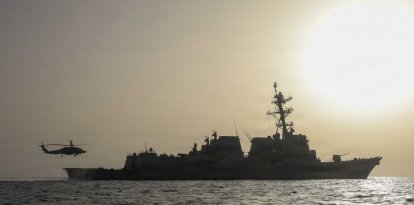
An MH-60R Sea Hawk helicopter taking off from the flight deck of the Arleigh Burke-class destroyer USS Thomas Hudner

Pakistan, which is acting as a mediator between Washington and Tehran, stated on Thursday that both sides are engaged in talks to try to reduce tensions, after the United States launched a new series of nighttime airstrikes against Iranian territory in response to Iranian attacks on one of its bases in Jordan.
According to Central Command (Centcom), its forces struck dozens of targets belonging to the Revolutionary Guard, including military command centers.
The spokesperson for the Pakistani Ministry of Foreign Affairs, Tahir Andrabi, told the press that "negotiations between the parties are still ongoing, especially regarding the Strait of Hormuz and de-escalation." He added that his country is doing "everything possible" to reinstate the memorandum of understanding signed in June, which provided for the launch of a round of peace talks.
World
The US resumes attacks against Iran following the end of the diplomatic pause
Emmanuel Alejandro Rondón
The conflict is spreading to Iraq and Egypt
After nearly a week of relative calm, exchanges of fire have intensified once again, and the conflict threatens to spread to countries that had largely remained on the sidelines until now, such as Iraq and Egypt.
The Egyptian government stated on Thursday that the fire that broke out the previous day at the port of Damietta was caused by a drone attack, the first such attack the country has suffered since the outbreak of the war in the Middle East.
According to AFP, authorities reported that two gas ships were damaged by the fire, while the British security firm Ambrey noted that the attack began with a drone targeting a U.S.-owned and operated LNG floating storage vessel.
The day before, the U.S. and Saudi Arabia had attacked pro-Iranian groups in Iraq. Washington specified that its attacks targeted logistics and weapons sites belonging to a group aligned with the Iranian regime, and Trump stated that the operation was coordinated from Baghdad. However, the Iraqi presidency denounced the bombings as "an unacceptable attack and a flagrant violation of sovereignty."
U.S. kills three members of the Revolutionary Guard
The Iranian Revolutionary Guards reported on Thursday the deaths of three of its members in a U.S. attack in the northwestern province of Zanjan.
"In the brutal attack carried out by the criminal U.S. terrorist regime on [Thursday], July 30, 2026, three brave and selfless members (...) of the Revolutionary Guards in Zanjan province were martyred," the regional branch of the ideological force said in a statement carried by the Tasnim news agency.

Jordan shoots down five Iranian missiles
Meanwhile, the Jordanian Army reported that its air defenses intercepted and shot down five Iranian missiles aimed at its territory, with no casualties reported. Tehran later confirmed that it had launched an attack against the Al Azraq airbase in Jordan, with the stated aim of targeting U.S. aircraft stationed there.
The Revolutionary Guards also accused the United States of using bases located in Jordan to "launch a bunker-busting bomb attack against two residential homes on the island of Qeshm." According to their account, the bombing killed a father, a mother, and a child, and wounded two other minors.
Washington described its attacks as "heavy" and presented them as a response to Iranian offensives against Jordan. Pakistani mediators, however, maintain that diplomatic efforts to achieve de-escalation remain active.
LATEST