Japan: The death toll from the earthquake has risen to at least 30 as the search for the missing continues
Thousands of households remain without electricity or water as they stock up in case of an even deadlier aftershock, as happened in 2016.
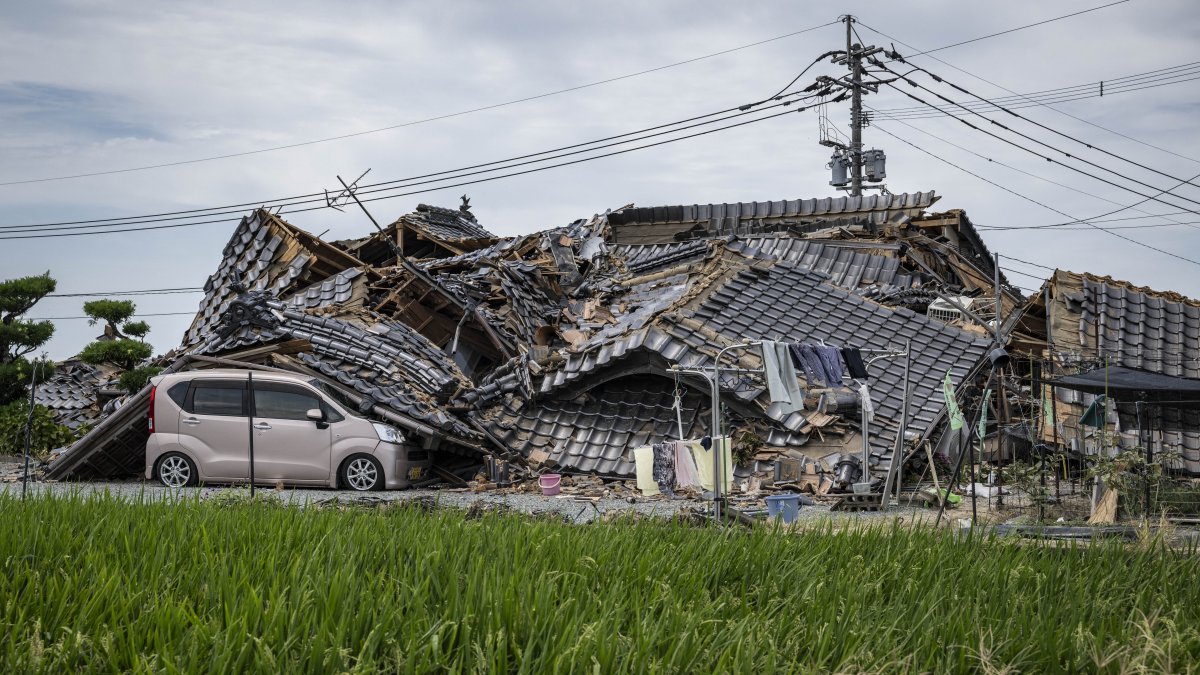
A building collapsed by the earthquake in Japan

The death toll from the earthquake with a magnitude of 7.1 that struck southwestern Japan this week has risen to at least 30 dead, the Japanese government announced Thursday. Authorities noted that efforts to reach possible survivors in a shopping center that collapsed due to the earthquake are continuing in a dramatic race against time.
Prime Minister Sanae Takaichi announced the new death toll after authorities in Kumamoto Prefecture reported the recovery of four bodies from a pile of rubble, steel, and cables at the Aeon shopping center, which collapsed due to an explosion following the earthquake—which registered the highest level on the Shindo scale.
"We have extracted 10 people. Four of them were confirmed dead, and one has no vital signs. Others suffered severe or minor injuries," an official from the local disaster management office told AFP.
Homes and bridges destroyed
The earthquake on Tuesday afternoon caused significant damage in Kumamoto, on the island of Kyushu, where it destroyed homes, damaged bridges, sparked fires, and left tens of thousands of people without electricity and water.
A series of aftershocks has rocked the region since the initial earthquake, further exacerbating the situation for residents, who are facing sweltering temperatures expected to reach at least 100°F over the weekend.
"The lack of essential services such as water and electricity is taking a heavy toll on residents," explained Hiroyuki Matsushima, a supermarket employee in Yatsushiro, one of the hardest-hit areas. "In this heat, without electricity or air conditioning, it's very difficult," added the 53-year-old father of four.
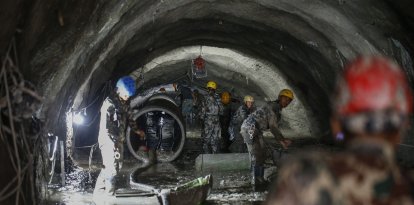
Images taken inside the collapsed shopping center showed rescuers in orange suits and white helmets moving cautiously among twisted steel rods, dangling cables, and shattered ceilings.
Fears of destructive aftershocks like those in 2016
"I was here just a short while ago," 56-year-old businessman Fumihiko Matsuura told AFP. "It's as if I narrowly escaped danger." "I have bottled water and other supplies," he added. "I'm going to stay alert and be cautious over the next few days," he said, recalling the tragedy caused in 2016 by a 7.3-magnitude earthquake—which followed another of magnitude 6.5—and left 273 dead and more than 2,800 injured.
Five deaths and four missing persons were also confirmed at the Nippon Paper Industries paper mill in the city of Yatsushiro, where part of a chimney collapsed, a government official told AFP on Wednesday.
Thousands of homes without water or electricity
As of the afternoon of that day, some 31,200 households and facilities remained without electricity, while 84,000 homes were experiencing water supply disruptions, according to authorities. Local television stations showed people lining up to buy gasoline and drinking water.
The U.S. Geological Survey (USGS) measured the earthquake's magnitude at 6.8, lower than Japan's estimate of 7.1. Located at the junction of four major tectonic plates along the western edge of the Pacific Ring of Fire, Japan is one of the countries most prone to earthquakes.
With a population of approximately 125 million people, it typically experiences several hundred seismic events each year, accounting for about 18% of the earthquakes recorded worldwide.
The vast majority of these are low-intensity, although the damage they cause varies depending on their location and the depth at which they occur beneath the Earth's surface.
Japan remains scarred by the massive magnitude 9 undersea earthquake that occurred in 2011, which triggered a tsunami that left approximately 18,500 people dead or missing and led to the disaster at the Fukushima nuclear power plant.
LATEST