The prop threat: Mamdani, Netanyahu and performative anti-Zionism
Mamdani is very young and possesses obvious national ambition and an influence that has been underestimated. If his formula works in New York—that is, a deficient, low-profile local administration that nonetheless promotes a high-voltage anti-Zionist agenda as a rallying cry for an ever-growing fanatical base—there is no reason to think it won't be exported elsewhere.
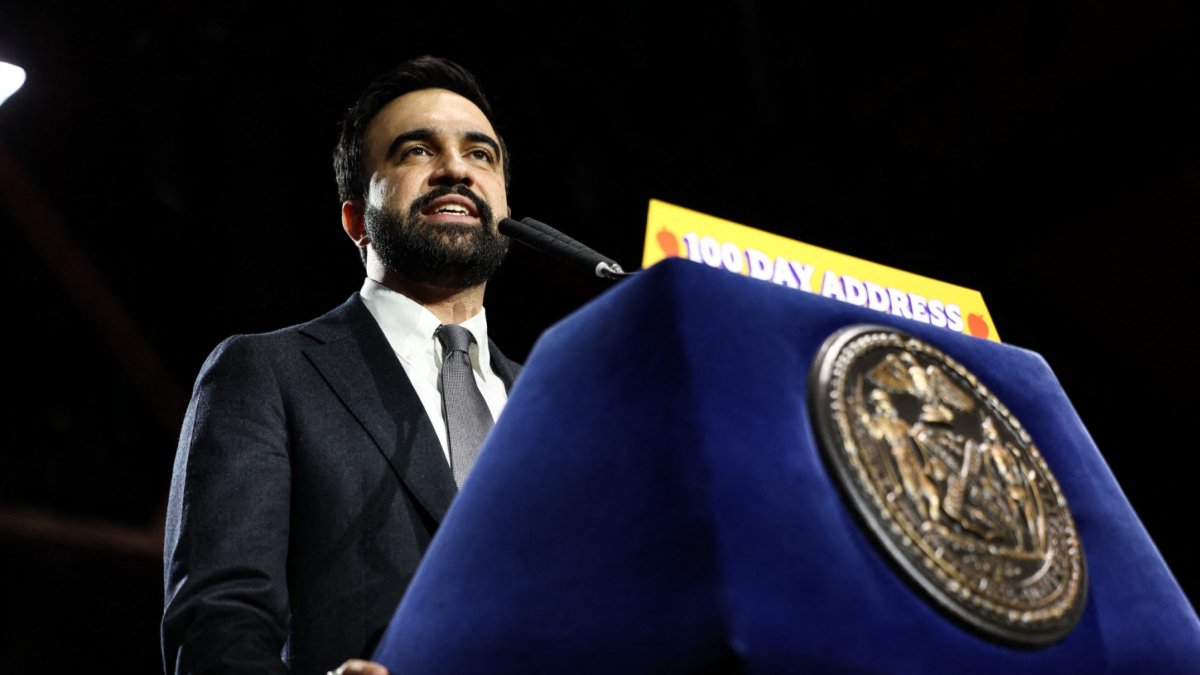
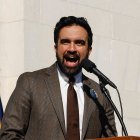
Mayor Zohran Mamdani
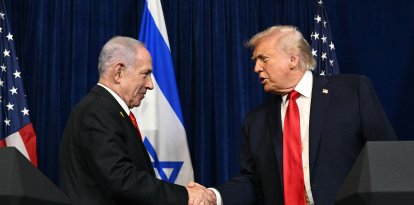
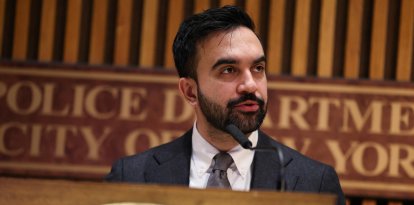
Zohran Mamdani could never arrest Benjamin Netanyahu. He shouted threats while he could and acknowledged his inability to do so with the same enthusiasm. He said one thing and then the opposite, and his followers applauded him both times, as if it were a staged performance, a school play or a sitcom. The mayor himself ended up telling the camera that he couldn't do what he had promised to do, because the promise had served its purpose before being discarded: it mobilized a base of fanatics, made them set the agenda against all logic, defined an enemy and turned the mayor—who was grappling with housing, transportation and security issues—into a player on the foreign policy stage.
What happened in New York was not a legal miscalculation, but a strategy.
A threat that doesn't need to be carried out to be effective. Mamdani can continue to point the finger at Netanyahu without having to follow through on anything he says, because the political value lies in its viability. The theatrics surrounding the Israeli prime minister's hypothetical arrest were a rhetorical pretext that allowed him to lash out against Israel, repeating stale slander, without ever having to address the real problems of the city he governs so poorly. Were it not for the veneer of radical Islam, his actions would be no different from those of any run-of-the-mill demagogue. And the more ridiculous the promise, the easier it is to create external enemies that prevent its fulfillment, because you'll never have to be held accountable for failing to keep it.
Politics
The illusion of the 'public supermarket': A lesson New York refuses to learn from Venezuela
Andrés Ignacio Henríquez
Despite his Machiavellian spirit, Mamdani's timing was off. The court whose authority he invoked to justify his threat is being seriously questioned—and not exactly by its usual critics. The prosecutor who signed the warrants against Netanyahu and Gallant, Karim Khan, was removed from office on July 24 by an overwhelming vote. It is the first time in the history of the ICC that a chief prosecutor has been removed from office, and the body tasked with overseeing him concluded that he had committed "serious misconduct and serious breach of duty." Khan, whose signature backs the arrest warrant that Mamdani promised to execute on the streets of New York, has ended up as a pariah ousted by his peers.
And the underlying problem with that warrant predated Khan's personal scandal. The International Criminal Court issued the warrants against Netanyahu and Gallant for "starvation as a method of warfare," even as data from the Gaza Ministry of Health itself thoroughly refuted the narrative of the deliberate use of hunger as a weapon of war. Mamdani, then, not only promised to carry out something legally impossible on U.S. soil: he promised to enforce the ruling of a court whose own prosecutor ended up being dismissed in disgrace. It is the performative threat raised to the power of two, signed by a man who is today, for much of the world, little more than an institutional relic. The moral authority with which Mamdani brandished the accusations crumbled along with its signatory.
But Mamdani's lies—his false accusations—have consequences. Hours after his infamous speech, two men were stabbed on the Upper West Side; while the attacker shouted "Allahu Akbar." The mayor did what defenders of Islamism do after every attack: claim that the attacker is mentally ill—which leaves us with a striking prevalence of mental disorders among certain religions.
Netanyahu did not let the opportunity pass and explicitly linked Mamdani's rhetoric about Israel to the climate that made the attack possible, accusing him of "fomenting hate." The reasoning is valid: What effect does it have, in a city with the largest Jewish community outside of Israel, when the mayor spreads anti-Israeli slander as the daily focus of his public discourse, while avoiding such forceful mention of the terrorism that such rhetoric seems to excuse?
Mamdani did not win the mayoral election on the strength of his foreign policy; he won by promising free buses, rent control and public grocery stores. But as the months go by, it is becoming increasingly clear that municipal administration was not his passion and that he did not seek city office to improve the daily lives of its residents, but rather as part of a deeper and more extensive program of subversion. His role as a kingmaker for Islamo-socialist candidates across the country reveals the true plot. That is why the limited scope of his actual duties does not prevent him from continuing to campaign in support of an absurd agenda. Symbolic foreign policy becomes the perfect substitute for actual governance. Israel, in this scheme, is the agenda.

Mamdani is very young and possesses obvious national ambition and an influence that has been underestimated. If his formula works in New York—that is, a deficient, low-profile local administration that nonetheless promotes a high-voltage anti-Zionist agenda as a rallying cry for an ever-growing fanatical base—there is no reason to think it won't be exported elsewhere.
New York should be concerned about Mamdani, not Netanyahu. If its mayor fabricates a legal threat that he knows is unenforceable, maintains it months after his own legal team explained that it has no basis, and continues to repeat it just hours before a man shouts "Allahu Akbar" and plunges a knife into the flesh of a Jew in Manhattan, he is not making a communication error. He is executing a plan that is not about governing, but about using the city as a launching pad for a political brand. And this brand is already beginning to be replicated by other candidates, under the same formula that seems to go unpunished: poor or irrelevant governance and anti-Zionism as fuel for a permanent campaign. That same strategy will begin to win states, more congressional seats and mayoral offices, and with this precedent, no one will be able to say we didn't see it coming. It was right there in front of us, live, capitalizing on performative anti-Zionism.
LATEST