WHO declares end of hantavirus outbreak on MV Hondius cruise chip after three deaths and more than 650 close contacts
The last person exposed to the virus completed their quarantine period, tested negative, and returned home, allowing the World Health Organization to declare the emergency over.

Concept illustration of a hantavirus test using laboratory tubes (File photo)

The World Health Organization (WHO) announced on Thursday the official end of the hantavirus outbreak that affected the cruise ship MV Hondius, an incident that sparked international alarm due to its rarity and potential for human-to-human transmission.
The outbreak resulted in 12 confirmed cases and one probable case, including three deaths. The last person exposed to the virus completed their quarantine period, tested negative, and returned home, allowing the WHO to declare the emergency over.
"We are very pleased to announce that the WHO considers the hantavirus outbreak to be over," said the organization’s director-general, Tedros Adhanom Ghebreyesus.
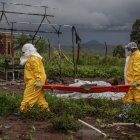
Ship’s itinerary and tracking of more than 650 incidents of close contact
The Dutch-flagged ship set sail on April 1 from Ushuaia, Argentina, traveling through remote islands in the South Atlantic, including Tristan da Cunha, before heading to Tenerife, in the Canary Islands. Subsequently, the remaining passengers were evacuated, and the ship finally arrived in Rotterdam on May 18.
During the incident, health authorities in 33 countries and territories traced more than 650 incidents of close contact. Although the outbreak is now under control, scientists are just beginning to analyze what happened.

Future research and characteristics of the hantavirus
The WHO will continue to investigate the virus and has coordinated a study with 21 countries to better understand its evolution, with the goal of advancing the development of diagnostics, treatments, and potential vaccines for future emergencies.
Hantavirus is a disease transmitted primarily by rodents. The Andes strain, responsible for this outbreak, is the only known strain capable of human-to-human transmission, which explains the rapid global concern.
LATEST