ANALYSIS
UK | Arday's death reopens debate: Did an ideological panel grant him Cambridge professorship?
The death of Jason Arday, Cambridge's youngest black professor, has reignited the debate over diversity policies at elite universities. The scholar, found dead on Friday in London, had resigned amid serious allegations of plagiarism while the university was investigating how he obtained his professorship.
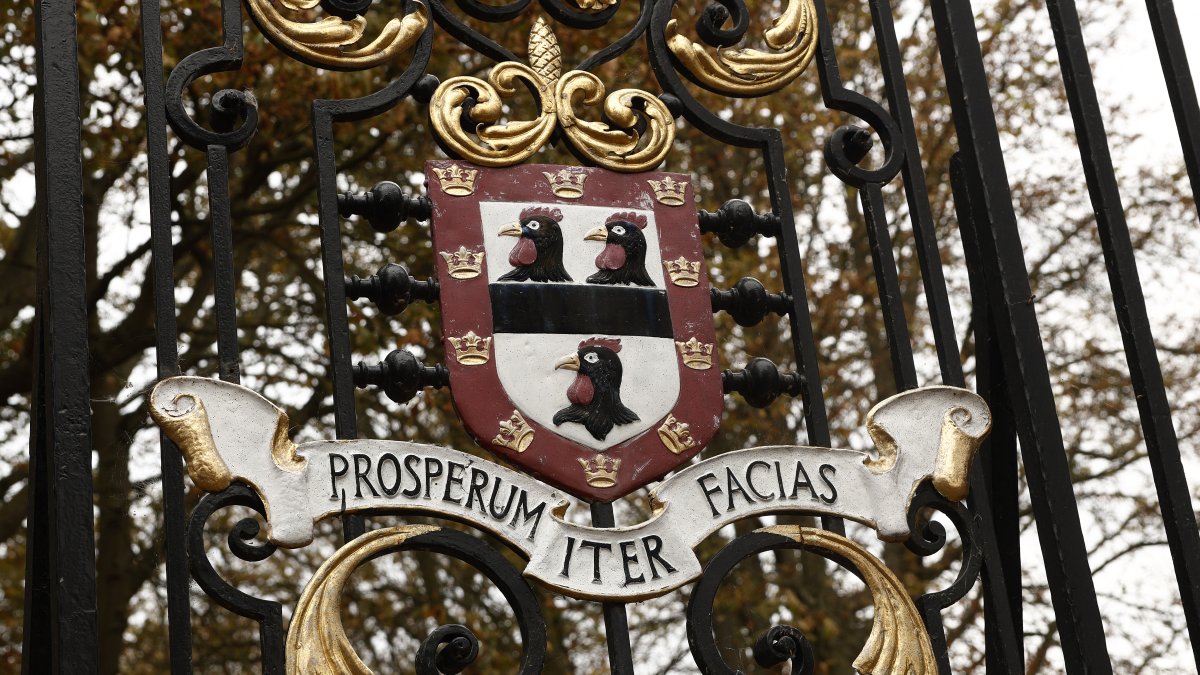
Jesus College, where Jason Arday was a fellow, at the University of Cambridge.

The University of Cambridge has launched an independent investigation to examine how Jason Arday was hired as a professor of sociology of education and to review his academic career at the institution.
Arday, 41, was found dead on Friday in a home in south London. The scholar had resigned earlier this month from his position at the University of Cambridge after facing serious allegations of academic plagiarism that called into question both his career and the role of diversity policies at elite universities.
In an interview with The Times, the scholar himself acknowledged having made "mistakes" in his work, but said he was being wrongly "portrayed to be a liar and a fantasist and an academic fraud". The University of Cambridge, however, had decided to continue its investigation despite his resignation.

Panel aligned with DEI ideology?
Arday was selected in 2022 by a nine-member committee to fill a chair in the Faculty of Education. The panel was chaired by Baroness Sally Morgan, a Labour member of the House of Lords and principal of Fitzwilliam College. The university announced his appointment in February 2023, highlighting his career as a sociologist and his status as one of the youngest black professors in Cambridge's history.
The rest of the panel consisted of scholars whose careers align with the DEI agenda. Among them were Anoop Nayak of Newcastle University, a critic of the "neoliberal whiteness" of Anglo-Saxon universities; Louise Archer, from University College London, who specializes in social justice and critical race theory; and Michalinos Zembylas, a professor of educational theory at the Open University of Cyprus.

According to a report by The Telegraph, Zembylas has argued that education should teach students to "disrupt, refuse, and displace liberal democratic principles" and create a "new moral order" that challenges Western democracy.
The committee also included Jo-Anne Dillabough, Tim Harper, Karen Coats, Martin Mills and Paul Ramchandani, whose work focuses on identity, gender, anti-colonialism and reducing inequalities through education.
At the time, the University of Cambridge itself defended Arday’s appointment as being based on academic merit. Hilary Cremin, then head of the Faculty of Education, stated in a 2023 BBC interview that the board of electors had been "absolutely unanimous" and that Arday was "the best in the world in terms of the research that you do." In the same vein, Pro-Vice-Chancellor for Education Bhaskar Vira described him as "an exceptional scholar of race, inequality and education" who would make a significant contribution to Cambridge’s research in that field.

World
230 migrants on a single boat: ‘New and sad record’ for English Channel crossings
Carlos Dominguez
Cambridge and Burnham call for calm
Cambridge Vice Chancellor Deborah Prentice described the case as an "aberration" to make it clear that it is an exception and should not be used to cast doubt on the legitimacy of the university's other black staff members. She acknowledged the concern raised both within and outside the institution, and promised a "thorough and transparent" investigation to be conducted by senior scholars from Cambridge and other universities.
Until the investigations are complete, it cannot be stated as a proven fact that the committee acted with ideological reasoning or that Arday was chosen to fill an identity quota. But there is sufficient basis to demand explanations as to how a leading university came to appoint a professor whose career is now the subject of a formal investigation of this nature.
Prime Minister Andy Burnham, speaking to the press in southwest England, urged people not to jump to conclusions. "It's a tragedy on so many levels, but particularly just for everybody who knew Jason, his family obviously, his friends. We think of them today," he said. "It's a moment for reflection ... reflecting on how things came to this."
LATEST