China sanctions 10 US companies for being on Pentagon's blacklist
This decision comes a month after President Donald Trump visited Beijing in an attempt to stabilize tense relations during talks with his Chinese counterpart, Xi Jinping.
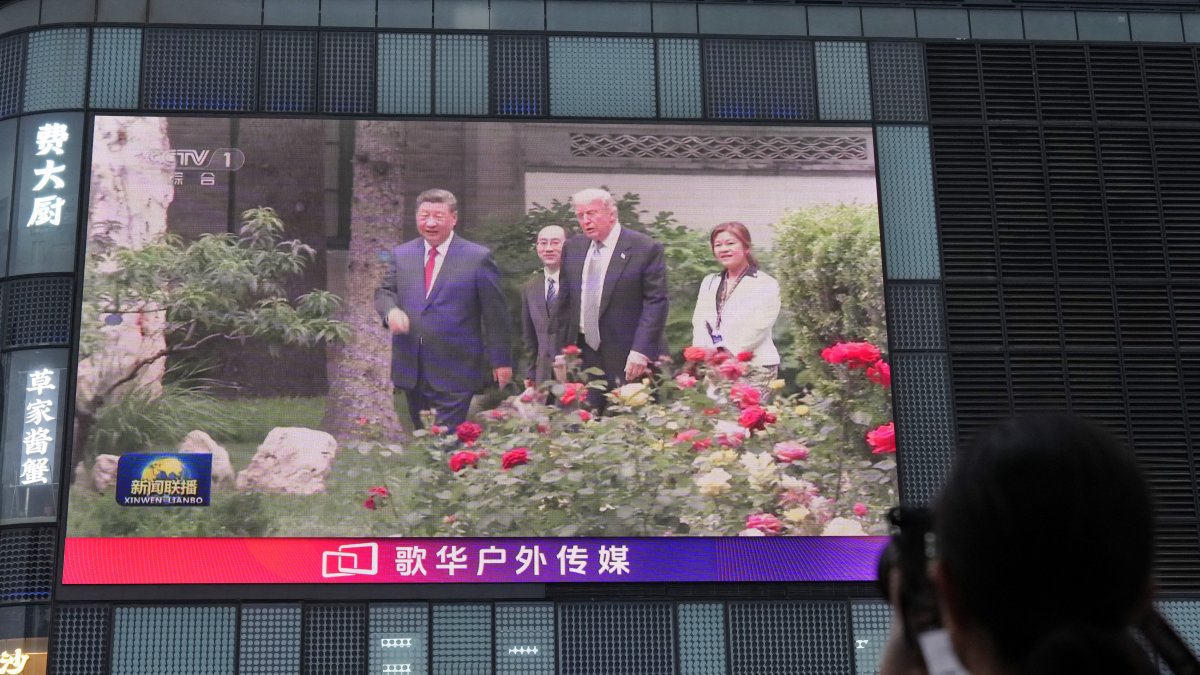
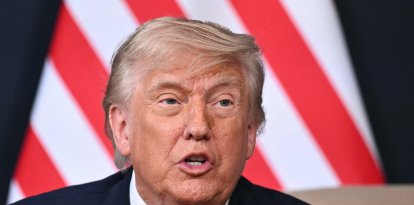
Image of Trump and the Chinese president

China imposed export controls on 10 U.S. companies involved in defense and rare earth mining in response to Washington’s blacklist of Chinese companies, Beijing announced on Monday.
This decision comes one month after President Donald Trump visited Beijing in an attempt to stabilize strained relations during talks with his Chinese counterpart Xi Jinping.
Although the countries agreed to work toward reducing tariffs, relations have been strained ever since, as both sides have been hindering each other in the areas of technology and defense.
This month, Washington published a new blacklist of 80 companies and their subsidiaries that it claims provide support to the Chinese military.
This led to the inclusion of tech giants such as Alibaba and Baidu, as well as electric vehicle giant BYD, prompting Beijing to threaten retaliation.
The new export controls on China come "in response to the U.S. government’s outrageous act of expanding its 'list of Chinese military companies,'" the Ministry of Commerce stated in a press release, adding that the measure also aims to “safeguard national security.”
Politics
Tulsi Gabbard declassifies documents on Anthony Fauci’s role in investigation into origins of COVID-19
Carlos Dominguez
Among the 10 entities are Aveox, which has aerospace defense contracts with the U.S. military, and Oshkosh Defense, which produces fleets of military vehicles.
It also includes U.S. rare earth producers MP Materials and USA Rare Earth.
China’s Ministry of Commerce has prohibited exporters from supplying dual-use items to the entities on the list, adding that “any relevant export activities currently underway must cease immediately.”
The ban also applies to “organizations or individuals in any country or region… that transfer or provide dual-use items originating in China to those entities,” it stated.
China’s Ministry of Finance simultaneously announced a ban on agencies involved in public procurement from purchasing products manufactured by 46 U.S. companies, including Lockheed Martin, Raytheon, and Boeing’s defense division.
Also on the list were divisions of General Dynamics and Anduril Industries, major U.S. military contractors, and several aerospace companies.
According to a statement from the Ministry of Finance, companies with U.S. investments operating in China are exempt, and the measures will take effect starting Monday.
China’s Ministry of Commerce had already sanctioned several of these companies and their subsidiaries, both in 2024 and 2025, for the sale of U.S. weapons to Taiwan.
Taipei relies heavily on Washington’s support to counter Beijing’s growing pressure, as Beijing claims Taiwan as part of its territory and has not ruled out taking it by force.
Arms package
Since his meeting with Xi Jinping in May, Trump has sought to publicly project an image of strong bilateral ties.
Last week, during the G7 summit in France, Trump thanked the Chinese leader for remaining “neutral” in the U.S. conflict with Iran, when both countries agreed to an initial ceasefire.
LATEST