






ANALYSIS
The hidden axis: Investigation traces links between Cuba, extremist organizations and US activists
An op-ed published in The Washington Times argues that Havana has served as a connection point between island solidarity movements, leftist organizations in the United States and groups linked to extremist organizations in the Middle East.
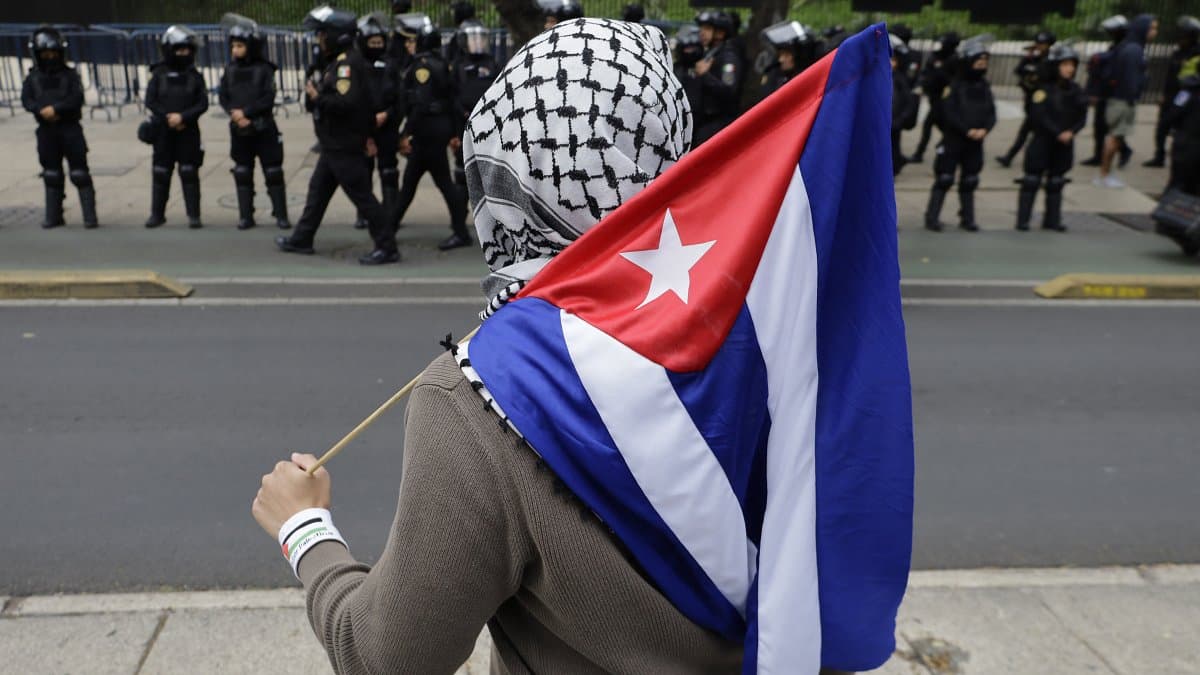

U.S. authorities should pay greater attention to the role of Havana in the articulation of international networks involving U.S. activists, organizations in solidarity with Havana and groups noted for their links to Islamic extremist movements.
This is the thesis defended by an investigation published in The Washington Times this week, which puts the spotlight on the network that would have operated for years with little public scrutiny.
Federal investigations and alleged foreign influence
The article follows recent reports that the U.S. Departments of Justice and Treasury are investigating U.S. nonprofit organizations and activist groups for allegedly coordinating actions with Cuba as part of an alleged foreign influence campaign.
The material argues that such investigations should not be limited to examining the relationship between Cuba and U.S. organizations, but also analyze the role that, according to the authors, Havana plays in connecting Cuban solidarity networks, Western activists and Middle Eastern organizations.
The role attributed to ICAP
The authors take up a previous column published in 2025 that analyzed the work of the Instituto Cubano de Amistad con los Pueblos (ICAP). According to the text, this entity, which the authors link to the Cuban intelligence services, would have facilitated trips to the island by activists and solidarity organizations from the United States.
According to the investigation, among the more than 2,000 organizations associated with ICAP are groups such as CodePink, Party for Socialism and Liberation, Democratic Socialists of America and the pro-Iranian coalition known as al-Tajammu.
The article states that in 2022 ICAP and al-Tajammu signed a cooperation document. Citing the International Institute for Counter-Terrorism (ICT) from Israel, he argues that al-Tajammu maintains links to Hezbollah and that its structure includes members linked to organizations designated by the United States as foreign terrorist organizations, including the Houthis, Palestinian Islamic Jihad and the Popular Front for the Liberation of Palestine (PFLP).
Cuba and the presence of the PFLP
The article also mentions that in 2018 a California nonprofit organization linked to Paul Larudee registered the trade name International Committee for Peace, Justice and Dignity (ICPJD). Other public reports identify a Havana-based PFLP member as a co-founder of that organization, the text adds.
Larudee is presented in the investigation as director of the Association for Investment in Popular Action Committees (AIPAC), an entity that, according to records cited by the authors, has operated under various names related to anti-Israel campaigns. The authors clarify that this organization is not related to the well-known pro-Israel lobby group that shares the same acronym.
Resumen Latinoamericano and the dissemination of content
Among the organizations mentioned in the article is also Resumen Latinoamericano, a digital media outlet described by the authors as a platform that amplifies narratives favorable to the Cuban government and critical of Israel.
The research cites researcher Michael Barak, of the International Institute for Counter-Terrorism, who stated that Resumen Latinoamericano disseminates messages aligned with Iran, Hezbollah and organizations close to al-Tajammu.
The Washington Times added that a review of their own allowed them to find content from Resumen Latinoamericano subsequently republished by Al-Manar, a media channel linked to Hezbollah.
Volunteers, delegations and historical background
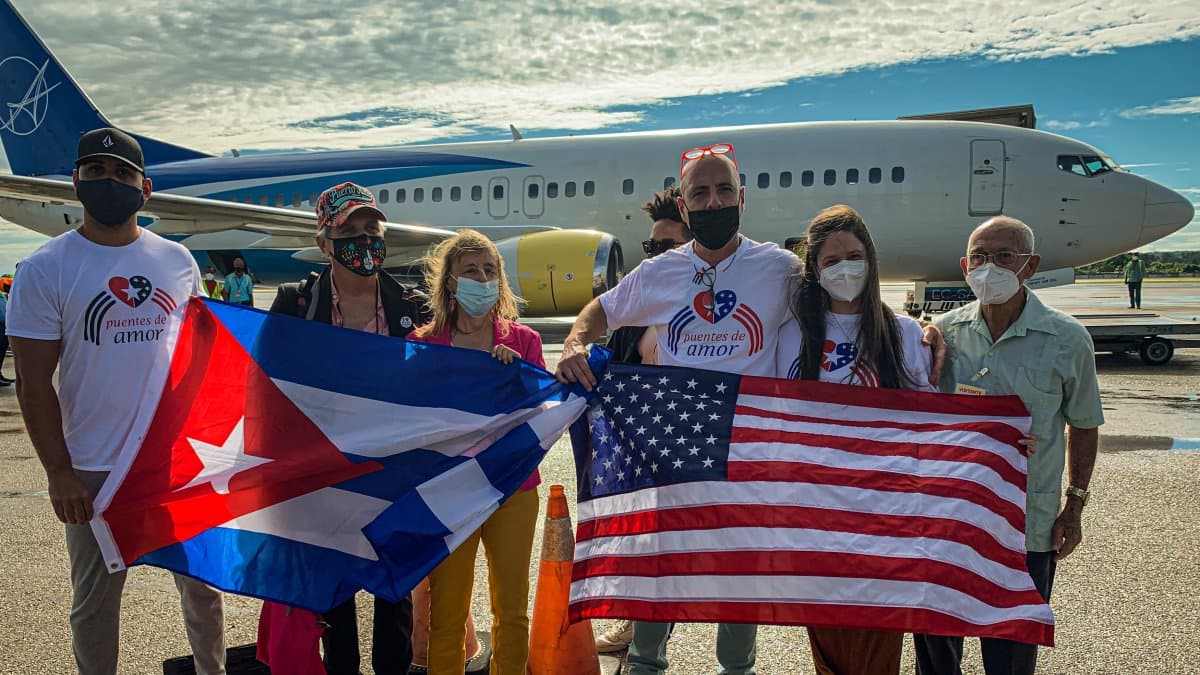
According to the text, since 2020 Larudee's organization would have coordinated delegations of U.S. volunteers to Cuba and Venezuela.
The journalistic analysis further argues that the described connections are not recent. They claim that several activists currently linked to al-Tajammu were previously involved in campaigns to secure the release of the so-called Wasp Network, a Cuban espionage network dismantled by the FBI during the 1990s.
In support of that claim, they cite statements made in 2022 by Hassan Juni, a member of al-Tajammu's board of directors, who reportedly acknowledged the involvement of the group's activists in campaigns related to the release of Cuban agents.
Connections with Neville Roy Singham
Another of the elements addressed by the investigation is the relationship between some of these organizations and the businessman Neville Roy Singham.
The authors recall that Singham has been the subject of questions in the U.S. Congress for his alleged ties to the Chinese Communist Party and for his financial support to leftist organizations and groups critical of Israel.
According to public records cited in the article, Paul Larudee's AIPAC organization made donations to the Justice and Education Fund, an entity the authors link to Singham.
Politics
Trump expands sanctions against Cuban regime, warns of links to terrorism
Andrés Ignacio Henríquez
Events in Havana and figures involved
The research also reviews a Palestinian workshop held in Cuba in March 2024. Several photographs published by Resumen Latinoamericano showed the participation of Mariela Castro, daughter of Raúl Castro, along with representatives of the PFLP and leaders of the Justice and Education Fund.
The authors specifically mention Manolo de los Santos, director of the Justice and Education Fund and executive director of The People's Forum. During an event held in Havana that same month, De los Santos reportedly gave a speech in which he referred to symbols associated with the Popular Front for the Liberation of Palestine.
Likewise, Cuban journalist Darío Alemán told the media that around 2014 he observed De los Santos in an office operated by René González, a former member of the Avispa Network, accompanied by Graciela Ramírez, identified as editor of Resumen Latinoamericano and coordinator of the ICPJD.
Cuba as the "connective tissue" of an international alliance
The material argues that the connections between the Cuban government, organizations associated with the PFLP, groups such as al-Tajammu and various U.S. activist organizations are part of an international network whose influence would have grown over the past decade.
The text concludes by noting that the last major discussion in the U.S. Congress on Cuba's role in projecting Iranian influence occurred in 2015 and that, according to the authors, Washington should revisit these dynamics with greater attention.
🛠 Do you think there is an error in this article?
Recommendations



LATEST