A right-wing outsider wins Colombia's presidential election and a polarized runoff is confirmed
De la Espriella and his vice presidential running mate, José Manuel Restrepo, consolidated first place with 43.72% of the vote.
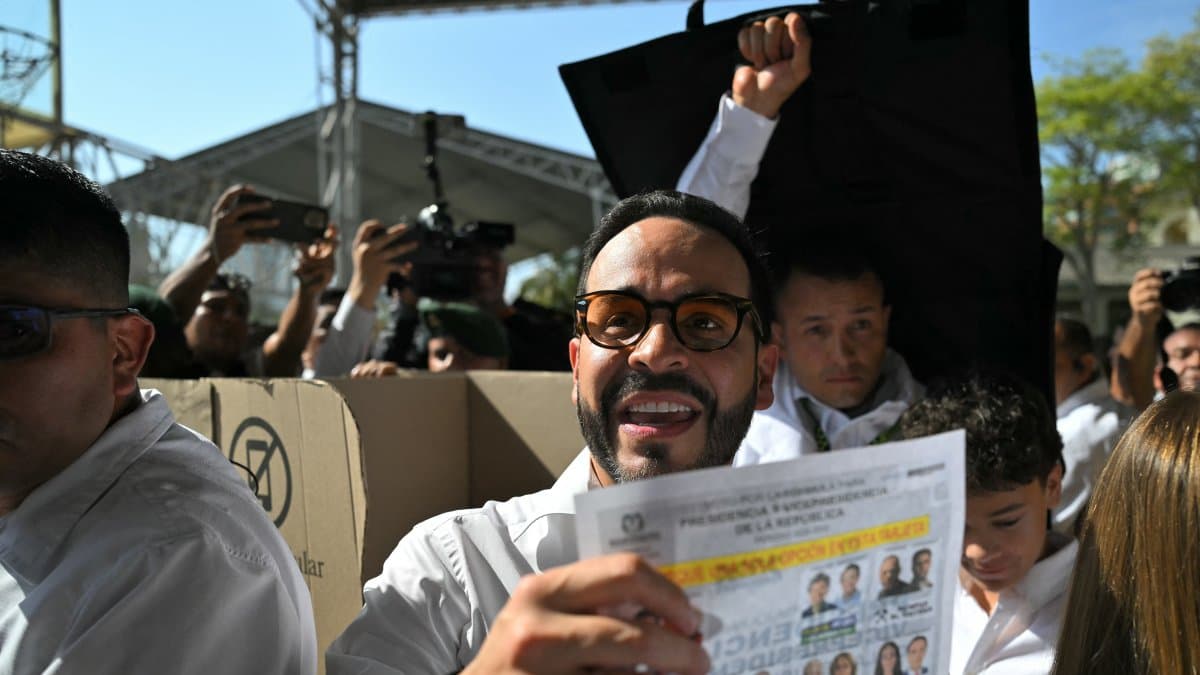

In a scenario that defied most pollsters' forecasts, the lawyer, businessman and staunch defender of right-wing ideas, Abelardo de la Espriella, won in the first presidential round.
With this result, the leader of the movement Defensores de la Patria leads the advance towards a definitive runoff against the aspirant of the leftist ruling party, Iván Cepeda.
According to the official bulletin of the National Registry of Civil Status, with 99.43% of polling stations tallied, De la Espriella and his vice-presidential candidate, José Manuel Restrepo, consolidated first place with 43.72% of the votes, equivalent to more than 10.1 million voters.
The ruling Historic Pact coalition, headed by Iván Cepeda and Aida Quilcué, had to settle for second place, registering 40.92% of the vote (approximately 9.5 million votes). The result redefines the balance of power in a nation exhausted by President Gustavo Petro's management.
Triumph of "el tigre" against the government's agenda
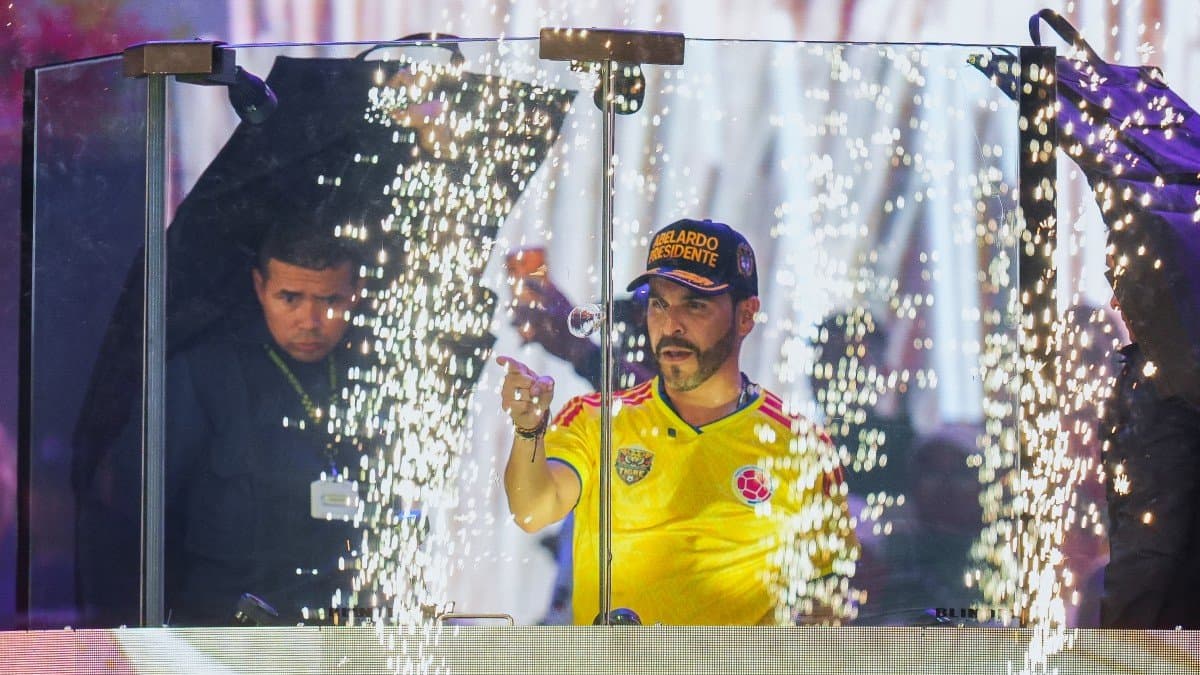
At 47 years old, and having never held elected office, De la Espriella built his meteoric rise on hardline proposals inspired by Nayib Bukele’s models of public order in El Salvador and Javier Milei’s economic freedom reforms in Argentina.
His electoral platform captured citizens' discontent with the promise to severely combat illegal armed organizations and criminality, in direct contrast to the negotiated exit approach promoted by Cepeda, a strategy widely criticized for the lack of substantial results under the current government.
After the official data were known, the winning candidate disseminated a message with his family in which he celebrated the popular support:
"We went to the second round thanks to the more than 10 million Colombians who responded to the roar. In 21 days we will make history!" he stated on X, adding his determination to win in the next stage to "defeat tyranny and absolutism."
In his statements, De la Espriella vindicated his status as a figure outside the traditional bureaucratic apparatus: "We are going to celebrate this victory of 'the never', of those of us who have never lived off the teat of the State, of those of us who have never done politicking, against those of always, with those who are part of the establishment."
Right-wing bloc closes ranks for the ballot
The day was marked by the retreat of the traditional center-right parties.
Senator Paloma Valencia, aspirant of the Democratic Center, together with Juan Daniel Oviedo, occupied the third position with 6.92% of the vote (1.6 million votes), a figure significantly lower than the 15% initially projected by several opinion polls.
The list of aspirants was completed by Sergio Fajardo, who obtained 4.26%, and Claudia López, with just 0.95% of the endorsements.
Despite the adverse results for her organization, the conservative bloc reacted immediately to consolidate a broad front against socialism. Paloma Valencia formally announced her support for De la Espriella's candidacy ahead of the second round, scheduled for June 21.
"I announce my support to Dr. Abelardo de la Espriella, and I invite us to defeat Cepeda, so that the neocommunism that reigns in this country does not continue," Valencia declared, calling to remain "firm on the side of the ideas of freedom, progress, private initiative".
For his part, former president Álvaro Uribe Vélez reaffirmed the absolute support of his bases in a public statement shared on his official social media.
"Dr. Abelardo De La Espriella won. We kept our word, we will vote for him and we ask you to vote for him and for Colombia. For the defense of the Constitution, of freedoms, of individual creativity, of social cohesion, of the fraternal economy, of the small and austere State," Uribe said, firmly warning that the country "cannot continue on the path of becoming a branch of Chavismo, of Petro and Cepeda."
Petro alleges fraud
President Gustavo Petro rejected the preliminary results declaring victory for the right, citing alleged technical glitches in the data system:
"The so-called live vote count is not legally binding. Its data is not a matter of public record. As president, I do not accept the results of the preliminary count by the Bautista brothers’ private firm, because while the algorithms of the counting and tabulation software should have remained unchanged, they were altered three times in the last week and added 800,000 more voter IDs of people who are not in the official census presented,” the president stated.
Petro also denounced the existence of parallel voter rolls that allegedly irregularly altered the size of the electorate. “There are two voter rolls at this time: the official one and the one from the Bautista brothers’ software, which includes 800,000 additional people,” the president stated, adding that “the polling stations that have already been challenged demonstrate that hundreds of thousands of votes were added in the absence [sic] of voters.”
Finally, the president warned that he will not validate the current data until the judiciary issues a ruling. “Therefore, and in accordance with the law, the binding results that the president will recognize and accept are those of the vote-counting commissions led by the judges of the Republic,” he concluded, setting the stage for intense institutional tension ahead of the runoff election.
Mobilization and projections for the second round of elections
The electoral authority reported that voter turnout stood at approximately 56% of the 41 million citizens eligible to vote, concluding a day that unfolded under conditions of institutional normalcy.
The final statistics from the Registrar's Office also recorded 1.7% blank votes (400,000 ballots), 1% invalid votes and a residual 0.2% unmarked ballots.
The observed low voter turnout leaves decisive room for maneuver for both campaigns heading into the runoff. Nevertheless, local analysts suggest that the consolidation of the center-right vote, along with moderate sectors, in favor of De la Espriella’s free-market and security-focused model grants him a strategic advantage over a weakened incumbent camp.
Next June 21, Colombians will choose between the continuity of Petro's statist agenda or the restoration of order and economic freedoms under a renewed leadership.

🛠 Do you think there is an error in this article?
Recommendations




LATEST