Colombia’s next president could be far more radical than Petro: Iván Cepeda
With only days remaining before Colombia’s presidential election, the possibility of a candidate even more radical than Gustavo Petro taking power is becoming increasingly real. Over the past four years, Petro has laid the groundwork for his political heir to inherit a government with far greater institutional influence and unprecedented power.
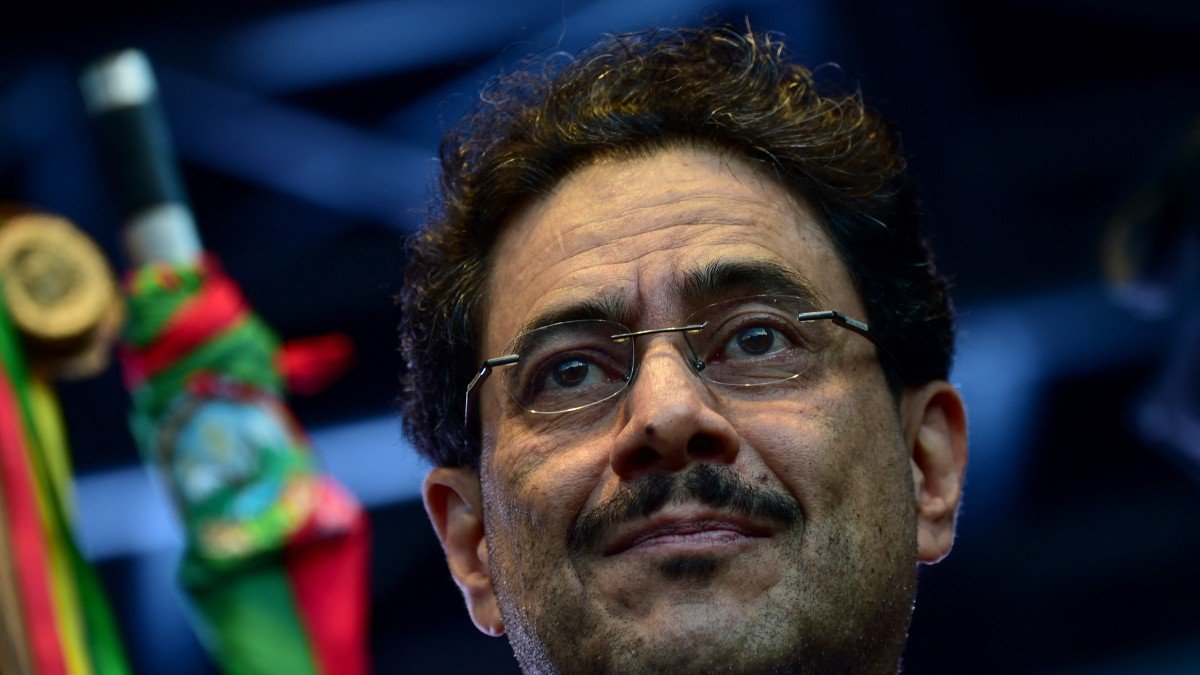
Ivan Cepeda, Colombian presidential candidate (Photo by Pablo VERA / AFP)
As the electoral process in Colombia moves forward, what is at stake is not merely the political model, but institutional integrity itself. At this moment, the country’s fundamental institutions, such as the Constitutional Court, the Central Bank, the Office of the Attorney General, and the Army, are barely surviving the purges, attacks, and radical alterations that the Left has attempted to implement during Gustavo Petro’s four years in power. The current president has paved the way for an even more extreme successor who, facing already-weakened institutions, will almost certainly consummate the plan that the most radical wing of the Left envisions for Colombia.
Part of the headway Petro has made to facilitate the rise of Iván Cepeda, and the continuation of the communist agenda, stems from his willingness to allow the strengthening of criminal and drug-trafficking groups that have supported the Left, both covertly and openly. One of the greatest risks of fraud in these elections concerns the possibility that the FARC and the ELN could coerce voters into casting ballots for the leftist candidate in the vast territories they control, a situation resulting from the inaction of the current government.
If Cepeda succeeds in winning the presidency, Petro's advances in the leftist plan will allow him to relatively easily carry out the destruction of institutions created to limit presidential power and maintain democracy.
The Constitutional Court is the most powerful body after the Presidency. It has the power to strike down laws, block reforms, halt emergency decrees, review states of exception, and even rule on constitutional amendments or calls for a constituent assembly. A constituent assembly is every communist's dream, and it will undoubtedly be one of Cepeda's primary objectives.
The Constitutional Court is composed of nine magistrates, elected by the Senate from shortlists submitted by the president, the Supreme Court and the Council of State. However, in practice, a president with sufficient political strength can exert influence over the court's composition,particularly if seeking to manipulate it to their advantage through dubious means, especially in the context of a coalition that retains the capacity in the Senate to approve magistrates for two consecutive terms.
During the Petro government, figures closely linked to his administration have already been appointed to the Court, such as Vladimir Fernández, former legal secretary of the Presidency, and Héctor Carvajal, the president's personal lawyer. The appointment of the latter provoked sharp criticism among legal experts and academics, who warned of an erosion of judicial independence and the danger of a president using their power to nominate candidates to entrench individuals with evident close ties.
If this dynamic persists for another four years, given the vacancies that will arise during the upcoming term, the far left could consolidate a profound institutional transformation. Even if we believe that the court can maintain a certain level of dignity while holding a majority of justices driven by the far left, the minimum risk is that a court leaning more toward progressivism would be more inclined to validate structural state reforms and push the boundaries regarding constitutional reform proposals advanced by the Executive, and that, in itself, is dangerous enough.
Another major institution that the Petro administration has attempted to modify is the Bank of the Republic. The independence of the central bank has served as one of the foundations of Colombia’s macroeconomic stability for decades. Its board of directors consists of seven members: the minister of finance, the general manager, and five co-directors. The law permits the president of the Republic to gradually replace board members during his term. Petro has appointed three co-directors and, naturally, enjoys the support of his minister of finance. Cepeda could appoint additional co-directors, potentially resulting in approximately five of the seven votes on the board of directors.
Another concerning issue is the Army's future. In Colombia, the president serves as the supreme commander of the Armed Forces and possesses broad powers to appoint or remove personnel. This means that eight consecutive years of far-left governance could profoundly alter the Military Forces. Through the changes implemented thus far, the government has weakened the military offensive against illegal armed groups, instituting a policy of senseless negotiations and ceasefires amidst a surge in terrorist attacks, the territorial expansion of criminal organizations and a rise in cocaine cultivation.
In addition, of course, in the face of these changes, one of the most important concerns is that the left is creating an army loyal to the president, regardless of the constitution. A personal army, like that of the leftist regimes in Latin America.
Gustavo Petro has spent four years weakening democratic checks and balances and paving the way for someone who could deepen a radical left-wing political project. A potential presidency under Iván Cepeda would not merely be another administration, but rather the continuation of the same ideological project spanning nearly a decade. Many Colombians fear that the institutions that have held firm until now, such as the Constitutional Court, the Central Bank, and other independent bodies, will be unable to withstand another four years of political pressure and executive-driven changes.
The example of Venezuela once again serves as a warning. There, institutional destruction did not occur immediately, but rather gradually, through the progressive takeover of the courts, electoral bodies, the Armed Forces, and the state apparatus. The result was a dictatorship, a shattered economy, and millions of citizens condemned to poverty or exile.
That fear is once again looming over Colombia, at a time when citizens will have to decide at the ballot box what kind of country they want for the future and whether they will seize the opportunity to save it.
LATEST