Chaos in Bolivia: Protests, blockades and pressure from fugitive Evo Morales for early elections
Protests entered their fourth week and have already left one dead. The government accused the former president of driving the crisis while Rodrigo Paz has tried to contain the escalation with calls for dialogue and symbolic measures such as a salary reduction.
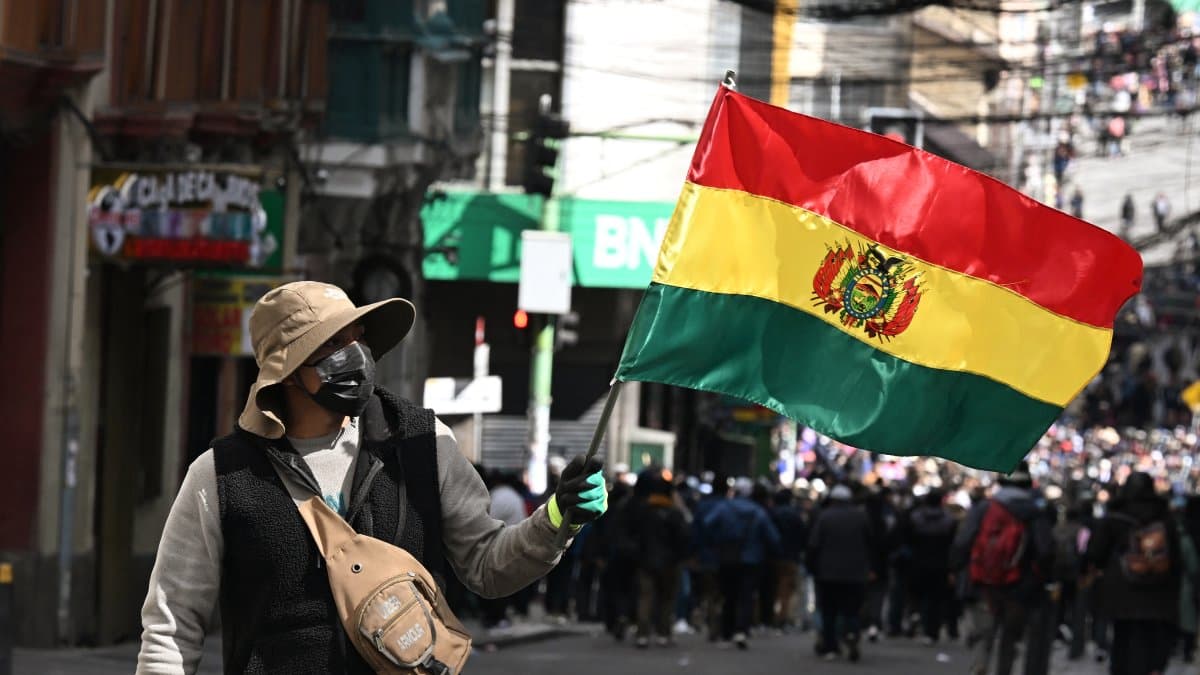

Bolivia is going through one of the biggest political and social crises in recent decades. The protests against President Rodrigo Paz have already entered their fourth week, with thousands of people mobilized, blockades in different parts of the country and an indefinite strike that is aggravating the fuel, food and medicine shortages.
At the same time, the government is directly targeting fugitive former President Evo Morales, whom it accuses of encouraging the protests to force an early departure of the president. Morales, for his part, raised the pressure in the last hours and demanded elections within 90 days to avoid an escalation of the conflict, according to AFP.
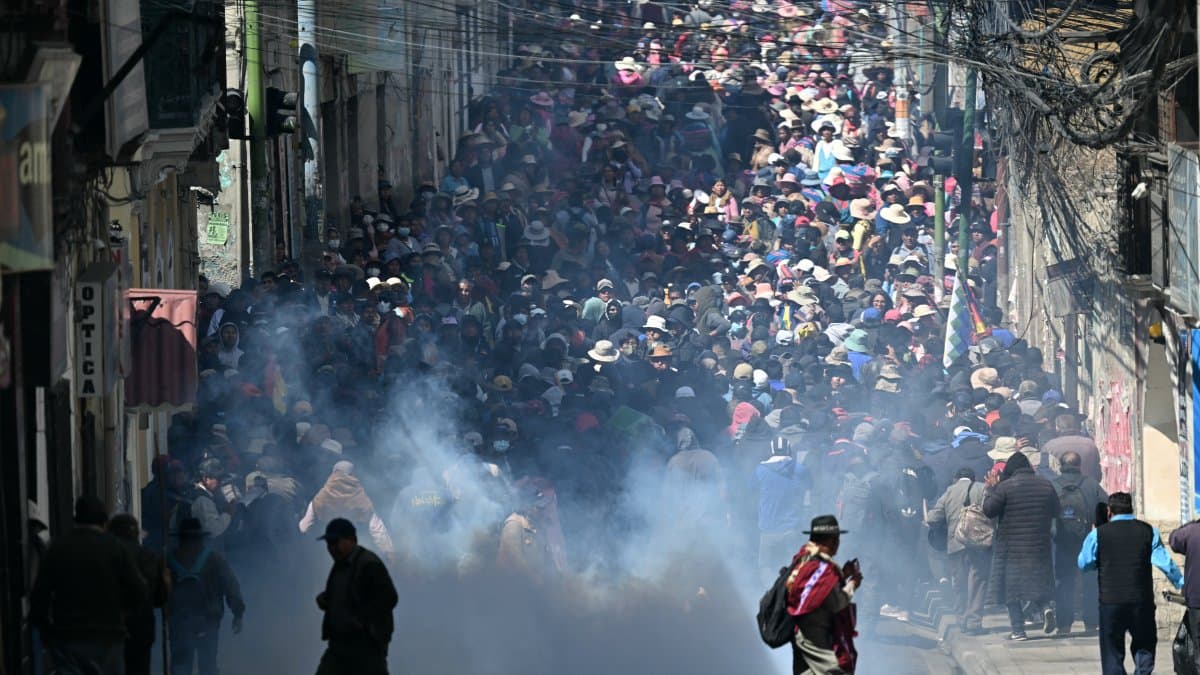
Tension in the streets escalated again Monday with new clashes between protesters and security forces in La Paz.
New clashes in the capital
The week began with a massive march of miners, farmers, transporters, workers and laborers who descended from El Alto toward La Paz, seat of the Bolivian government.
The protest included anti-government chants and criticism of the economy. "What do we want? Resignation! When do we want it? Now!" some groups repeated during the march.
Tension broke out when several demonstrators tried to advance towards the square where the presidential offices are located. The accesses were blocked by a large police deployment.
Riot agents dispersed the groups with tear gas. Protesters responded with stones, firecrackers and sawed-off cylinders of dynamite. A dozen people were arrested during the incidents.
Amid shouts of "Killers!" several participants condemned the death recorded during other clashes that occurred on Saturday.
One death and an open investigation
The new disturbances follow violent clashes over the weekend, when police and military attempted to enable corridors to allow the entry of convoys with food and fuel to La Paz and El Alto.
The operations were blocked by groups of civilians who used stones and other objects to impede the passage.
Initially the government denied that there were fatalities, but this Monday ended up confirming the death of one person during those incidents.
"We regret that it happened. Now we are waiting for the investigation to be completed," said Jose Luis Gálvez, presidential spokesman. He also assured that security forces were ordered to avoid the use of lethal weaponry, quoted AFP.
Meanwhile, the conflict is already causing supply problems in different areas of the country. Shortages are especially affecting La Paz and El Alto, although other cities such as Oruro, Potosí and Cochabamba are experiencing minor impacts.
Morales, since his escape, intensifies rhetoric and calls for elections in 90 days
In the midst of the crisis, and with an arrest warrant against him and several charges pending, Morales burst back into the center of the political scene.
From his weekly program on radio Kawsachun Coca, the former indigenous leader launched a direct message to President Paz: "You have two paths: a suicidal decision, to militarize, or peace, transition and election in 90 days."
Morales went further and demanded the early departure of the president "so that there are no deaths."
The government interprets these statements as a new political pressure maneuver and a threat. It maintains that the protests seek to "alter the democratic order" and accused the former socialist leader of promoting a scenario of destabilization.
Paz's gesture: Salary reduction and call for dialogue
"This president has made the decision, as part of the effort and commitment to the country, to reduce his salary by 50%," he said during an event in Sucre.
The measure was interpreted as a symbolic gesture. The president receives about 24,000 bolivianos a month (about $3,500) and the reduction is not among the central demands of the protesters. The average official salary in the Andean country is around $600, while the real average is around $300.
The president also insisted on his willingness to open talks with the mobilized sectors, although he ruled out negotiating with groups that resort to violent acts.
🛠 Do you think there is an error in this article?
Recommendations

LATEST