Rubio says Iran deal still possible despite attacks, but warns: The Strait of Hormuz will reopen 'one way or the other'
"What's happening there is unlawful, it's illegal, it's unsustainable for the world, it's unacceptable," the secretary of state said.

An E-2D Hawkeye aircraft- File Image.

Negotiations between United States and the Iranian regime showed moderate progress Monday but lingering tensions.
In a lengthy post on Truth Social, President Trump said that talks with Iran were "proceeding well" and reiterated that "It will only be a Great Deal for all or, no Deal at all."
The president also urged Muslim-majority nations in the Middle East and other regions to normalize relations with Israel as part of the Iran peace deal.
Trump listed the countries whose leaders he spoke with in a teleconference Saturday about efforts to end the war. "After all the work done by the United States to try and pull this very complex puzzle together, it should be mandatory that all of these Countries, at a minimum, simultaneously, sign onto the Abraham Accords."
Separately, U.S. forces on Monday conducted "self-defense strikes" strikes in southern Iran near Bandar Abbas against Iranian missile sites and vessels allegedly laying mines in the Strait of Hormuz.
The U.S. Central Command (Centcom) justified the bombings as necessary to protect its troops during the current truce, while Iran reported explosions and casualties in the area.
"U.S. forces conducted self-defense strikes today in southern Iran to protect our troops from threats posed by Iranian forces," Tim Hawkins, a Centcom spokesman, said in a statement in which he did not give details about the strikes.
Despite these military incidents, diplomatic talks continue in Doha.
Times correspond to Eastern Standard Time (ET).
Iranian regime's supreme leader says region will no longer serve as a shield for U.S. bases
Iran's supreme leader Ayatollah Mojtaba Khamenei said Tuesday that countries in the region will no longer be shields for the United States, in a written statement broadcast on state television.
"What is certain in this regard is that the hands of time will not turn back and the nations and lands of the region will no longer serve as shields for U.S. bases," said Khamenei, who has not appeared in public since taking office in March.
Rubio says Strait of Hormuz will be reopened "one way or the other"
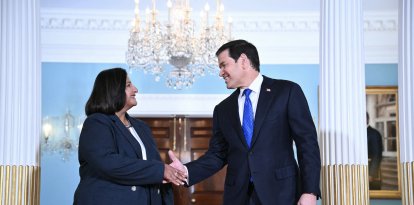
Secretary of State, Marco Rubio, reiterated Tuesday that the Strait of Hormuz will become operational again "one way or another" after new attacks by Washington against the Iranian regime cast doubt on an agreement to end the war.
"The straits have to be open. They're going to be open one way or the other, so they need to be open," Rubio told reporters in the Indian city of Jaipur, where he was making an official visit.
"What's happening there is unlawful, it's illegal, it's unsustainable for the world, it's unacceptable," he said.
The secretary of state declared that a deal with Iran is still possible despite new U.S. attacks that cast doubt on the fragile cease-fire.
"There were some talks going on in Qatar today, so we'll see if we can make progress. I think it's a lot of talking back and forth going on about specific language in the initial document, so it'll take a few days," Rubio said.
"The president's expressed his desire to make it. He's either going to make a good deal or no deal," he said.
Iranian president orders restoration of internet after its suspension during the war
Iranian President Masoud Pezeshkian has ordered the restoration of internet access in Iran, which had been suspended since U.S. and Israel launched attacks against the regime, local media reported Monday.
"The decree aimed at restoring Internet access to its previous state in January was communicated to the Ministry of Communications by the president," Iranian news agencies Tasnim and Fars reported.
LATEST